
TL;DR
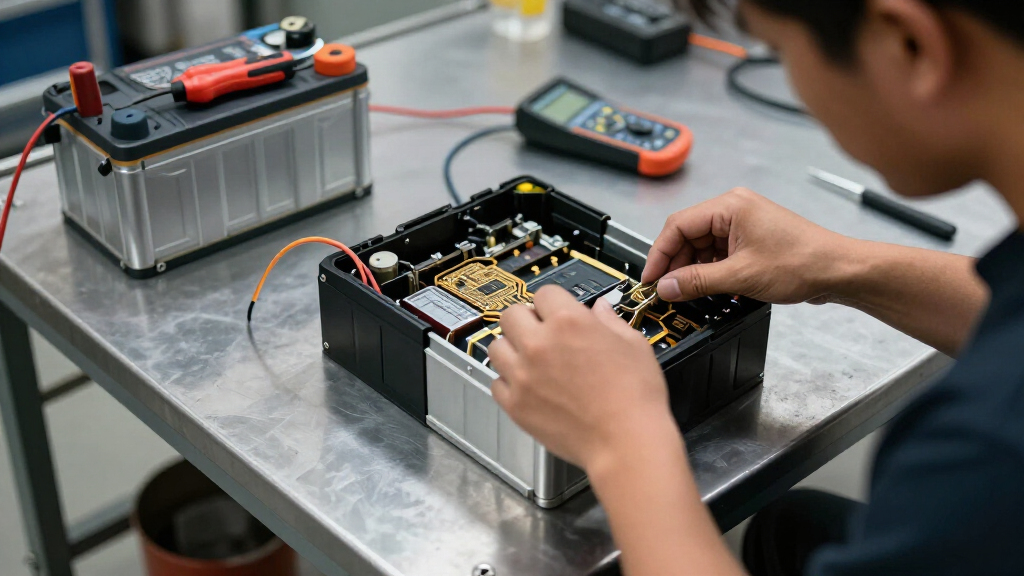
Many companies are investing heavily in solid-state battery technology due to its potential for higher energy density and safety. While progress is promising, widespread commercial use remains uncertain. This development could significantly impact electric vehicles and portable electronics.
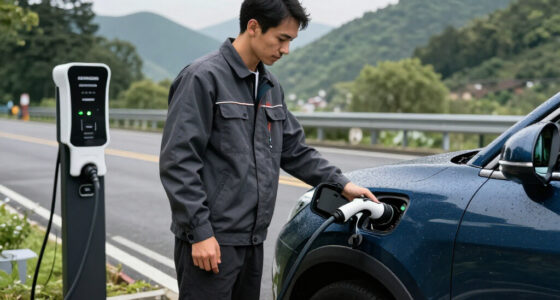
Several leading automakers and battery firms are actively pursuing the development of solid-state batteries, aiming to replace traditional lithium-ion cells. This push is driven by the promise of higher energy density, improved safety, and faster charging times, making solid-state batteries a key focus in the race to advance electric vehicle (EV) technology and portable electronics.

Get business pricing on garage and car supplies
- Business-only prices and quantity discounts
- Tax-exempt purchasing
- Multiple users, one account, clear invoices
Implications of Solid-State Batteries for Future Technology
The push for solid-state batteries could revolutionize electric vehicles by enabling longer ranges, shorter charging times, and enhanced safety. If successfully commercialized, this technology may also impact portable electronics, renewable energy storage, and aerospace applications. However, the timeline for mass-market availability remains uncertain, and high manufacturing costs could slow adoption. The development reflects a broader industry effort to overcome limitations of current lithium-ion technology, which is approaching its theoretical performance limits.Products Worth Considering

DEWALT 20V MAX Brushless 3-Tool Cordless Power Tool Kit with Drill, Impact Driver, Oscillating Multi-Tool, 3 Batteries, and Charger

DEWALT 20V MAX XR 3/4-Inch Cordless High-Torque Impact Wrench Kit with POWERSTACK Battery and Charger (DCF964GH1)

Autel MaxiCharger Level 2 50A Hardwired EV Charger with Wi-Fi and 25-Foot Cable
As an affiliate, we earn on qualifying purchases.
Recent Advances and Industry Investment in Solid-State Battery Technology
Over the past year, several companies have announced breakthroughs, including Toyota claiming to have a working prototype with > 500 km range, and QuantumScape reporting progress toward scalable manufacturing. The industry has seen a surge in funding, with billions of dollars committed to research and pilot production lines. Historically, solid-state batteries have been considered a promising but elusive goal since the 1990s, with technical challenges such as electrolyte stability and manufacturing costs delaying commercial deployment. Recent advances have renewed optimism, but experts caution that commercial-scale production and cost reduction are still in progress.Unresolved Challenges in Commercializing Solid-State Batteries
It is not yet clear when solid-state batteries will become commercially available at scale. Key issues such as electrolyte durability, manufacturing costs, and long-term stability are still under active research. While prototypes have demonstrated promising performance, large-scale production methods and cost-effective manufacturing processes are still being developed. Industry insiders acknowledge that several technical and economic hurdles must be overcome before these batteries can replace lithium-ion cells in mainstream applications.Next Steps in Solid-State Battery Development and Deployment
Researchers and manufacturers are expected to focus on scaling up production techniques, improving electrolyte stability, and reducing costs over the next 1-3 years. Pilot production lines are likely to test commercial viability, with some companies aiming for limited consumer deployment by the late 2020s. Regulatory approvals, safety testing, and supply chain development will also shape the timeline for broader adoption. Industry analysts will monitor these developments to assess when solid-state batteries might become a standard feature in EVs and electronics.Key Questions
What are the main advantages of solid-state batteries over lithium-ion batteries?
Solid-state batteries offer higher energy density, improved safety due to reduced fire risk, and potentially faster charging times compared to traditional lithium-ion batteries.
When will solid-state batteries be available for consumer products?
While prototypes exist, mass-market availability is likely still 3-5 years away, depending on overcoming manufacturing and cost challenges.
What companies are leading in solid-state battery development?
Major players include Toyota, QuantumScape, Samsung SDI, and Panasonic, all investing heavily in research and pilot production.
Are there any safety concerns with solid-state batteries?
Solid electrolytes are generally considered safer than liquid electrolytes, reducing the risk of fires or thermal runaway, but long-term safety data is still being collected.
What technical hurdles remain before commercialization?
Challenges include electrolyte stability over many charge cycles, scalable manufacturing processes, and reducing production costs to competitive levels.
Source: hn