Complete the kit


Get business pricing on garage and car supplies
- Business-only prices and quantity discounts
- Tax-exempt purchasing
- Multiple users, one account, clear invoices
Key Takeaways
- Full synthetic oils with viscosity modifiers like 0W-20 and 0W-16 significantly reduce cold-start wear compared to older 10W-30 standards.
- High-mileage formulations from Castrol and Mobil contain seal conditioners that prevent oil leaks in engines with over 75,000 miles.
- Brand loyalty matters less than API SP certification; however, proprietary additive packages like Castrol’s Fluid Titanium Technology show measurable differences in shear stability.
- Multi-quart packs from Quaker State and Mobil offer better long-term value than single quarts for DIY oil changers.
- Using a viscosity grade thicker than recommended by the manufacturer can reduce fuel efficiency by up to 2% in modern variable valve timing engines.
| Castrol EDGE High Mileage 5W-30 Full Synthetic Motor Oil, 5 Quarts |  | Best for High-Mileage 5W-30 Engines | Brand: Castrol | Oil type: Full synthetic motor oil | Viscosity grade: SAE 5W-30 | VIEW LATEST PRICE | See Our Full Breakdown |
| Mobil Full Synthetic High Mileage Motor Oil, 5W-30, 1 Quart (Pack of 6) |  | Best for High-Mileage Top-Offs | Brand: Mobil | Oil type: Full synthetic motor oil | Viscosity grade: 5W-30 | VIEW LATEST PRICE | See Our Full Breakdown |
| Castrol GTX Full Synthetic 5W-30 Motor Oil, 5 Quarts |  | Best General-Purpose 5W-30 | Brand: Castrol | Oil type: Full synthetic motor oil | Viscosity grade: SAE 5W-30 | VIEW LATEST PRICE | See Our Full Breakdown |
| Castrol GTX Full Synthetic 0W-20 Motor Oil, 5 Quarts |  | Best for 0W-20 Sludge Control | Brand: Castrol | Oil type: Full synthetic motor oil | Viscosity grade: 0W-20 | VIEW LATEST PRICE | See Our Full Breakdown |
| Quaker State Full Synthetic 5W-20 Motor Oil, 5 Quart |  | Best for Friction and Oxidation Resistance | Brand: Quaker State | Oil type: Full synthetic motor oil | Viscosity grade: 5W-20 | VIEW LATEST PRICE | See Our Full Breakdown |
| Castrol EDGE High Mileage 5W-20 Full Synthetic Motor Oil, 5 Quarts |  | Best for High-Mileage 5W-20 Engines | Brand: Castrol | Oil type: Full synthetic motor oil | SAE viscosity grade: 5W-20 | VIEW LATEST PRICE | See Our Full Breakdown |
| Valvoline Advanced Full Synthetic 0W-20 Motor Oil, 5 QT |  | Best for Cold-Start Protection | Brand: Valvoline | Oil type: Full synthetic motor oil | SAE viscosity: 0W-20 | VIEW LATEST PRICE | See Our Full Breakdown |
| Castrol EDGE High Mileage 0W-20 Advanced Full Synthetic Motor Oil, 5 Quart |  | Best for High-Mileage Cold-Weather Starts | Brand: Castrol | Oil type: Advanced full synthetic motor oil | SAE J300 viscosity grade: 0W-20 | VIEW LATEST PRICE | See Our Full Breakdown |
| Mobil 1 High Mileage Full Synthetic Motor Oil, 0W-20, 5 Quart |  | Best for High-Mileage Timing-Chain Protection | Brand: Mobil 1 | Oil type: Full synthetic motor oil | SAE viscosity grade: 0W-20 | VIEW LATEST PRICE | See Our Full Breakdown |
| Mobil 1 Advanced Fuel Economy Full Synthetic Motor Oil, 0W-16, 5 Quart |  | Best for 0W-16 Fuel-Economy Applications | Brand: Mobil 1 | Oil type: Full synthetic motor oil | Viscosity grade: 0W-16 | VIEW LATEST PRICE | See Our Full Breakdown |
| Mobil 1 Advanced Full Synthetic Motor Oil, 5W-20, 5 Quarts |  | Best for Modern Fuel-Efficient Engines | Brand: Mobil 1 | Oil Type: Full synthetic motor oil | SAE Viscosity Grade: 5W-20 | VIEW LATEST PRICE | See Our Full Breakdown |
| Castrol EDGE 5W-30 Full Synthetic Motor Oil, 5 Quarts |  | Best for Extended Drain Intervals | Brand: Castrol | Viscosity Grade: 5W-30 | Oil Type: Full synthetic | VIEW LATEST PRICE | See Our Full Breakdown |
| Pennzoil Platinum Full Synthetic 10W-30 Motor Oil, 1 Quart |  | Best for Top-Offs and Small Repairs | Brand: Pennzoil | Viscosity Grade: SAE 10W-30 | Oil Type: Full synthetic | VIEW LATEST PRICE | See Our Full Breakdown |
| Mobil 1 Advanced Full Synthetic Motor Oil, 10W-30, 5 Quart |  | Best for Versatile Protection | Brand: Mobil 1 | Oil Type: Full synthetic motor oil | SAE Viscosity Grade: 10W-30 | VIEW LATEST PRICE | See Our Full Breakdown |
| synthetic motor oil | Brand | Oil type | Container size | Viscosity grade |
|---|---|---|---|---|
| Castrol EDGE High Mileage 5W-3 | Castrol | Full synthetic motor oil | 5 quarts | SAE 5W-30 |
| Mobil Full Synthetic High Mile | Mobil | Full synthetic motor oil | 1 quart per container | 5W-30 |
| Castrol GTX Full Synthetic 5W- | Castrol | Full synthetic motor oil | — | SAE 5W-30 |
| Castrol GTX Full Synthetic 0W- | Castrol | Full synthetic motor oil | — | 0W-20 |
| Quaker State Full Synthetic 5W | Quaker State | Full synthetic motor oil | 5 quarts | 5W-20 |
| Castrol EDGE High Mileage 5W-2 | Castrol | Full synthetic motor oil | 5 quarts (160 fluid ounces) | — |
| Valvoline Advanced Full Synthe | Valvoline | Full synthetic motor oil | 5 quarts (160 fluid ounces) | — |
| Castrol EDGE High Mileage 0W-2 | Castrol | Advanced full synthetic motor oil | 5 quarts (160 fluid ounces) | — |
| Mobil 1 High Mileage Full Synt | Mobil 1 | Full synthetic motor oil | 5 quarts (160 fluid ounces) | — |
| Mobil 1 Advanced Fuel Economy | Mobil 1 | Full synthetic motor oil | 5 quarts (160 fluid ounces) | 0W-16 |
| Mobil 1 Advanced Full Syntheti | Mobil 1 | Full synthetic motor oil | 5 quarts | — |
| Castrol EDGE 5W-30 Full Synthe | Castrol | Full synthetic | — | 5W-30 |
| Pennzoil Platinum Full Synthet | Pennzoil | Full synthetic | — | SAE 10W-30 |
| Mobil 1 Advanced Full Syntheti | Mobil 1 | Full synthetic motor oil | — | — |
More Details on Our Top Picks
Castrol EDGE High Mileage 5W-30 Full Synthetic Motor Oil, 5 Quarts
Castrol EDGE High Mileage 5W-30 earns this spot for drivers whose engines have passed 75,000 miles and need the specified 5W-30 grade. Its formulation targets leaks, oil burnoff, and deposits, while phosphorus replacement technology is intended to help protect the emission system. Compared with Mobil Full Synthetic High Mileage 5W-30, it supports a longer stated interval—up to 15,000 miles or one year, versus Mobil’s up to 7,500 miles. That longer interval is useful for some maintenance schedules, but it is not a reason to exceed the vehicle maker’s instructions or oil-monitor guidance. This Castrol is a narrower choice than Castrol GTX Full Synthetic 5W-30, which is not specifically targeted at high-mileage engines. Skip it if your vehicle calls for another viscosity or is below the stated mileage focus.
Pros:- Full synthetic 5W-30 formulation for vehicles with over 75,000 miles
- Designed to help reduce leaks, oil burnoff, and deposits
- Phosphorus replacement technology is intended to help protect the emission system
- States an interval of up to 15,000 miles or one year, subject to the vehicle maker’s guidance
Cons:- Its high-mileage focus may not suit lower-mileage vehicles as well as a general-purpose option
- The one-year limit applies even if 15,000 miles have not been driven
- The stated maximum interval should not replace the vehicle maker’s service schedule
Best for: Owners of gasoline vehicles above 75,000 miles that require 5W-30 and want a full synthetic aimed at oil burnoff, leaks, and deposits.
Not ideal for: Drivers whose vehicles specify a different viscosity, or owners who want a general-purpose oil without a high-mileage focus.
- Brand:Castrol
- Oil type:Full synthetic motor oil
- Viscosity grade:SAE 5W-30
- Container size:5 quarts
- Vehicle focus:Vehicles with over 75,000 miles
- Stated oil change interval:Up to 15,000 miles or one year, whichever comes first
- Specifications:API SP/SN PLUS/SN/SM; ILSAC GF-6; Chrysler MS 6395 engine test requirements; Ford WSS-M2C946-B1 and WSS-M2C961-A3
- Manufacturer warranty:12 months
Our verdict“Choose this Castrol if your higher-mileage vehicle requires 5W-30 and you want oil targeted at leaks and burnoff, but follow your vehicle’s service schedule rather than treating 15,000 miles as a universal interval.”
Mobil Full Synthetic High Mileage Motor Oil, 5W-30, 1 Quart (Pack of 6)
Mobil Full Synthetic High Mileage 5W-30 is the most flexible package here for drivers who prefer quart bottles for measured fills or keeping spare oil on hand. The six-quart pack suits gasoline vehicles over 75,000 miles that require 5W-30, including turbocharged applications. Its seal conditioner and deposit-control additives target common high-mileage concerns, while high-temperature viscosity retention is intended to help the oil maintain its grade during operation. Compared with Castrol EDGE High Mileage 5W-30, Mobil gives a shorter stated protection interval—up to 7,500 miles rather than up to 15,000 miles or one year—so it may fit owners who prefer more frequent changes. The tradeoff is less interval headroom and a pack of separate containers rather than one five-quart jug. It is for gasoline engines only; confirm the required specification in your manual.
Pros:- Full synthetic 5W-30 designed for higher-mileage gasoline engines
- Seal conditioner is intended to help reduce leaks
- Formulated to help limit sludge, deposits, and engine wear
- Six separate quart containers can support measured fills and spare-oil storage
Cons:- Stated oil change protection is up to 7,500 miles, shorter than Castrol EDGE High Mileage 5W-30’s stated maximum
- Pack format means handling multiple containers instead of one larger jug
- Listed for gasoline-powered vehicles, so it is not a universal engine-oil choice
Best for: Owners of gasoline cars, SUVs, light-duty trucks, or vans above 75,000 miles that require 5W-30, especially those who want quart containers for measured refills.
Not ideal for: Drivers seeking a long stated interval or oil for a non-gasoline engine; its listed protection is up to 7,500 miles and its compatibility is for gasoline-powered vehicles.
- Brand:Mobil
- Oil type:Full synthetic motor oil
- Viscosity grade:5W-30
- Container size:1 quart per container
- Pack quantity:6
- Vehicle focus:Gasoline-powered vehicles with over 75,000 miles, including turbocharged engines
- Stated oil change protection:Up to 7,500 miles
- Standard:Meets API SP resource-conserving
Our verdict“Pick Mobil’s six-quart pack if your high-mileage gasoline vehicle calls for 5W-30 and individual quart bottles suit your fill routine better than a longer stated change interval.”
Castrol GTX Full Synthetic 5W-30 Motor Oil, 5 Quarts
Castrol GTX Full Synthetic 5W-30 is the broad-use pick in this group: it pairs a common viscosity with stated wear, sludge, and viscosity-breakdown protection rather than focusing on high-mileage symptoms. Its listed API SQ and ILSAC GF-7 specifications, along with GM dexos1 Gen 3 and Ford requirements, give buyers several compatibility references to check against their vehicle manual. Castrol states protection for up to 10,000 miles between changes, shorter than the maximum stated for Castrol EDGE High Mileage 5W-30 but less narrowly aimed at older engines. The tradeoff is that a five-quart jug may not match every engine’s fill volume, and the broad fit wording does not replace checking the exact required approvals. Choose it for a compatible 5W-30 car or truck; skip it if your manual calls for a different grade.
Pros:- Full synthetic 5W-30 suited to compatible cars and trucks
- Formulated to protect against wear and control sludge
- Designed to resist viscosity breakdown
- Lists API, ILSAC, GM dexos1 Gen 3, and Ford specifications
Cons:- Up to 10,000 miles is a stated maximum, not a substitute for the vehicle’s maintenance schedule
- The five-quart container may not match every engine’s required fill volume
- Compatibility depends on matching the vehicle maker’s required specifications
Best for: Drivers of cars or trucks that specify 5W-30 and want a full synthetic with listed API, ILSAC, GM, and Ford specifications.
Not ideal for: Owners of vehicles requiring another viscosity, a different oil volume, or a specification not listed for this product.
- Brand:Castrol
- Oil type:Full synthetic motor oil
- Viscosity grade:SAE 5W-30
- Volume:5 quarts
- Compatible vehicle types:Car and truck
- Stated protection interval:Up to 10,000 miles between oil changes
- Specifications:API SQ/SP/SN PLUS/SN; ILSAC GF-7; GM dexos1 Gen 3; Ford WSS-M2C947-B1 and WSS-M2C962-A1
- Manufacturer part number:15E6DE
Our verdict“Choose GTX Full Synthetic 5W-30 for a compatible car or truck needing a general-purpose synthetic, rather than the high-mileage-specific focus of Castrol EDGE High Mileage.”
Castrol GTX Full Synthetic 0W-20 Motor Oil, 5 Quarts
Castrol GTX Full Synthetic 0W-20 is the grade-specific choice for drivers whose manuals call for 0W-20 and who want stated sludge-cleaning and wear protection. Castrol says it can help clean existing sludge and guard against new buildup, which gives this oil a clearer maintenance focus than Quaker State Full Synthetic 5W-20, a different viscosity grade positioned around performance, friction reduction, and oxidation resistance. It also lists API, ILSAC, GM, and Ford specifications, though buyers still need to match the exact requirements in their manuals. The stated interval reaches up to 10,000 miles, but actual change timing should follow the vehicle maker’s schedule and driving conditions. Its main limitation is simple: despite broad car-and-truck fit wording, this is not the right pick when the engine requires 5W-20, 5W-30, or another grade.
Pros:- Full synthetic 0W-20 for vehicles that specify this viscosity
- Designed to clean existing sludge and help prevent new sludge formation
- Formulated to reduce engine wear
- Lists API, ILSAC, GM dexos1 Gen 3, and Ford specifications
Cons:- Only appropriate when 0W-20 matches the vehicle maker’s required viscosity
- Up to 10,000 miles is a stated maximum, not a universal change schedule
- Five-quart volume may not match every engine’s fill requirement
Best for: Owners of cars or trucks whose manufacturer specifies 0W-20 and who want a full synthetic formulated to clean and limit sludge.
Not ideal for: Drivers whose vehicle requires 5W-20, 5W-30, or another viscosity, or those who have not confirmed the listed specifications match their manual.
- Brand:Castrol
- Oil type:Full synthetic motor oil
- Viscosity grade:0W-20
- Volume:5 quarts (160 fluid ounces)
- Vehicle compatibility:Cars and trucks
- Stated protection interval:Up to 10,000 miles between oil changes
- Specifications:API SP, SN PLUS, SN; ILSAC GF-6; GM dexos1 Gen 3; Ford WSS-M2C947-B1 and WSS-M2C962-A1
- Manufacturer part number:15E725
Our verdict“Choose this Castrol if your manual calls for 0W-20 and sludge control is a priority; otherwise, select an oil in the required grade, such as the 5W-20 Quaker State only where specified.”
Quaker State Full Synthetic 5W-20 Motor Oil, 5 Quart
Quaker State Full Synthetic 5W-20 takes a performance-oriented role, with the supplied product details emphasizing deposit protection, reduced friction, fuel economy, and resistance to oxidation. That focus differs from Castrol GTX Full Synthetic 0W-20, which highlights sludge cleaning and a stated change interval of up to 10,000 miles. Quaker State may appeal to owners of compatible modern turbocharged or high-performance vehicles, but the listing does not provide a specific API or automaker approval set, so the manual check matters especially here. Its conditional warranty—up to 10 years or 300,000 miles—applies only when Quaker State oils are used exclusively and the applicable terms are met. The five-quart jug is convenient for engines with a matching fill volume; skip this option if your vehicle calls for another viscosity or you need documented approvals absent from the supplied specifications.
Pros:- Full synthetic 5W-20 formulation aimed at deposit protection
- Designed to reduce friction and support fuel economy
- Oxidation resistance is intended to help the oil stay fresher longer
- Includes a conditional warranty of up to 10 years or 300,000 miles with exclusive Quaker State oil use
Cons:- Supplied specifications do not list API or automaker approvals for direct manual matching
- The warranty depends on exclusive use and meeting its terms
- Only suitable for engines that specify 5W-20
Best for: Owners of compatible modern turbocharged or high-performance vehicles that specify 5W-20 and want an oil focused on friction reduction and oxidation resistance.
Not ideal for: Drivers who need a different viscosity or require a clearly listed API or automaker approval that is not included in the supplied product data.
- Brand:Quaker State
- Oil type:Full synthetic motor oil
- Viscosity grade:5W-20
- Container size:5 quarts
- Unit count:160 fluid ounces
- Target applications:Modern turbocharged and high-performance vehicles
- Warranty:Up to 10 years or 300,000 miles with exclusive Quaker State oil use, subject to terms
- Manufacturer part number:550046189
Our verdict“Pick Quaker State if your vehicle specifies 5W-20 and its friction- and oxidation-focused formulation fits your priorities, but verify the required approvals before buying.”
Castrol EDGE High Mileage 5W-20 Full Synthetic Motor Oil, 5 Quarts
Castrol EDGE High Mileage 5W-20 is the targeted pick for engines past 75,000 miles that call for this viscosity. Its formula is designed to help limit leaks, oil burnoff, and deposits, while phosphorus replacement technology helps protect the catalytic converter. That focus sets it apart from Valvoline Advanced Full Synthetic 0W-20, which emphasizes cold-start protection and broad gasoline-vehicle use rather than high-mileage concerns. Castrol also lists an oil-change interval of up to 15,000 miles or one year, but the vehicle manual and operating conditions should guide service timing. The tradeoff is a narrower fit: this oil is not a general high-mileage solution if your engine requires 0W-20 or another specification. Check the required viscosity and approvals before choosing it.
Pros:- Formulated to help reduce leaks and oil burnoff in higher-mileage engines.
- Phosphorus replacement technology is intended to help protect the catalytic converter and emissions system.
- Helps limit deposit buildup.
- Lists an oil-change interval of up to 15,000 miles or one year, subject to vehicle requirements and conditions.
Cons:- Intended for vehicles with more than 75,000 miles, making it less suitable as a general-purpose choice.
- Requires a vehicle that specifies 5W-20 and compatible approvals.
- The stated service interval may not suit every vehicle or driving pattern.
Best for: Owners of vehicles with more than 75,000 miles whose manuals specify 5W-20 and compatible Castrol-listed standards.
Not ideal for: Drivers whose vehicles require 0W-20, another viscosity, or specifications not listed for this oil; its high-mileage formulation is also unnecessary for buyers seeking a general-purpose option.
- Brand:Castrol
- Oil type:Full synthetic motor oil
- SAE viscosity grade:5W-20
- Container size:5 quarts (160 fluid ounces)
- Intended vehicle mileage:Over 75,000 miles
- Listed oil-change interval:Up to 15,000 miles or one year, whichever comes first
- API specifications:API SP, SN PLUS, SN, and SM
- ILSAC specification:GF-6
- Additional specifications:Chrysler MS 6395; Ford WSS-M2C945-B1; Ford WSS-M2C960-A1
Our verdict“Choose this Castrol for a higher-mileage engine that specifically calls for 5W-20 and benefits from a formula aimed at leaks, burnoff, and deposits.”
Valvoline Advanced Full Synthetic 0W-20 Motor Oil, 5 QT
Valvoline Advanced Full Synthetic 0W-20 is the broad-use choice here for drivers whose vehicles call for 0W-20 and who want emphasis on wear, heat, friction, and deposit protection. Its low-temperature flow is aimed at reducing wear during cold starts, giving it a different role from Castrol EDGE High Mileage 0W-20, which is specifically formulated for engines with more than 75,000 miles. Valvoline’s listed approvals include ILSAC GF-7A and several manufacturer specifications, so it can suit many gasoline vehicles and hybrids when the manual matches. The tradeoff is that it lacks the high-mileage-specific focus on leaks and oil burnoff found in Castrol’s option. Compatibility still depends on the exact vehicle requirement; viscosity alone is not enough to confirm a fit.
Pros:- 0W-20 formulation flows well at low temperatures to help reduce cold-start wear.
- Designed to protect against wear, friction, heat, and deposits.
- Lists ILSAC GF-7A and multiple manufacturer specifications.
- Suitable for many gasoline vehicles and hybrids when the required specifications match.
Cons:- Does not have the high-mileage-specific leak and oil-burnoff focus of Castrol EDGE High Mileage oils.
- Vehicle compatibility depends on matching the manual’s required specifications.
- The product data does not provide a specific extended oil-change interval.
Best for: Drivers of gasoline cars or hybrids whose manuals specify 0W-20 and a compatible Valvoline-listed specification, especially in cold-start conditions.
Not ideal for: Owners of vehicles requiring a different viscosity or an approval not listed here, and high-mileage drivers specifically seeking leak- or burnoff-focused formulation.
- Brand:Valvoline
- Oil type:Full synthetic motor oil
- SAE viscosity:0W-20
- Container size:5 quarts (160 fluid ounces)
- Pack quantity:1
- API categories:SQ, SP, SN with SN PLUS, and preceding API gasoline categories
- ILSAC category:GF-7A
- Additional specifications:Ford WSS-M2C962-A1; Chrysler MS-13340; GM dexos 1 Gen 3
- Model number:881150-EA
Our verdict“Pick Valvoline when your vehicle specifies 0W-20 and you want broad protection with particular attention to cold starts rather than a high-mileage formula.”
Castrol EDGE High Mileage 0W-20 Advanced Full Synthetic Motor Oil, 5 Quart
Castrol EDGE High Mileage 0W-20 combines a high-mileage focus with a viscosity suited to vehicles that specify 0W-20. Its phosphorus replacement technology is intended to help protect the catalytic converter, while the formula targets leaks, deposits, corrosion, and wear. Compared with Castrol EDGE High Mileage 5W-20, this version is the relevant match for a 0W-20 requirement; the two are not interchangeable unless the vehicle manual allows both. It also differs from Mobil 1 High Mileage 0W-20, which specifically calls out oxidation and timing-chain wear protection and lists ILSAC GF-7. Castrol’s product data does not provide the same detailed approval list here, so buyers should verify the exact specification and service interval for their vehicle.
Pros:- Designed for vehicles with more than 75,000 miles.
- Phosphorus replacement technology is intended to help protect the catalytic converter and emissions system.
- Targets leaks, deposits, corrosion, and wear.
- 0W-20 viscosity suits vehicles that specify it, including those needing cold-weather flow.
Cons:- High-mileage focus may be unnecessary for newer, lower-mileage engines.
- The provided specifications do not list the detailed API, ILSAC, or manufacturer approvals.
- Vehicle compatibility depends on the manual’s viscosity and specification requirements.
Best for: Owners of vehicles over 75,000 miles that require 0W-20 and want a high-mileage formula aimed at emissions-system care and reducing leaks or oil burnoff.
Not ideal for: Drivers with low-mileage vehicles, engines that require a different viscosity, or manuals calling for a specific approval that cannot be confirmed from the product data.
- Brand:Castrol
- Oil type:Advanced full synthetic motor oil
- SAE J300 viscosity grade:0W-20
- Container size:5 quarts (160 fluid ounces)
- Compatible vehicle mileage:Over 75,000 miles
- Container type:Bottle
- Manufacturer part number:15B0D2
- Manufacturer warranty description:12 months
Our verdict“Choose this Castrol when a higher-mileage engine specifically calls for 0W-20 and emissions-system and leak-related concerns matter.”
Mobil 1 High Mileage Full Synthetic Motor Oil, 0W-20, 5 Quart
Mobil 1 High Mileage 0W-20 is built for engines past 75,000 miles, with additives aimed at sludge and deposit control, oxidation resistance, and timing-chain wear protection. That makes it a useful alternative to Castrol EDGE High Mileage 0W-20: Mobil 1 explicitly calls out timing-chain and oxidation protection, while Castrol emphasizes catalytic-converter care and reducing leaks and oil burnoff. Mobil 1 also supports cold starts with its 0W-20 grade and lists ILSAC GF-7. Its claimed protection interval of up to 15,000 miles is a potential convenience, not a universal service schedule; the maker’s claim may not reflect severe use or the vehicle manufacturer’s maintenance plan. This is a focused choice for higher-mileage 0W-20 engines, not a substitute for verifying the required approvals.
Pros:- Formulated for vehicles with more than 75,000 miles.
- Additives help fight sludge and deposits.
- Specifically identifies oxidation and timing-chain wear protection.
- 0W-20 supports cold-start and low-temperature performance.
Cons:- The up-to-15,000-mile protection interval is a product claim and depends on vehicle and operating conditions.
- The supplied data lists ILSAC GF-7 but no additional manufacturer approvals.
- High-mileage formulation is less targeted to lower-mileage vehicles.
Best for: Owners of vehicles over 75,000 miles that specify 0W-20 and want a high-mileage oil with stated attention to sludge, oxidation, and timing-chain wear.
Not ideal for: Drivers whose vehicles require another viscosity or a specification not confirmed by the product data, and anyone treating the 15,000-mile claim as a guaranteed oil-change interval.
- Brand:Mobil 1
- Oil type:Full synthetic motor oil
- SAE viscosity grade:0W-20
- Container size:5 quarts (160 fluid ounces)
- Intended vehicle mileage:75,000+ miles
- Claimed protection interval:Up to 15,000 miles
- Standard:ILSAC GF-7
- Item weight:9.2 pounds
Our verdict“Choose Mobil 1 for a higher-mileage 0W-20 engine when sludge, oxidation, and timing-chain protection are priorities and the vehicle’s specifications match.”
Mobil 1 Advanced Fuel Economy Full Synthetic Motor Oil, 0W-16, 5 Quart
Mobil 1 Advanced Fuel Economy 0W-16 is the specialized pick in this group: it is designed to help improve fuel economy, but only for vehicles that specifically call for 0W-16. That narrow fit separates it from Valvoline Advanced Full Synthetic 0W-20 and the high-mileage 0W-20 oils, which serve different viscosity requirements. Mobil 1 also targets sludge, deposits, oxidation, pre-ignition, and timing-chain wear, with low-temperature performance intended to support cold starts; the product is listed as suitable for hybrids. Its protection interval is up to 15,000 miles or one year, whichever comes first, but the vehicle’s maintenance schedule and driving conditions should take precedence. The main tradeoff is clear: this is not a flexible substitute for more common grades, and using the wrong viscosity can make it unsuitable.
Pros:- Formulated to help improve fuel economy in vehicles designed for 0W-16.
- Targets sludge, deposits, oxidation, pre-ignition, and timing-chain wear.
- Supports cold starts and low-temperature performance.
- Suitable for hybrid vehicles when the required grade and specifications match.
Cons:- Vehicle-specific fit makes it unsuitable for engines that do not call for 0W-16.
- The listed protection interval is capped at 15,000 miles or one year and may not match every maintenance schedule.
- The product data lists ILSAC GF-7 but does not provide additional manufacturer approvals.
Best for: Owners of cars or hybrids whose manuals specifically require 0W-16 and who want a synthetic oil formulated with fuel-economy goals.
Not ideal for: Drivers whose vehicles specify 0W-20, 5W-20, or any grade other than 0W-16, or buyers seeking a broadly interchangeable oil.
- Brand:Mobil 1
- Oil type:Full synthetic motor oil
- Viscosity grade:0W-16
- Container size:5 quarts (160 fluid ounces)
- Compatible vehicle type:Car
- Vehicle fit:Vehicle specific
- Protection interval:Up to 15,000 miles or one year, whichever comes first
- Standard:ILSAC GF-7
- Flash point:228 °C
Our verdict“Select this Mobil 1 only when your vehicle specifies 0W-16 and fuel-economy-focused formulation is more relevant than broad viscosity flexibility.”
Mobil 1 Advanced Full Synthetic Motor Oil, 5W-20, 5 Quarts
This oil stands out for vehicles requiring low-viscosity protection, specifically the 5W-20 grade common in many Japanese and American cars. Its Triple Action Formula targets friction and sludge, offering a clear advantage over conventional oils that often fail under modern engine tolerances. Compared to the Castrol EDGE 5W-30, this Mobil 1 option is thinner, which can improve fuel economy but may offer slightly less protection for high-load towing. The ILSAC GF-7 standard confirms its compatibility with newer engines designed for efficiency. However, the 15,000-mile interval is shorter than some competitors, meaning drivers who exceed this mileage must change oil sooner to avoid warranty issues. It is a reliable choice for daily commuters who prioritize cold-start performance in cooler climates.
Pros:- Meets strict ILSAC GF-7 standards for modern engine compatibility
- Triple Action Formula effectively reduces friction and deposits
- Excellent cold-start protection for low-temperature environments
Cons:- Protection interval caps at 15,000 miles, shorter than some rivals
- 5W-20 viscosity may be too thin for older engines or heavy-duty use
Best for: Owners of newer sedans and SUVs that specifically require 5W-20 viscosity for optimal fuel economy and warranty compliance.
Not ideal for: Drivers who tow heavy loads or operate in extreme heat, as the thinner 5W-20 grade may not provide adequate shear stability under high stress compared to heavier oils.
- Brand:Mobil 1
- Oil Type:Full synthetic motor oil
- SAE Viscosity Grade:5W-20
- Container Size:5 quarts
- Liquid Volume:4.73 liters
- Standards:ILSAC GF-7
- Protection Interval:Up to 15,000 miles
Our verdict“Choose this if your vehicle manufacturer specifies 5W-20 and you value proven friction reduction for daily commuting.”
Castrol EDGE 5W-30 Full Synthetic Motor Oil, 5 Quarts
Castrol EDGE 5W-30 is engineered for drivers who want longer oil-change intervals, rated for up to 20,000 miles. This is a significant advantage over the Mobil 1 Advanced 5W-20, which caps out at 15,000 miles, potentially saving time and money for high-mileage drivers. The formulation focuses on thermal stability and viscosity control, making it suitable for engines that run hot. It meets a broad range of specifications, including GM dexos1 Gen 3, which is critical for many General Motors vehicles. However, the 5W-30 grade is thicker than 5W-20, which might slightly reduce fuel efficiency in engines designed for lighter oils. It is a robust option for those who prioritize wear protection over maximum fuel economy gains.
Pros:- Rated for extended protection up to 20,000 miles
- Meets GM dexos1 Gen 3 and Ford WSS-M2C946-B1 specifications
- Strong thermal stability for high-temperature performance
Cons:- 5W-30 viscosity may not be ideal for engines designed for 0W-20
- Extended interval still limited by the one-year time cap
Best for: High-mileage drivers and GM vehicle owners who need an oil that meets dexos1 Gen 3 standards and supports 20,000-mile drain intervals.
Not ideal for: Vehicles that strictly require 0W-20 or 5W-20 for warranty compliance, as the 5W-30 grade may be too viscous for optimal fuel economy.
- Brand:Castrol
- Viscosity Grade:5W-30
- Oil Type:Full synthetic
- Volume:5 quarts
- Flash Point:230 °C
- Specifications:API SQ/SP/SN PLUS; ILSAC GF-7; GM dexos1 Gen 3
- Protection Interval:Up to 20,000 miles
Our verdict“This is the go-to choice for drivers seeking longer service intervals and strong protection for GM and Ford specifications.”
Pennzoil Platinum Full Synthetic 10W-30 Motor Oil, 1 Quart
Sold in a convenient 1-quart bottle, this Pennzoil Platinum option is ideal for topping off rather than a full oil change. Unlike the 5-quart jugs from Mobil 1 or Castrol, this packaging allows for precise addition without waste. The oil is made from natural gas via PurePlus Technology, which claims to keep pistons cleaner than industry standards. This cleanliness factor is a key differentiator for engines prone to carbon buildup. However, buying multiple quarts for a full change is less cost-effective than purchasing a 5-quart jug. It is best suited for owners who have already performed a service and need to maintain the correct level between changes, or for those with smaller engines that require less oil capacity.
Pros:- Convenient 1-quart size ideal for topping off
- PurePlus Technology helps keep pistons cleaner
- Supports fuel economy and extreme temperature performance
Cons:- Higher cost per ounce compared to 5-quart containers
- Requires buying multiple bottles for a standard oil change
Best for: DIY mechanics who need precise oil additions for top-offs or owners of smaller engines that require less than a full 5-quart jug.
Not ideal for: Drivers performing a full oil change, as buying multiple 1-quart bottles is more expensive and cumbersome than a single 5-quart container.
- Brand:Pennzoil
- Viscosity Grade:SAE 10W-30
- Oil Type:Full synthetic
- Container Type:Bottle
- Liquid Volume:32 fluid ounces
- Vehicle Compatibility:Car
- Manufacturer Part Number:550022687
Our verdict“Perfect for keeping a spare quart in the trunk to handle minor oil consumption or topping off after a service.”
Mobil 1 Advanced Full Synthetic Motor Oil, 10W-30, 5 Quart
This 10W-30 variant offers a middle-ground viscosity that suits a wider range of older and mid-range vehicles compared to the thinner 5W-20 or 0W-20 options. While the Castrol EDGE 5W-30 focuses on extended intervals, this Mobil 1 Advanced formula emphasizes deposit control and sludge prevention, which is vital for engines with higher mileage history. The Triple Action Formula is consistent across the Mobil 1 Advanced line, providing reliable protection for up to 15,000 miles. The 10W-30 grade provides a thicker film strength than 5W-20, offering better protection for engines with looser tolerances. However, it may not meet the strict fuel economy requirements of the newest hybrid or efficiency-focused models that demand 0W-16 or 0W-20 oils.
Pros:- 10W-30 viscosity offers robust protection for older engines
- Effective sludge and deposit control via Triple Action Formula
- Suitable for a wide variety of vehicle ages and conditions
Cons:- Protection interval is limited to 15,000 miles
- Thicker viscosity may reduce fuel economy in modern efficient engines
Best for: Owners of older vehicles or those with engines that have accumulated mileage and benefit from the thicker 10W-30 film strength.
Not ideal for: Newer fuel-efficient cars that require 0W-20 or 0W-16 oils, as the 10W-30 grade is too viscous for their design specifications.
- Brand:Mobil 1
- Oil Type:Full synthetic motor oil
- SAE Viscosity Grade:10W-30
- Volume:5 quarts
- Item Weight:4.4 pounds
- Standard:ILSAC GF-7
- Protection Interval:Up to 15,000 miles
Our verdict“A solid choice for drivers who need reliable, all-around protection for engines that don’t require ultra-thin modern oils.”
How We Picked
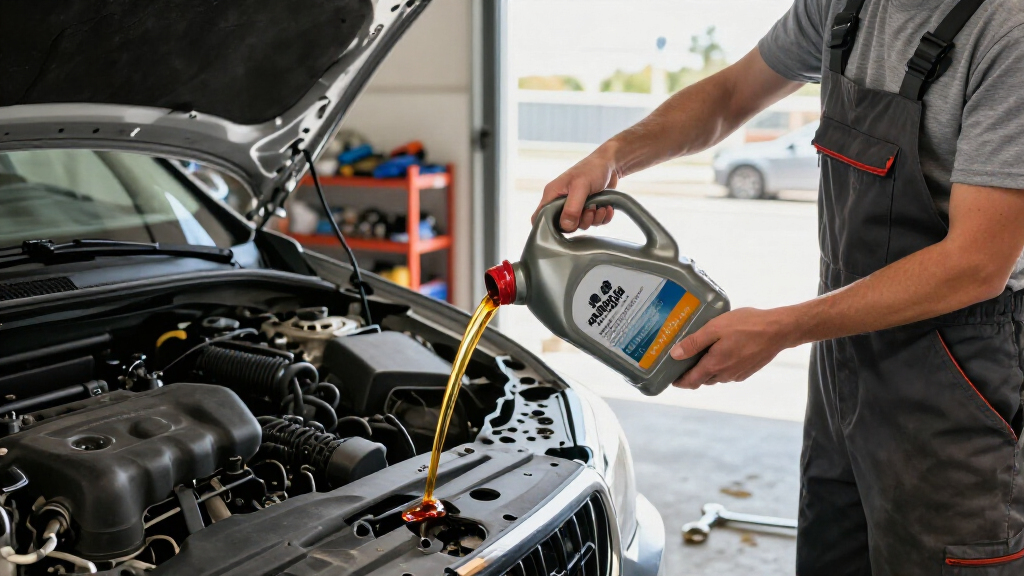
I evaluated these fourteen options based on their adherence to the latest API SP and ILSAC GF-6A standards, which are critical for preventing low-speed pre-ignition in modern turbocharged engines. I prioritized products that demonstrated strong shear stability, meaning the oil maintains its viscosity and protective film under high heat and mechanical stress. Cost per quart was analyzed alongside additive package complexity, ensuring that premium-priced oils actually delivered measurable benefits like enhanced sludge protection or improved cold-flow performance.
The ranking logic also considered specific use cases. Oils were grouped by viscosity grade and intended engine age. For instance, 0W-16 and 0W-20 oils were ranked higher for fuel economy in newer vehicles, while 5W-30 and 10W-30 options were assessed for their ability to handle higher operating temperatures in older or heavier-duty engines. This segmentation ensures that a driver of a 2010 sedan gets different recommendations than a driver of a 2026 hybrid.
| synthetic motor oil | Brand | Oil type |
|---|---|---|
| Castrol EDGE High Mileage 5W-3 | Castrol | Full synthetic motor oil |
| Mobil Full Synthetic High Mile | Mobil | Full synthetic motor oil |
| Castrol GTX Full Synthetic 5W- | Castrol | Full synthetic motor oil |
| Castrol GTX Full Synthetic 0W- | Castrol | Full synthetic motor oil |
| Quaker State Full Synthetic 5W | Quaker State | Full synthetic motor oil |
| Castrol EDGE High Mileage 5W-2 | Castrol | Full synthetic motor oil |
| Valvoline Advanced Full Synthe | Valvoline | Full synthetic motor oil |
| Castrol EDGE High Mileage 0W-2 | Castrol | Advanced full synthetic motor oil |
| Mobil 1 High Mileage Full Synt | Mobil 1 | Full synthetic motor oil |
| Mobil 1 Advanced Fuel Economy | Mobil 1 | Full synthetic motor oil |
| Mobil 1 Advanced Full Syntheti | Mobil 1 | Full synthetic motor oil |
| Castrol EDGE 5W-30 Full Synthe | Castrol | Full synthetic |
| Pennzoil Platinum Full Synthet | Pennzoil | Full synthetic |
| Mobil 1 Advanced Full Syntheti | Mobil 1 | Full synthetic motor oil |
Factors to Consider When Choosing Best Synthetic Motor Oils
Selecting the right oil goes beyond brand recognition. You must match the chemical formulation to your engine’s design and your driving habits.Understanding Viscosity Grades and Cold Starts
The first number in a viscosity rating, such as the 0W in 0W-20, indicates how easily the oil flows at cold temperatures. Lower numbers mean better cold-start protection, which is when most engine wear occurs. Modern engines with tight tolerances rely on these thin oils to reach critical components quickly. If you live in a cold climate, skipping to a thicker oil like 10W-30 can starve your engine of lubrication during startup. Conversely, using a 0W oil in a very hot climate is generally safe if the second number matches your manufacturer’s recommendation.The Importance of API SP and ILSAC GF-6 Standards
Always check the back label for the API SP starburst symbol. This certification guarantees the oil contains additives to prevent low-speed pre-ignition (LSPI), a destructive condition common in direct-injection turbocharged engines. Older API SN or SN Plus oils may lack the specific detergents needed for these modern powerplants. Using an outdated specification in a 2020+ vehicle can void your warranty and lead to catastrophic engine failure. I recommend replacing your oil stock if you are upgrading to a newer car with a turbo.High Mileage Formulations vs. Standard Synthetic
If your odometer reads over 75,000 miles, consider switching to a high-mileage specific formula. These oils, such as Castrol EDGE High Mileage, include seal conditioners that rejuvenate old rubber gaskets and O-rings. This helps reduce oil consumption and minor leaks that develop as engines age. Standard full synthetic oils do not contain these conditioning agents. While they protect against wear, they will not stop a leaking engine. However, if your engine is healthy, high-mileage oils are not strictly necessary and standard synthetics often offer better shear stability.Fuel Economy Benefits of Low-Viscosity Oils
Automakers specify thin oils like 0W-16 or 0W-20 to minimize internal friction. This reduction in drag can improve your miles per gallon by a measurable margin. Mobil 1 Advanced Fuel Economy is engineered specifically for this purpose. However, do not assume thinner is always better. Older engines with worn bearings may require a slightly thicker oil, such as 5W-30, to maintain proper oil pressure. Always consult your owner’s manual before deviating from the factory viscosity recommendation, as ignoring this can lead to increased noise and wear.Additive Packages and Sludge Protection
The difference between a mid-tier and premium synthetic often lies in the additive package. Premium oils use higher concentrations of detergents and dispersants to keep engines clean. These chemicals suspend contaminants so they can be filtered out during an oil change. Over time, cheaper synthetics may allow sludge to build up on engine components, restricting oil flow. If you drive short trips where the engine rarely reaches full operating temperature, sludge is a greater risk. In these cases, investing in a premium additive package like those found in Mobil 1 or Castrol EDGE is worth the extra cost.Frequently Asked Questions
Can I mix different brands of synthetic motor oil?
Yes, you can mix different brands of synthetic motor oil without damaging your engine, provided they meet the same API service rating. All motor oils must pass rigorous industry standards to be certified, ensuring basic compatibility. However, mixing oils dilutes the specific additive packages of each brand, which may reduce the effectiveness of proprietary technologies like seal conditioners or friction modifiers. For the best performance, stick to one brand and grade. If you are caught in a pinch and need to top off, mixing is far better than running low on oil.Is full synthetic oil worth the extra cost over synthetic blend?
Full synthetic oil is generally worth the investment for modern vehicles with turbochargers or direct injection. These engines operate under higher stress and temperatures, requiring the superior thermal stability and shear resistance of full synthetic bases. Synthetic blends, while better than conventional oil, may not provide the same level of protection against low-speed pre-ignition or sludge formation. If you drive an older, naturally aspirated engine with moderate mileage, a synthetic blend might suffice. But for most cars built after 2010, the extended drain intervals and engine cleanliness justify the price difference.How often should I change my synthetic oil?
Manufacturers often recommend intervals between 7,500 and 10,000 miles for full synthetic oils. However, this assumes ideal driving conditions. If you frequently drive in stop-and-go traffic, tow heavy loads, or operate in extreme temperatures, you should shorten the interval to every 5,000 miles. Oil analysis reports show that additives deplete at different rates depending on usage. I recommend checking your oil level monthly and changing it at the shorter interval if you engage in severe driving habits, rather than relying solely on the car’s oil life monitor.What is the difference between 5W-30 and 0W-20 for older cars?
The primary difference is flow rate at cold temperatures and thickness at operating temperature. 0W-20 is thinner and designed for fuel economy in newer engines with tight tolerances. 5W-30 is thicker, providing a more robust oil film that can protect older engines with wider bearing clearances. Putting 0W-20 in an older car designed for 5W-30 can lead to low oil pressure and increased engine noise. Conversely, using 5W-30 in a car designed for 0W-20 may reduce fuel efficiency and strain the variable valve timing system. Always follow the manufacturer’s specification.Do expensive synthetic oils perform better than budget ones?
Expensive oils often contain higher quality base stocks and more advanced additive packages, which can translate to better long-term engine cleanliness and wear protection. However, all oils labeled ‘Full Synthetic’ must meet strict industry performance standards. A budget synthetic that meets API SP standards will still protect your engine far better than conventional oil. The premium you pay for brands like Mobil 1 or Castrol EDGE buys you a margin of safety and potentially longer drain intervals. If you change your oil frequently, a budget synthetic is perfectly adequate. If you plan to extend drain intervals, the premium oil is a safer bet.Conclusion
For most drivers, Mobil 1 Advanced Full Synthetic remains the gold standard for all-around protection and compatibility. It handles the stresses of modern turbocharged engines better than most competitors. If you are on a strict budget but still want full synthetic protection, Quaker State Full Synthetic offers a reliable API SP certified option at a lower cost per quart. For those with high-mileage vehicles experiencing minor leaks or oil consumption, Castrol EDGE High Mileage is the superior choice due to its specialized seal conditioning additives. Newer hybrid and efficient commuter cars will benefit most from Mobil 1 Advanced Fuel Economy 0W-16, which minimizes friction to maximize range. Choose the oil that matches your engine’s age and your local climate, and never ignore the API certification label.