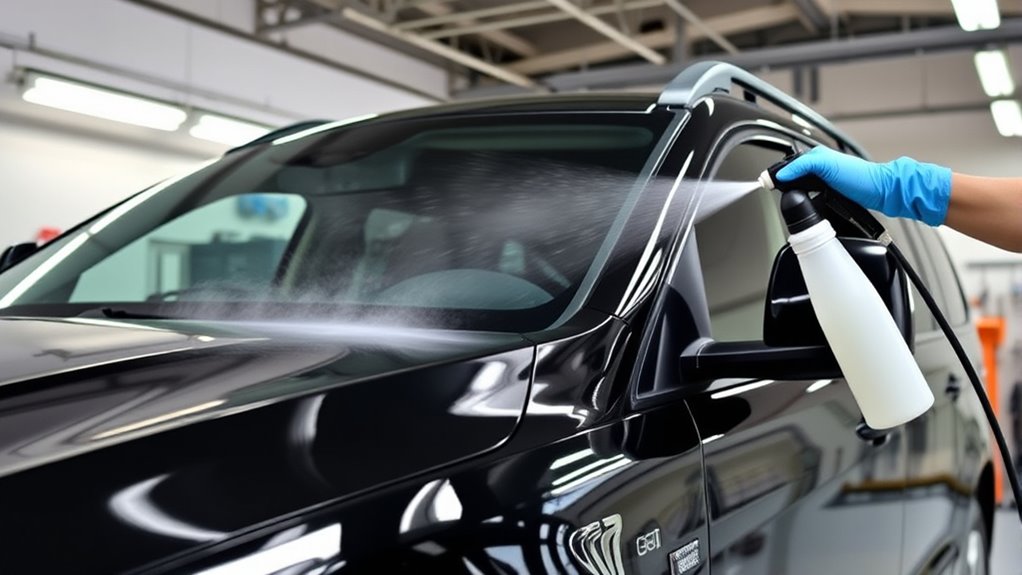

To sanitize vehicles in your shop effectively, focus on disinfecting high-touch surfaces like door handles, steering wheels, gear shifts, touchscreens, and seats with EPA-approved disinfectants. Always sterilize your tools and equipment between vehicles to prevent cross-contamination. Consistently clean and disinfect after each service to keep the environment safe and hygienic for staff and customers. Keep in mind that proper sterilization practices enhance safety—stay with us to learn more about maintaining a fully sanitized shop.

Get business pricing on garage and car supplies
- Business-only prices and quantity discounts
- Tax-exempt purchasing
- Multiple users, one account, clear invoices
Key Takeaways
- Focus on disinfecting high-touch surfaces like door handles, steering wheels, gear shifts, and touchscreens after each vehicle.
- Use EPA-approved disinfectants and follow manufacturer instructions for effective sanitization.
- Sterilize cleaning tools and equipment regularly to prevent cross-contamination between vehicles.
- Incorporate routine cleaning protocols to ensure consistent sanitation of the vehicle interior.
- Prioritize thorough disinfection to enhance safety, build customer trust, and promote a healthy shop environment.
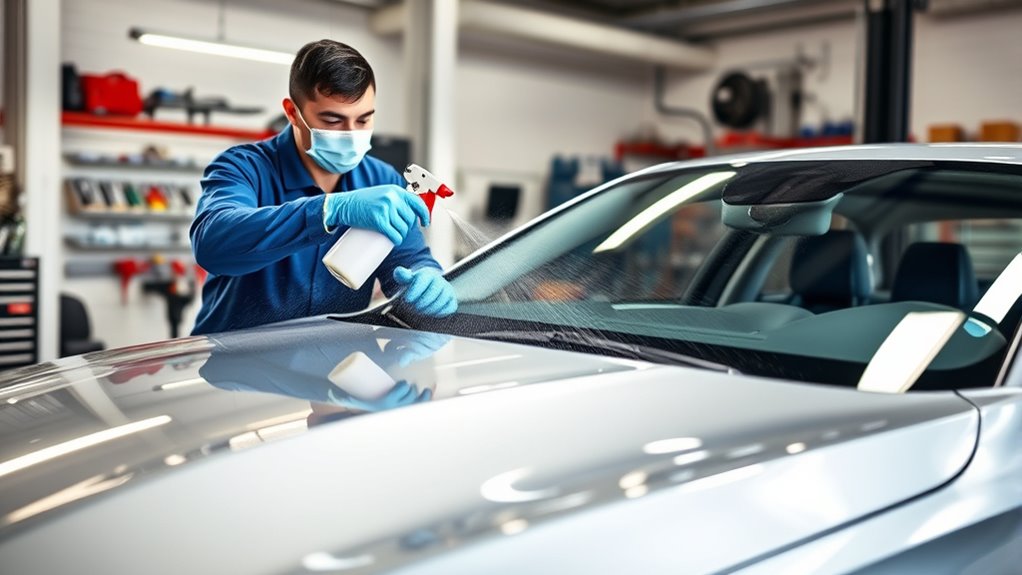
Keeping vehicles sanitized in the shop is vital for maintaining a safe and healthy environment for both staff and customers. When you prioritize interior disinfecting, you’re actively reducing the risk of spreading germs, bacteria, and viruses that can linger on surfaces inside the vehicle. This process involves carefully cleaning and disinfecting door handles, steering wheels, gear shifts, touchscreens, and seats—areas that see frequent contact. By focusing on thorough interior disinfecting, you not only protect your team but also give customers peace of mind, knowing that their vehicle has been carefully sanitized.
Beyond the interior, equipment sterilization plays an essential role in maintaining a hygienic workspace. Every tool, machine, or device used during the cleaning process needs to be properly sterilized between vehicles. This prevents cross-contamination, especially when handling multiple cars in a day. Sterilizing equipment like steam cleaners, microfiber cloths, and spray bottles ensures that no residual germs remain that could compromise the next vehicle’s cleanliness. You should establish routines for equipment sterilization that align with industry standards, making it an integral part of your daily workflow. Regularly disinfecting all tools minimizes the risk of infection and promotes a safer environment for everyone involved.
Incorporating these practices into your routine isn’t complicated, but it does require consistency. When you disinfect the interior surfaces thoroughly and sterilize your equipment after each use, you’re creating a cycle of cleanliness that keeps both your workspace and vehicles safe. Using EPA-approved disinfectants and following manufacturer instructions guarantees effective results without damaging sensitive interior components. Pay close attention to high-touch areas, ensuring no spot gets overlooked. This not only improves sanitation but also extends the lifespan of your cleaning tools and equipment. Remember, the goal is thorough sanitation, which involves both interior disinfecting and equipment sterilization working hand in hand.
Additionally, understanding the importance of vibrational energy can enhance your commitment to maintaining a hygienic environment, as a positive mindset can influence attention to detail and overall diligence in your sanitation practices.
EPA-approved vehicle disinfectant spray
As an affiliate, we earn on qualifying purchases.
As an affiliate, we earn on qualifying purchases.
Frequently Asked Questions
How Often Should Vehicle Sanitizing Be Performed?
You should sanitize vehicles regularly, ideally after each customer or daily, to maintain safety. Follow the recommended sanitizing intervals based on usage and exposure risk. For high-traffic or shared vehicles, increase the frequency recommendations to ensure cleanliness and reduce contamination. Consistent sanitizing not only protects everyone but also builds trust with clients. Adjust your schedule as needed, but always prioritize thorough cleaning to keep vehicles safe and sanitized.
What Cleaning Products Are Safest for Vehicle Interiors?
Oh, sure, just grab whatever’s shiny and hope for the best! But seriously, the safest products are eco-friendly disinfectants and UV sterilization. Eco-friendly disinfectants break down naturally, so they’re gentle on your interior and the planet. UV sterilization uses light to kill germs without chemicals, making it perfect for a thorough, safe clean. Skip harsh chemicals—your vehicle and environment will thank you!
Are There Specific Sanitizing Procedures for Electric Vehicles?
You should follow specific sanitizing procedures for electric vehicles to guarantee safety. Always prioritize battery safety by avoiding excessive moisture near the battery pack and high-voltage components. Disinfect charging stations thoroughly to prevent cross-contamination. Use approved disinfectants that are safe for EV surfaces, and avoid harsh chemicals that could damage sensitive electronics. Properly trained staff should handle these procedures to maintain vehicle integrity and safety during sanitization.
Can Sanitizing Damage Sensitive Vehicle Components?
Yes, sanitizing can cause damage if you’re not careful. You might trigger chemical reactions that weaken or weaken sensitive vehicle components, leading to material degradation. Using harsh chemicals or improper techniques can compromise delicate electronics or plastics. To protect your vehicle, always follow manufacturer guidelines, opt for gentle sanitizers, and avoid excessive moisture. This careful approach helps prevent damage while ensuring your vehicle stays clean and safe.
How Long Does a Typical Vehicle Sanitizing Process Take?
A typical vehicle sanitizing process takes about 30 to 60 minutes. During this time, you’ll use interior disinfectants to thoroughly clean surfaces, ensuring germs are eliminated. It’s important to follow your cleaning schedules to avoid rushing, which can lead to missed spots. Proper ventilation and appropriate disinfectant application are key to a quick, effective process. This way, you can keep your vehicle safe without sacrificing time or thoroughness.
Conclusion
Sanitizing your vehicles in the shop isn’t just about cleanliness; it’s about protecting your customers and your reputation. Some might think it’s time-consuming or unnecessary, but a sanitized vehicle shows you care and builds trust. Don’t cut corners—invest in proper sanitizing methods. When you prioritize cleanliness, you reduce the risk of germs spreading and ensure every customer drives away confident and safe. Make sanitizing a non-negotiable part of your shop’s routine today.
Halloween Picks
halloween
As an affiliate, we earn on qualifying purchases.