
When comparing diesel and gas maintenance, you’ll find that diesel engines require more regular attention to fuel system components, glow plugs, and turbochargers, which can lead to higher upkeep costs over time. Gas engines tend to be simpler, with less frequent and less expensive repairs. Your driving habits matter—diesel suits long-distance, heavy-duty use, while gas might be better for short trips. Explore further to understand how these differences can impact your long-term vehicle costs.

Get business pricing on garage and car supplies
- Business-only prices and quantity discounts
- Tax-exempt purchasing
- Multiple users, one account, clear invoices
Key Takeaways
- Diesel engines require frequent oil changes and maintenance of fuel system components like filters, glow plugs, and injectors.
- Gas engines have simpler designs, focusing mainly on spark plug and ignition system maintenance.
- Diesel maintenance routines are more complex and potentially costlier due to components like turbochargers and injection systems.
- Gas vehicles generally have lower repair costs because of less complex parts and easier access for repairs.
- Proper upkeep of diesel engines extends longevity, while gas engines typically need less intensive maintenance overall.
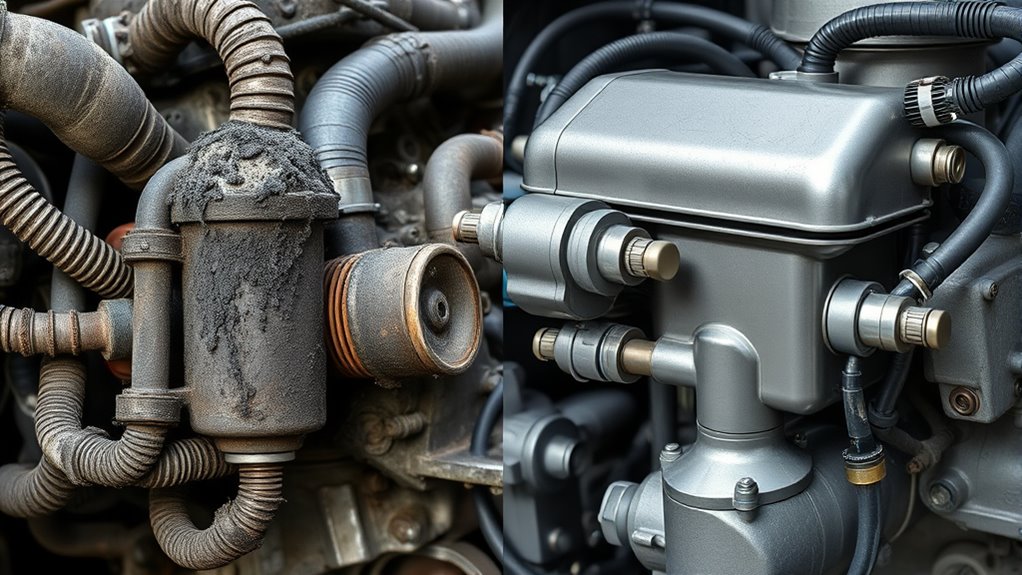
When choosing between diesel and gas vehicles, understanding their maintenance needs is crucial. One of the key aspects to weigh is how each type impacts fuel efficiency and engine durability. Diesel engines are known for their superior fuel efficiency, often providing more miles per gallon than gas engines. This advantage means you’ll spend less on fuel over time, especially if you regularly drive long distances. However, maintaining that fuel efficiency requires paying attention to specific maintenance routines, such as frequent oil changes and ensuring the fuel system stays clean. Neglecting these can lead to decreased efficiency and potential engine problems.
Diesel engines are also celebrated for their engine durability. Built with heavier-duty components, they tend to last longer than their gas counterparts. This durability makes them ideal for heavy-duty applications or for drivers who keep their vehicles for many years. But with that durability comes the need for regular inspections of parts like glow plugs, turbochargers, and injection systems. If these components aren’t properly maintained, you risk costly repairs down the line. Proper maintenance not only preserves engine longevity but also ensures the engine performs at its best, maintaining that advantage of durability over many years.
Diesel engines last longer with regular checks of glow plugs, turbochargers, and injection systems.
On the other hand, gas engines typically involve less complex maintenance routines. They don’t require the same level of attention to fuel system components or turbochargers, which can make upkeep less complicated and less expensive. Gas engines tend to have a simpler design, so repairs are often quicker and cheaper. But while they may be easier to maintain, they usually don’t match the fuel efficiency levels of diesel engines, especially over extended periods and high-mileage driving. This means that, in the long run, gas vehicles might cost more in fuel, though they might save you money on routine maintenance.
Both diesel and gas engines demand routine maintenance to keep them running smoothly. Regular oil changes, filter replacements, and scheduled inspections are essential for both. Diesel engines might need more frequent attention to their fuel and exhaust systems, while gas engines focus more on spark plugs and ignition components. Ultimately, your choice depends on your driving habits and priorities. If you value fuel efficiency and long-term engine durability, a diesel might be the better choice, provided you’re willing to invest in its specific maintenance needs. Conversely, if you prefer a simpler, less costly maintenance routine and shorter-term savings, a gas vehicle could suit you better. Either way, understanding these maintenance differences helps you make a more informed decision and keeps your vehicle running smoothly for years to come.
diesel engine glow plug replacement kit
As an affiliate, we earn on qualifying purchases.
As an affiliate, we earn on qualifying purchases.
Frequently Asked Questions
How Often Should Diesel Engine Glow Plugs Be Replaced?
You should replace your diesel engine’s glow plugs roughly every 100,000 miles, but this depends on their glow plug lifespan. If you notice hard starting, rough idling, or increased smoke, it’s a sign they may need replacement sooner. Regular maintenance checks can help you spot issues early. Typically, following the manufacturer’s recommended replacement frequency guarantees your glow plugs stay effective, preventing starting problems and maintaining engine performance.
Do Diesel Engines Require Different Oil Change Intervals?
Think of your engine as a beating heart that needs proper care. Diesel engines often require longer oil change intervals, usually every 5,000 to 10,000 miles, because their engine lubrication system handles higher pressures and temperatures. Regular oil changes keep the engine humming smoothly, preventing wear and tear. Stick to your manufacturer’s recommendations, monitor oil quality, and you’ll keep your diesel engine running strong like a well-tuned symphony.
Are Diesel Fuel Filters More Expensive Than Gas Filters?
Yes, diesel fuel filters are generally more expensive than gas filters due to their larger size and specialized design. You’ll find that diesel filter pricing is higher because they need to handle more contaminants and withstand higher pressures. When considering fuel filter costs, keep in mind that maintaining a diesel engine can lead to higher part expenses, but the durability and efficiency benefits often outweigh the initial investment.
How Does Maintenance Differ for Diesel Turbochargers?
You need to perform regular turbocharger inspection to guarantee peak performance, especially in diesel engines. Maintenance involves checking for signs of wear, cleaning or replacing the turbo’s components, and monitoring boost pressure. Additionally, fuel system maintenance is vital, as diesel turbochargers rely heavily on clean fuel and proper filtration. These steps help prevent damage, improve efficiency, and extend the turbocharger’s lifespan, keeping your engine running smoothly.
What Are Signs of Diesel Particulate Filter (DPF) Problems?
You might notice increased exhaust smoke, a noticeable decrease in fuel efficiency, or a warning light indicating DPF sensor issues. If your DPF isn’t cleaned regularly, it can cause clogging, leading to poor engine performance or even DPF failure. Pay attention to unusual engine behavior and have your DPF checked for sensor issues, ensuring timely DPF cleaning to prevent costly repairs and keep your vehicle running smoothly.
Conclusion
When choosing between diesel and gas, remember that diesel engines typically require more maintenance but last longer, with studies showing they can reach over 500,000 miles. Gas engines are cheaper to service upfront but may need repairs sooner. So, if you’re planning for longevity, diesel might be your best bet. Keep in mind, your maintenance choices can considerably impact your vehicle’s lifespan and overall costs, making it essential to weigh these differences carefully.
Fall Picks
fall essentials
As an affiliate, we earn on qualifying purchases.