
A drivability technician specializes in diagnosing and repairing complex engine and system issues that affect your vehicle’s performance and smooth operation. They use advanced diagnostic tools to identify problems with fuel injection, ignition, sensors, and air intake. Their work helps keep your vehicle reliable, running efficiently, and performing at its best. If you want to understand how they quickly find and fix these issues, you’ll discover more about their skills and techniques.

Get business pricing on garage and car supplies
- Business-only prices and quantity discounts
- Tax-exempt purchasing
- Multiple users, one account, clear invoices
Key Takeaways
- A drivability technician diagnoses and repairs vehicle issues affecting engine performance and smooth operation.
- They use diagnostic tools to identify problems like misfires, stalls, or power loss.
- They analyze systems such as fuel injection, ignition, and air intake for optimal performance.
- Their work ensures reliable vehicle operation through precise troubleshooting and repairs.
- They help maintain vehicle longevity and driver confidence by restoring drivability.
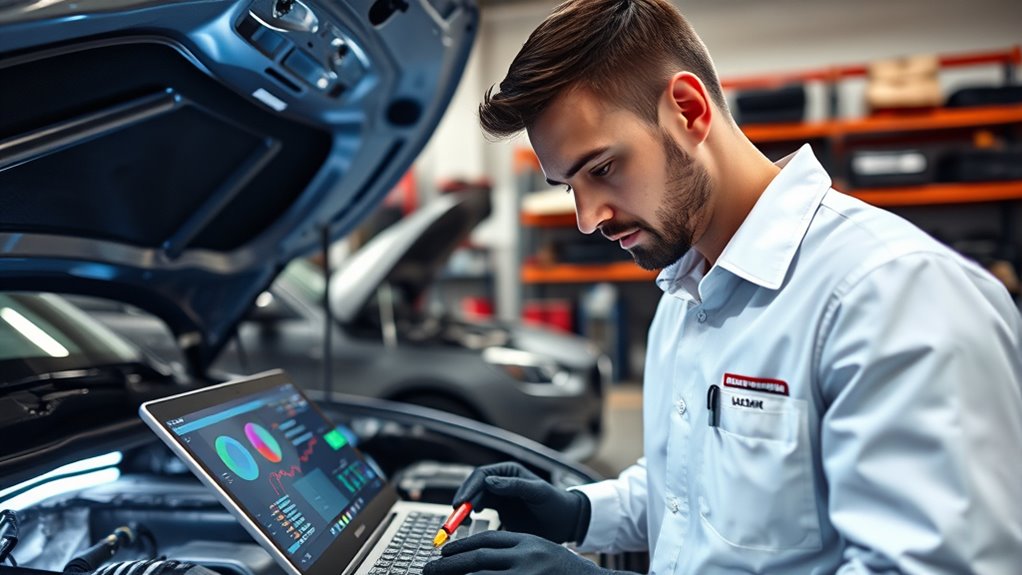
Ever wonder what it takes to keep your vehicle running smoothly and reliably? A drivability technician is the expert who ensures your car’s engine performance stays excellent, diagnosing and fixing issues that affect how your vehicle drives. These specialists are highly skilled in using diagnostic tools to identify problems that may not be obvious to the average driver. When your car hesitates, stalls, or struggles to accelerate, a drivability technician steps in to uncover the root cause and restore your vehicle’s smooth operation.
One of the key tools a drivability technician relies on is advanced diagnostic equipment. These diagnostic tools connect to your vehicle’s onboard computer system, allowing the technician to read error codes and monitor real-time engine data. With this technology, they can quickly pinpoint issues such as faulty sensors, ignition problems, or fuel delivery concerns that impact engine performance. This process saves you time and money, as it eliminates guesswork and helps target repairs precisely where they’re needed.
Beyond just reading codes, drivability technicians analyze various systems that influence your car’s performance. They examine components like the fuel injection system, ignition timing, and air intake to ensure everything operates in harmony. If your engine is misfiring, idling roughly, or experiencing power loss, the technician will use these diagnostic tools to trace the problem back to its source. They also evaluate the condition of spark plugs, oxygen sensors, and other essential parts, determining whether replacements or adjustments are necessary.
A drivability technician’s job isn’t solely about fixing problems; it’s about understanding how your vehicle’s systems work together to provide a seamless driving experience. They use their expertise to interpret diagnostic data and make informed decisions. When a car’s engine performance is compromised, the technician will use these diagnostic tools to trace the problem back to its source. Their troubleshooting process often involves complex analysis of multiple systems, which relies heavily on diagnostic tools to ensure accuracy. Their goal is to resolve the problem efficiently, restoring your vehicle’s reliability and ensuring it runs as it should.
In essence, a drivability technician is your partner in maintaining excellent engine performance. They combine their knowledge with cutting-edge diagnostic tools to diagnose complex issues quickly and accurately. Whether your car is exhibiting signs of trouble or simply needs a tune-up to keep running smoothly, these technicians have the skills and equipment to get your vehicle back on track. Their work makes a real difference in your driving experience, providing peace of mind that your vehicle is in capable hands and ready to serve you reliably mile after mile.
OBD2 diagnostic scanner for cars
As an affiliate, we earn on qualifying purchases.
As an affiliate, we earn on qualifying purchases.
Frequently Asked Questions
What Certifications Should a Drivability Technician Have?
You should have certifications like ASE’s L1 Master Technician, which covers advanced diagnostic tools, and certifications focusing on emission standards, such as EPA certifications. These credentials guarantee you’re knowledgeable about diagnosing drivability issues efficiently and maintaining compliance with emission regulations. Staying current with manufacturer-specific training and industry standards helps you effectively troubleshoot problems and keep vehicles running smoothly, meeting both customer expectations and legal requirements.
How Long Does a Typical Drivability Diagnosis Take?
A typical drivability diagnosis usually takes between 1 to 3 hours, depending on the complexity of the issue. You’ll use advanced diagnostic tools to scan for trouble codes and analyze sensor data, guiding your repair procedures. As you systematically test components and interpret data, you can efficiently identify problems, ensuring timely repairs. Your skill with diagnostic tools and knowledge of repair procedures help minimize the diagnosis time and get the vehicle back on the road quickly.
What Common Symptoms Indicate Drivability Issues?
You might notice symptoms like rough idling, stalling, poor acceleration, or decreased fuel efficiency. These issues often point to drivability problems that require sensor troubleshooting and fuel system diagnostics. You may experience hesitation during acceleration or difficulty starting your vehicle. Addressing these symptoms promptly helps identify underlying sensor or fuel system faults, ensuring your vehicle runs smoothly and efficiently. Regular diagnostics prevent further damage and maintain peak performance.
Are Drivability Repairs Usually Covered by Warranty?
Drivability repairs are often covered by warranty coverage, especially if the problem is due to manufacturing defects or covered components. You typically won’t have to pay for repair costs if your vehicle is still under warranty, but it’s important to check the specific terms. Keep in mind that some issues caused by neglect or accidents might not be covered, so review your warranty details carefully.
How Can I Prevent Future Drivability Problems?
Think of your car like a healthy body—you keep it active and check on it regularly. To prevent future drivability problems, you should maintain your fuel system by using quality fuel and getting regular tune-ups. Pay attention to ignition timing to ensure smooth running. Regularly inspecting and servicing these components helps avoid issues, much like a doctor’s checkup keeps you healthy, guaranteeing your vehicle runs reliably and efficiently.
Conclusion
So, next time you notice uneven acceleration or strange engine noises, remember a drivability technician is the one who can pinpoint the issue. It’s funny how a small hiccup in your car’s performance can turn into a bigger problem if ignored. Just like finding the perfect parking spot after a long day, spotting and fixing these issues early keeps your ride smooth. Trust a skilled technician—you’ll be glad you did when everything just clicks back into place.
Halloween Picks
halloween
As an affiliate, we earn on qualifying purchases.