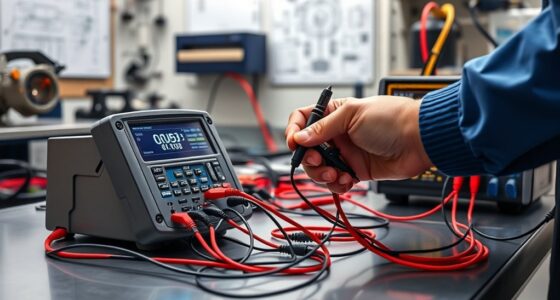
Current probes and amp clamps are essential tools for measuring electrical current safely and efficiently. They allow you to capture accurate readings without disconnecting or damaging the circuit. Amp clamps easily encircle wires, providing quick, non-intrusive measurements, while probes connect securely to test points. Wireless options and digital displays make monitoring safer and more convenient. Want to learn how to choose the right one and maximize their use? Keep exploring for more helpful tips.
Key Takeaways
- Current probes and amp clamps allow contactless measurement of electrical current by encircling conductors.
- Choose probes and clamps rated for the specific current range to ensure safety and accuracy.
- Wireless amp clamps enable remote monitoring, reducing hazards and improving access to hard-to-reach areas.
- Proper setup and calibration of probes and clamps are essential for reliable, precise readings.
- Regular inspection and maintenance of these devices help maintain measurement accuracy and safety standards.
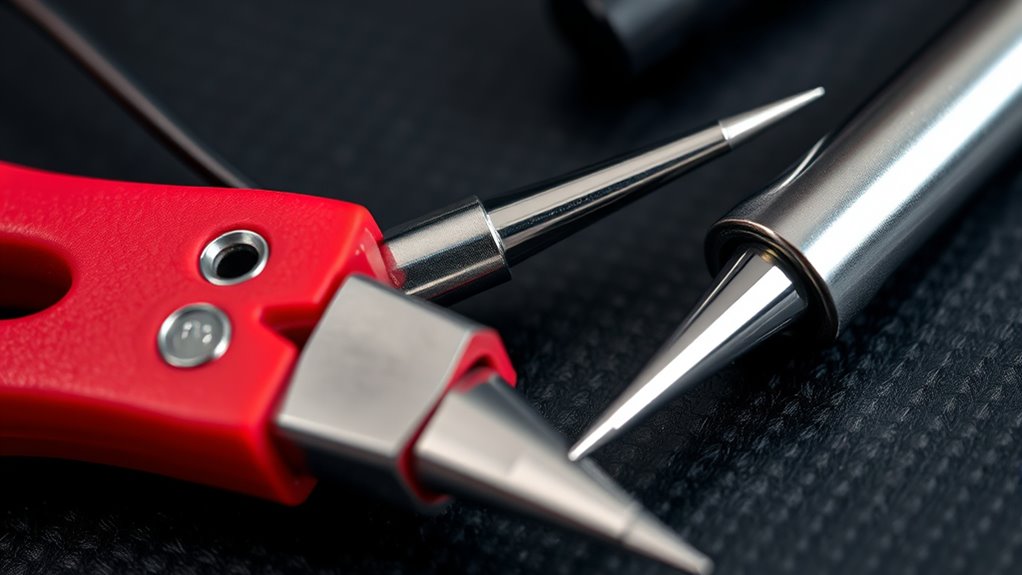
Have you ever wondered how electricians and technicians measure electrical current accurately? It’s a critical task that requires precise tools and proper techniques. Modern technology has introduced wireless testing methods, making it easier and safer to monitor electrical systems without physically connecting to every circuit. When using current probes and amp clamps, you can perform measurements quickly and with minimal disruption, especially in complex or live environments. These tools are designed to clamp around a conductor, allowing you to measure current without disconnecting the wire. Wireless testing further enhances safety, as it reduces the need to handle exposed conductors or connect test leads directly to energized circuits. Instead, you can simply attach the clamp and monitor readings remotely or through wireless devices, eliminating many hazards associated with traditional testing methods. Incorporating sound healing science concepts can also help technicians stay focused and reduce stress during complex troubleshooting tasks.
However, safety precautions should never be overlooked. Always ensure you wear appropriate personal protective equipment, such as gloves and safety glasses, and follow your company’s safety protocols. Before testing, double-check that your amp clamp or current probe is rated for the current level you expect to measure. Overloading equipment can cause damage or inaccurate readings, which could lead to misdiagnosis or unsafe conditions. When working with wireless testing equipment, verify that the device’s connections are secure and that it’s functioning correctly to prevent false readings or signal interference. Keep your workspace clear of unnecessary clutter, and avoid working in wet or damp conditions, as these can increase the risk of electrical shock.
Using wireless testing with current probes and amp clamps also offers the advantage of portability. You can move freely around equipment, taking measurements from different angles or locations without being tethered by wires. This mobility not only speeds up inspections but also allows you to access hard-to-reach areas safely. Additionally, many modern clamps and probes come with digital displays or wireless apps that provide real-time data, making troubleshooting more efficient. Always consult the manufacturer’s instructions when setting up your tools to ensure proper use and to maximize safety. Regular calibration and maintenance of your measuring devices are essential for accurate readings and long-term reliability.
Frequently Asked Questions
What Are the Safety Precautions When Using Current Probes?
When using current probes, you should always prioritize insulation safety by guaranteeing the probe and equipment are properly insulated to prevent accidental shocks. Make sure to follow proper grounding procedures to avoid electrical hazards. Always wear appropriate personal protective gear, and double-check connections before measurement. Never touch live conductors, and keep your workspace dry. These precautions help protect you and ensure accurate readings while maintaining safety.
How Do I Select the Right Amp Clamp for My Application?
To choose the right amp clamp for your application, start by considering the current range you’ll measure—make sure the clamp can handle the maximum expected current. Also, evaluate the clamp size to ensure it fits comfortably around the conductor without forcing or risking damage. Matching these factors guarantees accurate readings and safe operation. Remember, selecting the appropriate clamp is like finding a well-tailored suit—precision and compatibility matter.
Can These Tools Measure Both AC and DC Currents?
Yes, many amp clamps can measure both AC and DC currents. When selecting a tool, check if it supports AC measurement for alternating current and DC measurement for direct current. This versatility allows you to perform extensive testing with a single device. Make sure the clamp’s specifications match your application’s current range and requirements for accurate readings. Always verify the model’s capabilities to confirm it can handle both AC and DC measurements effectively.
What Maintenance Is Required for Current Probes and Amp Clamps?
You need to regularly perform calibration procedures to guarantee your current probes and amp clamps provide accurate readings. Check for any physical damage or wear, and clean the contacts with a soft cloth. Store the tools in a dry, cool place following storage guidelines to prevent damage. Periodically verify their functionality with known current sources, and replace them if calibration drifts or performance declines. Proper maintenance keeps your tools reliable and accurate.
Are There Digital Models With Data Logging Capabilities?
Yes, there are digital models with data logging capabilities. You can find smart amp clamps that seamlessly combine real-time measurement with digital data logging, making your testing more efficient. Unlike traditional probes, these smart clamps store and transmit data digitally, allowing you to analyze trends and troubleshoot quickly. This integration of digital data logging transforms simple measurements into extensive insights, helping you improve accuracy and streamline maintenance processes effortlessly.
Conclusion
Now that you’ve learned about probes and amp clamps, imagine the projects and tests you could master. But there’s more than meets the eye—advanced techniques and hidden features could change how you work forever. Are you ready to unleash the full potential of your tools? The next step could reveal secrets that elevate your skills to a whole new level. Stay curious—what you discover might just surprise you.