
Battery corrosion can cause damage to your vehicle’s wiring and bodywork, leading to costly repairs if ignored. Corrosion forms when the metal terminals react with environmental chemicals, leaks from the electrolyte accelerate this process, and exposure to moisture or salt worsens the damage. You can prevent this by inspecting and cleaning terminals regularly, applying protective coatings, and ensuring tight connections. Keep an eye on signs of corrosion—if you want to learn more about protecting your vehicle, continue exploring then.
Key Takeaways
- Corrosion from electrolyte leaks can cause damage to the vehicle’s bodywork and surrounding components.
- Environmental factors like humidity and salt accelerate battery corrosion, increasing risk of body damage.
- White or bluish deposits on terminals indicate corrosion, which can lead to electrical failures and surface deterioration.
- Regular maintenance, including cleaning and applying protective coatings, prevents electrolyte leakage and body corrosion.
- Securing the battery properly and inspecting for cracks helps minimize vibrations and physical damage that worsen corrosion.
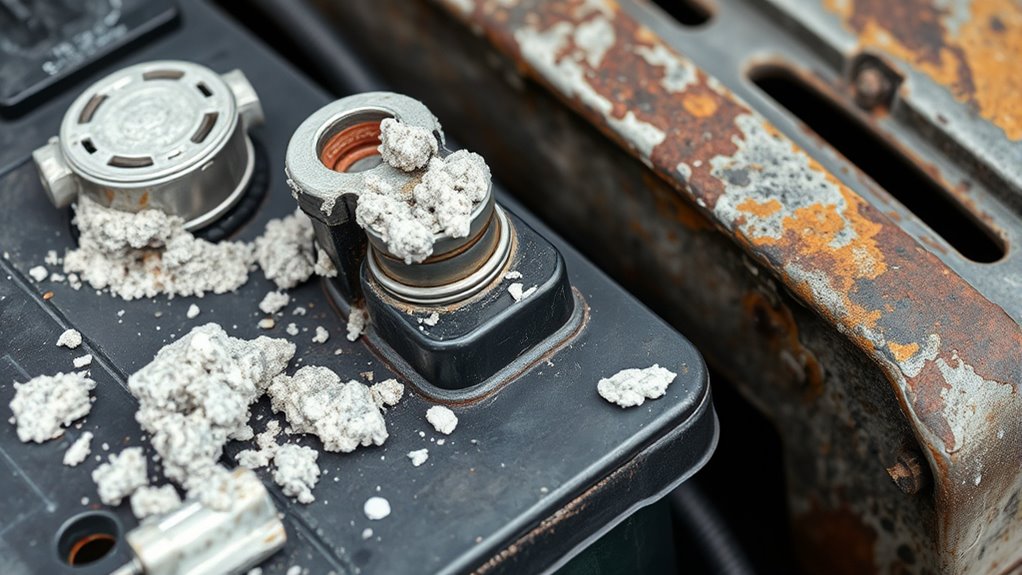
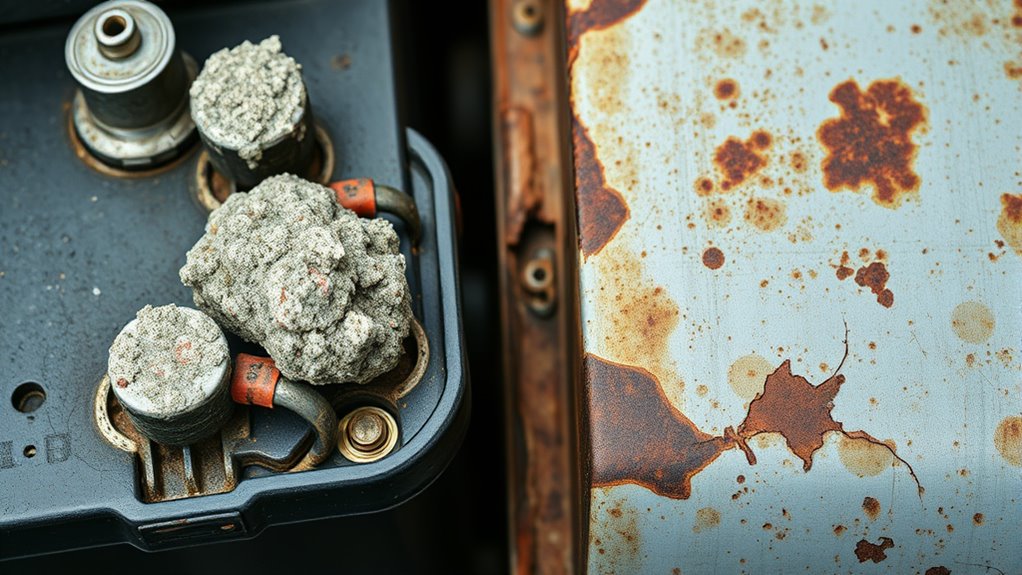
Battery corrosion occurs when the metal terminals of your battery react with chemicals in the environment, forming a white or bluish powder that can disrupt electrical flow. This corrosion is often caused by electrolyte leakage, which happens when the liquid inside the battery escapes and comes into contact with the terminals. When electrolyte leaks, it can accelerate corrosion, causing the buildup of corrosive deposits that hinder your battery’s performance. Recognizing early signs of electrolyte leakage and corrosion is essential to prevent further damage to your vehicle’s electrical system and avoid costly repairs.
Corrosion prevention starts with routine maintenance. Regularly inspecting your battery terminals for signs of white or bluish deposits can help you catch corrosion early. Cleaning the terminals with a mixture of baking soda and water removes corrosion and neutralizes any acid residue. After cleaning, it’s a good idea to apply a protective coating or terminal grease, which acts as a barrier against moisture and chemicals in the environment. This layer helps prevent electrolyte leakage from reaching the terminals, reducing the risk of corrosion over time.
Routine checkups and cleaning prevent battery corrosion and extend its lifespan.
Using terminal protectors or covers can also serve as an effective corrosion prevention method. These covers shield the terminals from exposure to moisture, dirt, and other contaminants that can cause electrolyte leakage. Additionally, ensuring your battery is securely mounted prevents vibrations and movement that may lead to cracks or damage, which could result in electrolyte leakage. Properly tightening the terminal connections also minimizes the chance of loose fittings that can cause arcing, corrosion, or electrolyte escape.
Environmental factors considerably influence corrosion development. High humidity, salt exposure, and extreme temperatures speed up chemical reactions at the terminals. If you live in a coastal or cold climate, taking extra steps to protect your battery is wise. Applying a corrosion-inhibiting spray or protective coating designed for batteries can help create a barrier against environmental elements. Regularly checking your battery’s condition, especially after periods of heavy rain or snow, can prevent electrolyte leakage and corrosion from becoming severe. Furthermore, consulting with professionals who have architectural expertise can ensure that your vehicle’s electrical components are maintained properly, preventing further damage.
Ultimately, consistent maintenance and proactive measures are your best defense against battery corrosion and body damage. Keeping the terminals clean, dry, and protected reduces the chances of electrolyte leakage, which is the primary culprit behind corrosion. By taking these preventive steps, you ensure your battery stays in good condition, prolonging its life and maintaining your vehicle’s electrical reliability. Remember, catching corrosion early not only preserves your battery but also prevents potential damage to surrounding components and bodywork caused by corrosive deposits or leaks.
Frequently Asked Questions
How Can I Prevent Battery Corrosion in the First Place?
To prevent battery corrosion, you should regularly perform battery maintenance by inspecting and cleaning terminals with a mixture of baking soda and water. Apply terminal protectant or petroleum jelly after cleaning to block moisture and prevent corrosion. Keep your battery tightly secured and guarantee proper connections. Also, avoid leaving your vehicle unused for long periods. Consistent corrosion prevention methods like these help prolong your battery’s lifespan and maintain ideal performance.
Are There Specific Signs Indicating Body Damage From Corrosion?
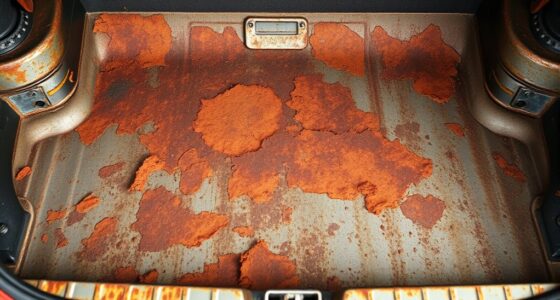
You’ll notice signs like paint bubbling and rust spots when corrosion damages your vehicle’s body. These telltale troubles tend to turn up on the panels around the battery, especially if corrosion is persistent. Keep an eye out for peeling paint or pitting, as these problems point to potential body damage. Promptly inspecting and addressing these signs can prevent further deterioration and keep your car looking its best.
Can Corrosion Affect My Vehicle’s Electrical System?
Yes, corrosion can affect your vehicle’s electrical system by causing poor connections and electrical failures. To prevent this, you should practice good battery maintenance and corrosion prevention. Regularly check your battery terminals for corrosion buildup, clean them with a wire brush, and apply a protective coating. Taking these steps helps guarantee your electrical system functions properly and avoids costly repairs caused by corrosion-related issues.
What Are the Long-Term Effects of Untreated Battery Corrosion?
Did you know that untreated battery corrosion can reduce your vehicle’s battery life by up to 50%? If you ignore corrosion mitigation and neglect proper battery maintenance, corrosion can lead to electrical failures, starting problems, and even engine stalling over time. To prevent these long-term effects, regularly clean your battery terminals, check for corrosion, and address any issues promptly. Consistent maintenance keeps your car running smoothly and extends its lifespan.
Is Professional Inspection Necessary for Corrosion-Related Body Damage?
Yes, a professional inspection is essential for corrosion-related body damage. The inspection importance lies in accurately evaluating the extent of corrosion and identifying hidden issues that could worsen over time. You should get a thorough corrosion assessment to ensure your vehicle’s structural integrity and safety. Ignoring this step might lead to unnoticed damage, risking costly repairs later. Regular inspections help maintain your vehicle’s longevity and safe operation.
Conclusion
To keep your car in top shape, don’t ignore battery corrosion or body damage. Regular checks and prompt repairs are your best bet to prevent small issues from turning into big headaches. Think of it as fixing a leaky faucet before the whole sink floods—you’ll save time, money, and hassle in the long run. Stay proactive, and your vehicle will run smoothly, keeping you on the road without a hitch.