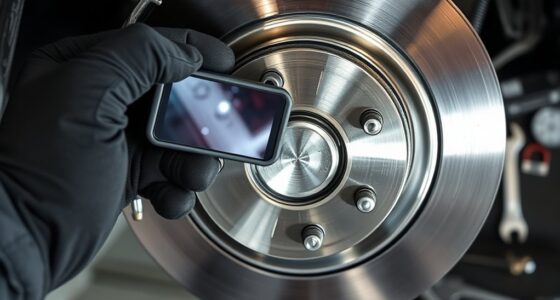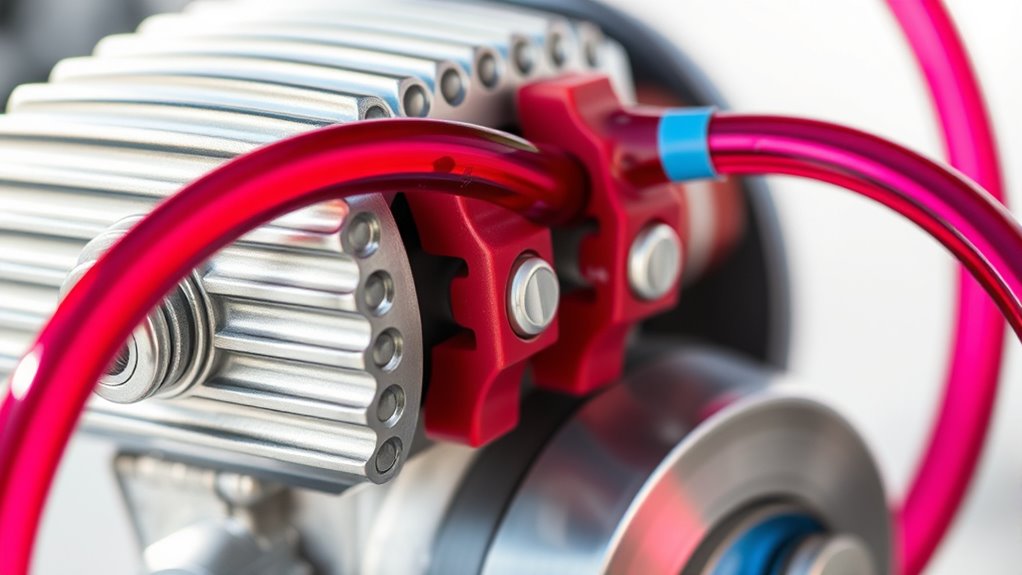

Hydraulics in brake systems work by transmitting force from your foot to the brake pads through pressurized hydraulic fluid. This system relies on the fluid to efficiently transfer pressure, allowing you to stop or slow down smoothly. Regularly checking fluid levels, inspecting hoses for leaks, and replacing old fluid help keep your brakes reliable. To understand more about how these components work together to keep you safe, keep exploring further details.
Key Takeaways
- Hydraulics transmit force from the brake pedal to brake pads via pressurized fluid.
- Proper maintenance of hydraulic fluid ensures effective pressure transfer and system reliability.
- Regular inspection for leaks, air bubbles, and fluid contamination prevents brake system failure.
- Signs of hydraulic issues include spongy pedals, increased effort, and fluid leaks.
- Using correct hydraulic fluid and inspecting system components prolong brake system lifespan.
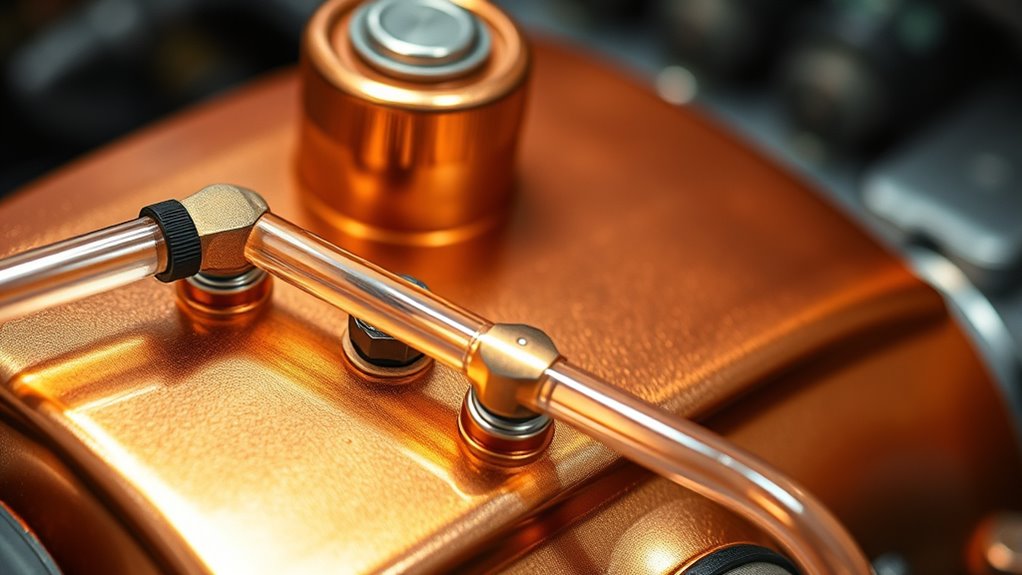
Hydraulics play a essential role in brake systems by transmitting force efficiently from the driver’s pedal to the brake pads. When you press down on the brake pedal, you’re applying pressure to a confined hydraulic fluid within the system. This fluid transfers your force through a series of interconnected components, ultimately causing the brake pads to clamp onto the rotors and slow your vehicle. To keep this process smooth and reliable, hydraulic fluid maintenance is indispensable. Over time, the fluid can become contaminated or lose its effectiveness due to age, heat, and moisture absorption. Regularly checking your brake fluid levels and replacing the fluid as recommended guarantees ideal performance. Fresh hydraulic fluid maintains the right viscosity, allowing for consistent pressure transmission and reducing the risk of brake fade or failure.
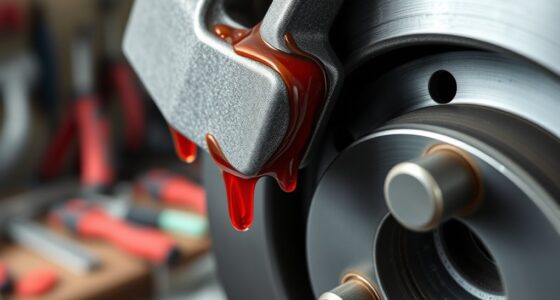
Proper hydraulic fluid maintenance also involves inspecting for leaks and ensuring the fluid is free from debris or air bubbles. Air in the system compresses under pressure, reducing braking responsiveness, so bleeding the brakes to remove trapped air can solve this issue. If you notice spongy brakes or a soft pedal feel, it might be a sign of low or contaminated hydraulic fluid, and troubleshooting the brake system promptly becomes necessary. Brake system troubleshooting often starts with checking the fluid level and condition. If the fluid is dark or gritty, it’s time for a flush. Leaks around the master cylinder, brake lines, or calipers can also cause pressure loss, so inspecting these components is essential. A visual check for cracked or worn hoses and fittings can prevent further damage or failure. Additionally, using appropriate hydraulic fluid ensures optimal system performance and longevity.
Understanding how hydraulic systems operate helps you identify problems early and take appropriate action. For example, if your brakes feel unresponsive or require more pedal effort, the issue might stem from air in the system or degraded fluid. Troubleshooting involves a systematic approach: checking fluid levels, inspecting for leaks, and testing the brake pedal’s response. Sometimes, the problem can be as simple as needing a brake fluid flush, but more complex issues like faulty master cylinders or damaged calipers may require professional attention. Maintaining clean, high-quality hydraulic fluid and staying vigilant for signs of trouble guarantees your brake system remains effective and safe. By routinely performing hydraulic fluid maintenance and troubleshooting the brake system when needed, you keep your vehicle responsive and avoid costly repairs down the line.
Frequently Asked Questions
How Often Should Brake Hydraulic Fluid Be Replaced?
You should replace your brake hydraulic fluid every 2 to 3 years to maintain ideal brake fluid maintenance. Over time, hydraulic fluid lifespan decreases due to contamination and moisture absorption, which can affect braking performance. Regularly checking the brake fluid level and condition helps guarantee safe operation. Don’t wait for signs of brake issues—changing the hydraulic fluid proactively keeps your braking system functioning smoothly and prevents costly repairs.
What Are Common Signs of Hydraulic Brake System Failure?
You’ll notice signs of hydraulic brake system failure if your brake pedal feels soft or spongy, or if it sinks too low under pressure. Brake fluid leaks are common indicators, often visible near the wheels or under the vehicle, and can lead to reduced braking performance. Pay attention to any unusual noises or a warning light on your dashboard, as these also signal potential hydraulic issues needing prompt attention.
Can Hydraulic Brake Systems Be Repaired or Only Replaced?
About 90% of hydraulic brake system issues can be repaired rather than replaced. When you notice hydraulic fluid leaks or a spongy brake pedal, it’s often a sign you need a repair. Skilled technicians can fix leaks, replace worn components, and recalibrate your brake system for safety. Only in severe cases, like extensive damage or corrosion, do you need a full replacement. Regular maintenance keeps your system reliable.
How Does Temperature Affect Hydraulic Brake Performance?
Temperature considerably impacts hydraulic brake performance by causing thermal expansion, which can lead to increased fluid pressure and potential leaks. As temperatures rise, the brake fluid’s viscosity decreases, making it less effective at transmitting force. Conversely, cold temperatures increase viscosity, reducing responsiveness. You should regularly check and replace brake fluid to maintain ideal performance, especially in extreme weather, ensuring the system functions reliably regardless of temperature changes.
Are There Eco-Friendly Hydraulic Fluids Available?
You’ll be pleased to know there are eco-friendly hydraulic fluids available today. Coincidentally, biodegradable fluids and non-toxic alternatives are gaining popularity, helping reduce environmental impact. These fluids perform effectively, offering a sustainable choice without sacrificing safety or reliability. By choosing such options, you contribute to environmental preservation while maintaining ideal brake system performance. It’s a smart move toward greener technology that fits seamlessly into modern, eco-conscious transportation solutions.
Conclusion
Now that you understand how hydraulics work in brake systems, you can appreciate their essential role in safety. Imagine you’re driving and suddenly need to stop quickly; thanks to hydraulic pressure, your brakes respond instantly. For example, in a crash test, a car’s hydraulic brake system prevented a collision by stopping precisely when needed. So, next time you press the brake pedal, remember the powerful hydraulic system working tirelessly to keep you safe.