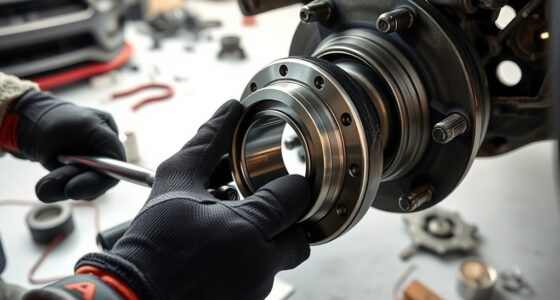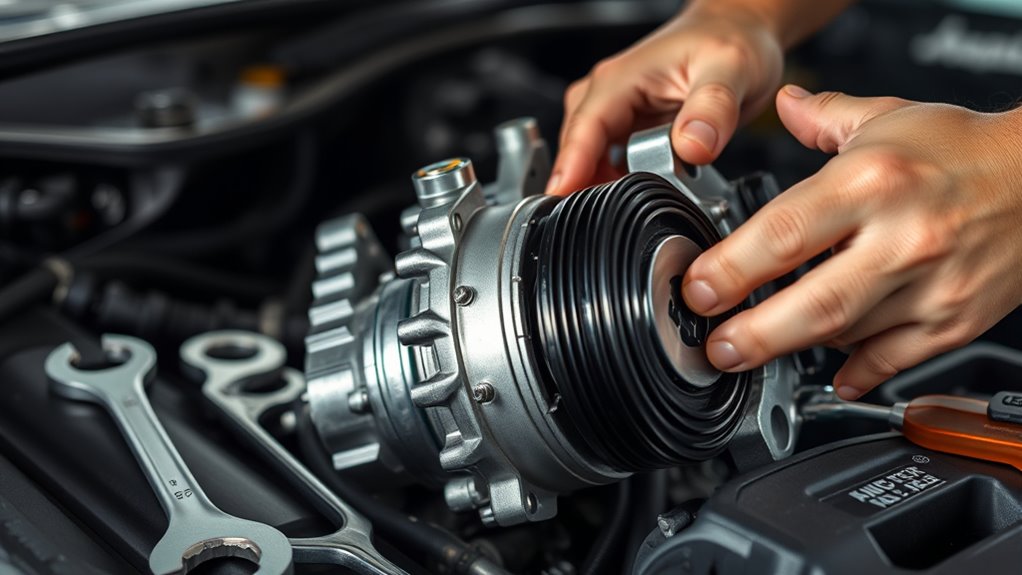

When your AC compressor fails, replacing it involves handling refrigerant, electrical connections, and ensuring compatibility with your system. The process typically requires a licensed technician to evacuate refrigerant, remove the faulty compressor, and install a matching new one. Proper replacement restores cooling and improves system efficiency, but timing and refrigerant type matter. If you want to understand the steps and considerations involved, you’ll find detailed insights that can help you plan your repair effectively.
Key Takeaways
- An AC compressor is vital for refrigerant compression, enabling effective cooling; failure causes warm air and system inefficiency.
- Proper refrigerant type, such as R-22 or R-410A, is crucial for compatibility and system performance during replacement.
- Replacement involves refrigerant evacuation, electrical disconnection, compressor installation, and system recharging, best done by licensed technicians.
- Cost and timing depend on system age, compressor condition, and overall component wear, with older systems often benefiting from upgrades.
- Regular maintenance and early repair extend compressor lifespan, ensuring efficient cooling and preventing costly system failures.

If your air conditioner isn’t cooling properly, a failing compressor might be to blame. The compressor plays a vital role in the cooling cycle, compressing refrigerant and circulating it through the system. When it starts to fail, you might notice warm air, strange noises, or increased energy bills. Understanding the basics of AC compressor replacement can help you decide if it’s time to call in a professional. One key factor to evaluate is the type of refrigerant your system uses, such as R-22 or R-410A. Different refrigerant types require specific compressor models, and using the wrong one can cause inefficiencies or damage. If your system uses R-22, which is being phased out, finding compatible replacement parts might be more challenging and costly. On the other hand, newer systems with R-410A refrigerant tend to have longer-lasting compressors, often with a lifespan of around 10 to 15 years, depending on usage and maintenance. Regular servicing can extend this lifespan, but eventually, even the best-maintained compressor will need replacement. Additionally, the compressor’s effectiveness depends on proper exfoliation of the system, which can be compromised if other components are neglected. When it’s time to replace the compressor, it’s important to understand that it’s a complex task that involves handling refrigerants, electrical components, and the system’s internal parts. If you’re not experienced, it’s best to hire a licensed HVAC technician. They will assess whether the compressor is truly at fault, often by performing pressure tests and inspecting for leaks or damage. Replacing the compressor involves evacuating the refrigerant safely, removing the faulty compressor, and installing a new one that matches the system’s specifications. After installation, the technician will recharge the system with the correct refrigerant type, ensuring peak performance and efficiency. Keep in mind that using the wrong refrigerant or installing an incompatible compressor can lead to system failure or reduced lifespan. The decision to replace the compressor isn’t just about fixing immediate cooling issues; it’s also about weighing the cost against the benefits. If your system is older and has other worn components, replacing the compressor might be a sign that it’s time for an upgrade. Conversely, if your AC is relatively new and the compressor has failed prematurely, it could indicate an underlying problem like electrical issues or poor maintenance. Remember, a well-maintained compressor with proper refrigerant types can last many years, but once it nears the end of its lifespan, replacement becomes the most practical solution. Ultimately, addressing compressor problems promptly will help keep your cooling system running efficiently and extend its overall lifespan.
As an affiliate, we earn on qualifying purchases.
Frequently Asked Questions
How Long Does an AC Compressor Typically Last?
You can expect your AC compressor to last about 10 to 15 years, depending on factors like usage, maintenance, and environmental conditions. The compressor’s lifespan varies with how well you care for your unit, including regular servicing and keeping it clean. Replacement factors such as frequent breakdowns, unusual noises, or reduced cooling efficiency indicate it’s time to contemplate a new compressor. Proper upkeep helps prolong its longevity.
Can I Replace Just the Compressor or Do I Need a System Overhaul?
Think of replacing your AC compressor as upgrading your smartphone—sometimes, just swapping out the part isn’t enough. You can replace just the compressor, but you need to guarantee system compatibility and perform refrigerant recovery properly. If your system is older or has other issues, a full overhaul might save you future headaches. Consult a professional to assess whether a simple compressor replacement suffices or if a more extensive repair is necessary.
What Are the Signs of a Failing AC Compressor?
You’ll notice signs of a failing AC compressor when it makes unusual noises like grinding or banging, which indicate internal issues. Compressor noise is a clear sign, and if you detect refrigerant leaks around the unit, that’s another warning. Additionally, if your AC isn’t cooling properly or the airflow is weak, these are signs the compressor might be failing. Address these issues promptly to prevent further damage.
Is DIY Compressor Replacement Feasible and Safe?
Thinking about DIY compressor replacement? While it might seem tempting, it’s quite a challenging task with significant DIY hurdles. You’ll need to navigate complex components and make certain safety precautions to avoid injury or damage. Unless you have experience and proper tools, it’s best to leave this job to professionals. They handle the tricky parts safely, saving you time, stress, and potential costly mistakes.
How Much Does It Usually Cost to Replace an AC Compressor?
Replacing an AC compressor usually costs between $1,200 and $2,800, but factors like your system’s make, model, and labor rates influence the price. You should also consider warranty coverage, which can greatly reduce your out-of-pocket expenses. Some warranties cover parts, while others include labor, so check your policy details. Getting multiple quotes ensures you find a fair price and understand what costs are included.
Conclusion
Replacing your AC compressor might seem intimidating, but once you see the new part glinting in the sunlight, it’s like giving your system a invigorating start. Imagine the cool breeze flowing freely again, whispering comfort through your home’s vents. With a little effort, you’re bringing back the rejuvenating oasis inside, turning a hot, stuffy day into a cool retreat. It’s a satisfying feeling, knowing you’ve powered up your comfort and kept your home a cozy refuge.