
Brake pad materials are key to your vehicle’s safety and performance. You’ll find options like ceramic, which is quiet, produces less dust, and lasts longer, ideal for daily driving. Composite formulations mix fibers and metals for versatility and cost savings, but might be noisier and dirtier. Your choice depends on your driving habits and budget. Keep exploring to discover how each material suits different driving conditions and personal preferences.

Get business pricing on garage and car supplies
- Business-only prices and quantity discounts
- Tax-exempt purchasing
- Multiple users, one account, clear invoices
Key Takeaways
- Brake pads are made from ceramic or composite materials, each offering different performance benefits.
- Ceramic brake pads provide quiet operation, minimal dust, and high heat resistance.
- Composite brake pads are customizable, durable, and suitable for various driving conditions.
- Material choice affects noise levels, dust production, lifespan, and braking performance.
- Selecting the right brake pad depends on driving style, budget, and desired performance.
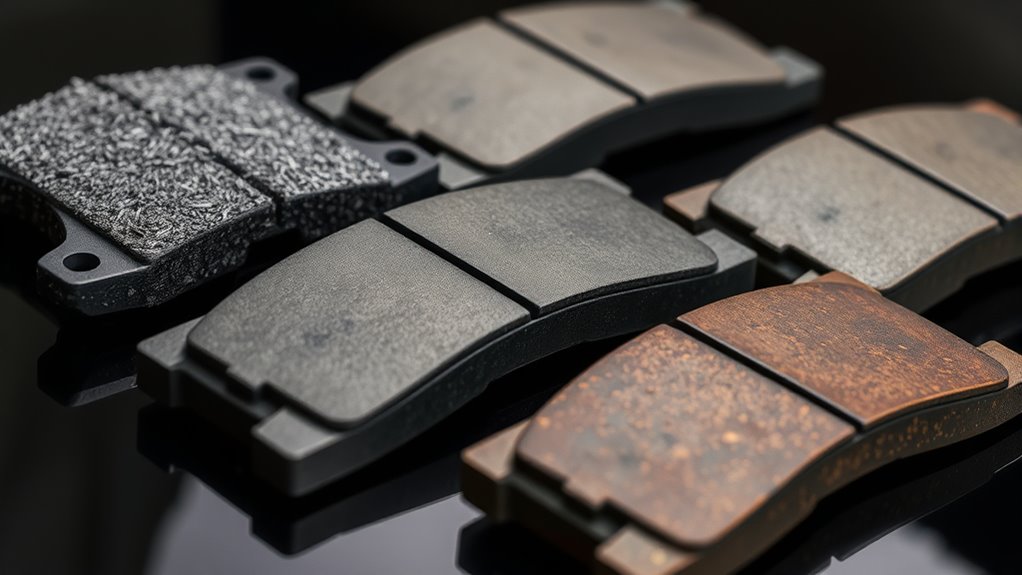
Choosing the right brake pad material is essential for ensuring your vehicle stops safely and efficiently. The type of material you select impacts braking performance, noise levels, durability, and how much dust the pads produce. Two common options you’ll encounter are ceramic and composite formulations, each with their own unique properties and benefits. Understanding these can help you make an informed decision tailored to your driving needs.
Ceramic brake pads are known for their exceptional ceramic characteristics, which include a smooth, quiet operation and minimal dust production. These pads are made with a dense ceramic compound that provides excellent heat resistance and stability. The ceramic formulations used in these pads contain tiny ceramic fibers and fillers that help disperse heat evenly, reducing the risk of brake fade during high-performance or repeated braking. Because of their composition, ceramic pads tend to produce less noise and dust compared to other types, making them a popular choice for daily drivers who want a cleaner, quieter braking experience. They also tend to last longer, thanks to their resistance to wear and thermal degradation. However, ceramic pads can be more expensive upfront, and their softer nature might not always be suitable for heavy-duty or aggressive driving styles that demand more aggressive braking power.
Ceramic brake pads offer quiet operation, minimal dust, and long-lasting performance for daily driving needs.
On the other hand, composite formulations involve a mix of materials such as fibers, metals, and resins, crafted to optimize specific performance characteristics. These composite formulations can include materials like aramid fibers, copper, or other metals, which enhance the pad’s strength and heat dissipation capabilities. The diversity in composite formulations allows manufacturers to tailor brake pads for different driving conditions, whether it’s for high-performance sports cars, off-road vehicles, or everyday commuting. Composite brake pads generally offer a good balance of durability, cost, and performance. They tend to be more affordable than ceramic options and can provide powerful braking with a responsive feel. While they may produce more dust and noise than ceramic pads, advancements in composite formulations have reduced these issues markedly.
Ultimately, the choice between ceramic and composite formulations depends on your driving style, budget, and priorities. If you want quiet, clean brakes for regular city driving, ceramic characteristics make a compelling option. If you need a more budget-friendly, versatile solution that can handle a broader range of conditions, composite formulations might suit you better. By understanding these differences, you can select the brake pad material that aligns with your vehicle’s demands and your driving preferences, ensuring safe and efficient stopping power every time you hit the brake pedal.
Frequently Asked Questions
How Do Brake Pad Materials Affect Vehicle Stopping Distance?
Your brake pad materials directly influence stopping distance by affecting their friction coefficients and wear resistance. Higher friction coefficients mean better grip, allowing you to stop more quickly. Meanwhile, good wear resistance ensures the pads maintain their effectiveness over time, preventing sudden decreases in braking performance. Using the right materials helps you achieve shorter stopping distances, safer braking, and consistent performance, especially in emergency situations.
Are Ceramic Brake Pads Suitable for High-Performance Vehicles?
Oh, absolutely, ceramic brake pads are perfect for high-performance vehicles—if you enjoy the illusion of durability and smooth stops. Their ceramic durability means they last longer, and they look fancy, but they might not handle the intense heat and stress of high-speed racing like specialized pads do. So, while they offer high performance compatibility for everyday driving, serious enthusiasts should consider more robust options for ultimate performance.
What Environmental Factors Impact Brake Pad Material Performance?
Environmental factors like temperature, humidity, and exposure to salt or chemicals markedly impact your brake pad material performance. High temperatures can reduce abrasion resistance and cause brake fade, while moisture and salt accelerate corrosion, weakening the pads. Good thermal conductivity helps dissipate heat quickly, preventing overheating. You should choose brake pads that withstand these conditions, maintaining ideal abrasion resistance and thermal management for safe, reliable braking in varying environments.
How Often Should Brake Pads Be Replaced Based on Material Type?
You should replace your brake pads when wear indicators squeal or after about 20,000 to 70,000 miles, depending on the material. Organic pads wear faster, while ceramic ones last longer. Don’t overlook those telltale signs; your brake pad lifespan is finite. Regular inspections ensure you catch the early warning signs, saving you money and safety. Remember, ignoring brake wear is like tempting fate—eventually, it’ll catch up with you.
Can Brake Pad Materials Cause Noise or Vibration Issues?
Yes, brake pad materials can cause noise generation and vibration issues. Organic pads tend to produce less noise but may vibrate more under heavy braking. Sintered pads often generate more noise and vibration due to their rough surface and metal content. If you notice unusual noise or vibration, your brake pads’ material composition might be the culprit, and you should have them examined to ensure safe driving.
Conclusion
Understanding brake pad materials helps you appreciate the subtle art of stopping smoothly. By choosing the right materials, you guarantee your vehicle’s quiet harmony and extend its life’s delicate balance. When you pay attention to these details, you’re gently guiding your car’s performance along a more refined path. Ultimately, it’s about nurturing a quiet trust between you and your vehicle, allowing every stop to be a graceful whisper rather than a jarring note.
Fall Picks
fall essentials
As an affiliate, we earn on qualifying purchases.