Replacing your struts and shocks is crucial for a smooth ride, safe handling, and even tire wear. The process involves removing the old components and installing new ones carefully, often requiring specialized tools due to high spring tension. Proper handling prevents damage and environmental contamination. Afterward, an alignment ensures everything functions correctly. While shocks are simpler to swap, experts recommend professional help for safety and peak performance. Keep going to discover more tips on making these repairs safely and effectively.
Key Takeaways
- Replacing struts and shocks maintains vehicle ride quality, handling, and safety by absorbing road impacts effectively.
- Proper installation involves careful spring handling, spring compression, and correct reassembly to prevent accidents and component failure.
- Post-replacement wheel alignment is essential to ensure proper tire wear, vehicle stability, and handling performance.
- Handling suspension components responsibly prevents environmental contamination and preserves suspension system longevity.
- Professional assistance ensures accurate installation, alignment, and long-term vehicle safety and performance.
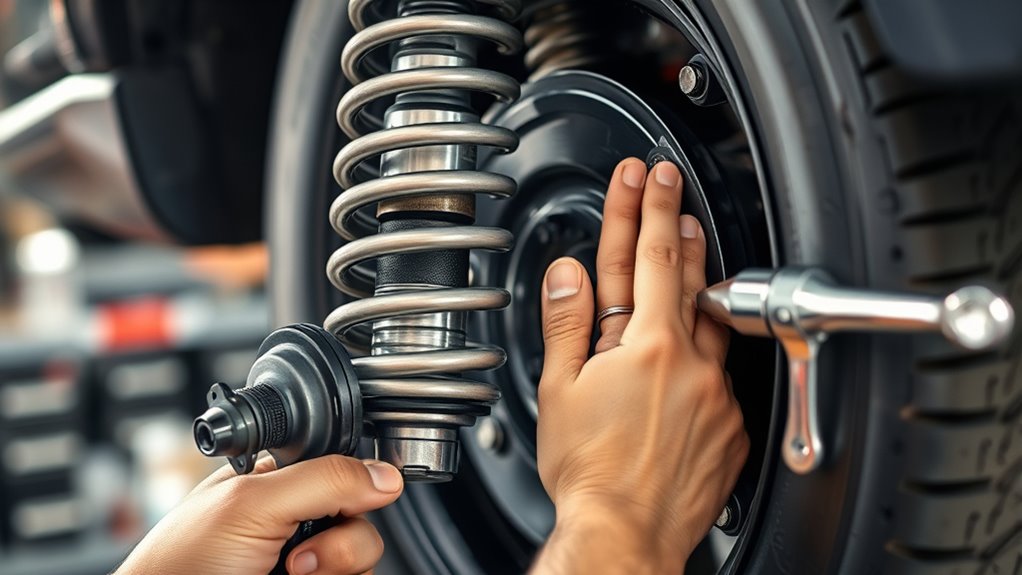
Replacing your vehicle’s struts and shocks is essential for maintaining a smooth ride and ensuring safe handling. When these components wear out, you’ll notice increased bouncing, poor steering response, and uneven tire wear. One crucial step during strut replacement is spring installation, which involves carefully removing and reinstalling the coil spring onto the new strut assembly. This process requires specialized tools and proper technique because the spring is under high tension, making it dangerous if mishandled. Taking the time to do spring installation correctly ensures the suspension functions as designed and prevents accidents caused by spring failure.
Spring installation requires specialized tools and careful handling due to high tension, ensuring safety and proper suspension function.
Proper handling of suspension components also helps preserve ecosystem health by preventing debris or oil leaks from contaminating nearby soil or water sources. After installing the new struts and shocks, alignment procedures are a vital next step. Misaligned wheels can cause uneven tire wear, compromised steering, and reduced fuel efficiency. An alignment involves adjusting the angles of the wheels so they sit perfectly parallel to each other and perpendicular to the road. It’s essential to perform alignment procedures after replacing suspension components because these parts can alter the wheel angles, even if only slightly. Proper alignment guarantees your vehicle handles accurately and that your tires wear evenly over time.
When replacing shocks, the process tends to be simpler since they don’t involve springs. Still, the importance of correct installation and alignment remains. You’ll need to detach the old shocks, often by removing bolts at the top and bottom, then install the new shocks securely. But if you’re replacing struts, which incorporate the coil spring, you must first decompress the spring safely before removing the old strut and installing the new one with the spring properly seated. Once everything is reassembled, it’s crucial to have a professional perform or verify the alignment procedures. This ensures that your suspension geometry is correct and that your vehicle’s handling remains predictable and stable.
Skipping proper spring installation or neglecting alignment procedures can lead to uneven tire wear, poor ride quality, and even safety hazards. Investing time and effort into these steps will pay off with a more comfortable ride, longer-lasting tires, and better vehicle control. If you’re uncomfortable doing this work yourself, it’s best to seek professional help. A qualified mechanic will have the tools and expertise to handle spring installation safely and ensure your vehicle is correctly aligned after the suspension repair. In the end, maintaining your suspension system with proper installation and alignment procedures keeps your vehicle running smoothly and safely for miles to come.
Frequently Asked Questions
How Long Does a Typical Strut and Shock Replacement Take?
A typical strut and shock replacement takes about 1 to 2 hours per axle. During the installation process, you’ll want to follow safety precautions, like using proper tools and securing the vehicle. You can often do it yourself if you’re experienced, but a professional mechanic might complete it faster. Remember, taking your time guarantees safety and proper function, preventing future issues and ensuring a smooth ride.
Can I Replace Just the Shocks or Struts Individually?
Think of shocks and struts as a team; replacing just one can cause imbalance. You can replace shocks or struts individually, but it’s often best to replace them in pairs for even wear. For a DIY tip, use the right replacement tools and follow manufacturer instructions. If you only replace one, be prepared for uneven handling, which could lead to quicker wear on the new part.
What Are Signs Indicating the Need for Replacement?
You’ll know it’s time to replace your shocks or struts if you notice unusual noises like clunking or squeaking, especially over bumps. Pay attention to wear indicators on the components—they’ll show signs of deterioration. Additionally, if your vehicle feels unstable, sways excessively, or your ride becomes rough, these are clear signs you need new shocks or struts to restore safety and comfort.
Are There Different Types of Shocks and Struts?
Yes, there are different types of shocks and struts, and you should consider options based on your driving needs. You can choose from types comparison like monotube and twin-tube shocks, each offering different performance benefits. When selecting, explore brand options to find reliable quality. Your choice depends on factors like ride comfort, handling, and budget, so comparing these types and brands helps you make an informed decision.
How Much Does a Complete Replacement Usually Cost?
A complete shock or strut replacement generally costs between $300 and $1,200 per axle, depending on your vehicle and parts quality. Pricing considerations include labor costs and whether you choose aftermarket or OEM parts. Don’t forget to investigate warranty options, as some shops offer limited warranties that protect your investment. Always get a detailed estimate upfront to understand what’s included and ensure you’re getting the best value for your money.
Conclusion
Replacing your struts and shocks might seem like a small task, but it can dramatically transform your driving experience. Think of it as giving your car a brand-new soul—smoother rides, better handling, and safer stops. Ignoring worn-out suspension components is like risking a roller coaster ride on a rickety track. Don’t wait for your car to loudly protest; act now and enjoy the incredible difference a fresh set of struts and shocks can make.