TL;DR

Get business pricing on garage and car supplies
- Business-only prices and quantity discounts
- Tax-exempt purchasing
- Multiple users, one account, clear invoices
Mitchell Kohrmann drove a 1992 Geo Metro convertible from the Red Ball Garage in Manhattan to the Portofino Inn in Los Angeles, covering 2,838 miles in 49 hours, 11 minutes and 18 seconds. The car produced 43 horsepower at the wheels on a dyno before the trip, according to the report, and Kohrmann described the effort as an “everyman’s Cannonball” rather than a record attempt.
Mitchell Kohrmann drove a 1992 Geo Metro convertible from Manhattan to Los Angeles, completing the 2,838-mile route in 49 hours, 11 minutes and 18 seconds, according to a report by The Drive. The trip, made in a car that measured 43 horsepower at the wheels on a pre-run dyno test, was presented as an “everyman’s Cannonball” rather than an effort to set a cross-country speed record.
The route began at the Red Ball Garage in Manhattan and ended at the Portofino Inn in Los Angeles, both traditional start and finish points for Cannonball-style cross-country drives. The Drive reports that Kohrmann covered the distance in 49 hours, 11 minutes and 18 seconds. The source does not provide a full route log or a detailed account of stops along the way.
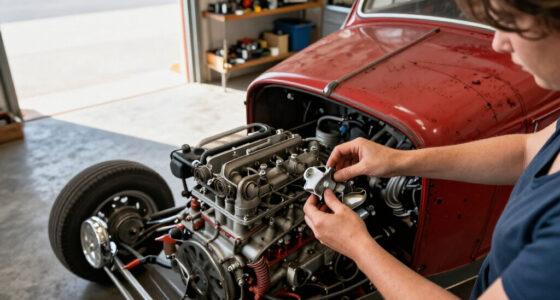
Kohrmann’s car was a first-generation Geo Metro LSi, powered by a 1.0-liter, three-cylinder engine. The engine was rated at 55 horsepower from the factory, but a dyno test before departure recorded 43 horsepower at the wheels, The Drive reported. Kohrmann estimated that the engine’s output would fall to roughly 26 horsepower at the elevations he would encounter crossing the Rocky Mountains; that figure is his calculation, not a reported measurement taken during the trip.
The project set out to contrast with high-budget Cannonball attempts. The Drive said Kohrmann travelled in a simple car without the extra fuel tanks and police spotters described as features of some record-seeking runs. He called the idea an “everyman’s Cannonball”, emphasizing an ordinary vehicle and a limited setup rather than record-level speed.
A Slower Take on the Cannonball
The trip shows how the familiar New York-to-Los Angeles challenge can be approached without making outright speed the central aim. Kohrmann’s 49-hour-plus journey is notable in the report for its low-powered, straightforward car and do-it-yourself premise, not for a claim that it broke a record. That distinction matters because record-oriented cross-country runs are associated with much higher speeds and risks to other road users.
The account also puts the Metro’s limitations in view: the car was slow by modern standards and had little power in reserve, especially at altitude, according to Kohrmann’s estimate. The Drive notes that a vehicle of this age and size lacks many safety features and crash-protection measures found in newer cars. The story is not evidence that such a trip is safe or advisable; it is a report on one driver’s completed journey.
Products Worth Considering

Chemical Guys 17-Piece Car Detailing Kit

Chemical Guys HOL123 Car Cleaning Kit – 14-Item Interior & Exterior Detailing Set

Chemical Guys 14-Piece Arsenal Builder Car Wash Kit with Foam Blaster
As an affiliate, we earn on qualifying purchases.
The Metro and the Route
The first-generation Geo Metro was sold for model years 1989 through 1994. It was a rebadged Suzuki Cultus, and its small three-cylinder engine and low purchase price helped make it known as an economy car. Period testing cited by The Drive put fuel economy as high as 50 miles per gallon in some configurations; that figure is not a measurement of Kohrmann’s fuel use on this trip.
The Metro LSi used for the drive was factory-rated at 55 horsepower. The less powerful XFi version was tuned with fuel economy in mind, according to The Drive. A redesigned version followed for 1995, and Chevrolet branding replaced Geo on later models as General Motors wound down the Geo marque. The trip’s endpoint choices followed the established Red Ball Garage-to-Portofino Inn convention associated with Cannonball runs.
““everyman’s Cannonball””
— Mitchell Kohrmann, as quoted in The Drive’s report
Trip Details Not Reported
The source does not state when the drive took place, list the route in detail, or provide a record-book comparison. It also does not include a complete breakdown of stops, fuel consumption, expenses, weather, or the car’s mechanical condition after the journey. The 26-horsepower figure is described as Kohrmann’s estimate for high-altitude performance, while the source does not report an altitude dyno test.
The report gives no independent verification of the elapsed time beyond its account of the trip, and it does not say whether Kohrmann intends to repeat the drive. The published details support the stated route, car, and time as reported by The Drive, but not a broader claim that the trip was a record or that similar drives carry a particular level of safety.
No Further Plans Reported
The source describes the completed drive but does not report a planned follow-up, a new attempt, or an official record submission. Any additional details about the trip, including its date and a fuller account of its stops and costs, would depend on further information from Kohrmann or the original video.
Key Questions
How long did the Geo Metro trip take?
According to The Drive, Mitchell Kohrmann completed the 2,838-mile drive in 49 hours, 11 minutes and 18 seconds.
What car did Kohrmann drive?
He drove a 1992 Geo Metro LSi convertible with a 1.0-liter, three-cylinder engine. The car was rated at 55 horsepower from the factory and measured 43 horsepower at the wheels on a pre-trip dyno, according to the report.
Was this a Cannonball record attempt?
The report characterizes it as an “everyman’s Cannonball”, not a record-setting attempt. It provides no claim that Kohrmann set or broke a cross-country record.
Where did the trip start and end?
The drive started at the Red Ball Garage in Manhattan and ended at the Portofino Inn in Los Angeles, the traditional endpoints cited in the report.
How much power did the Metro have?
The LSi’s engine was rated at 55 horsepower from the factory. A pre-trip dyno test recorded 43 horsepower at the wheels. Kohrmann estimated output could drop to about 26 horsepower at Rocky Mountain elevations, but the report does not describe that as a measurement made during the drive.
Source: thedrive.com