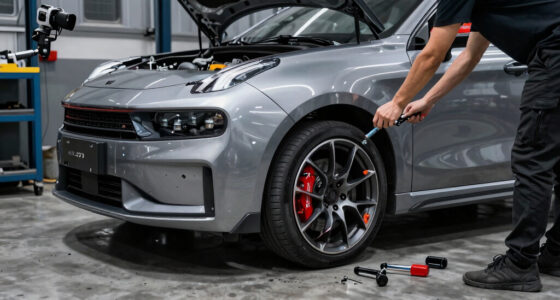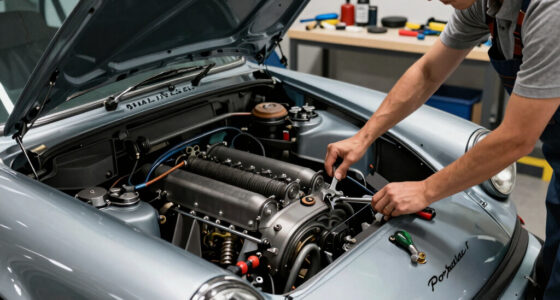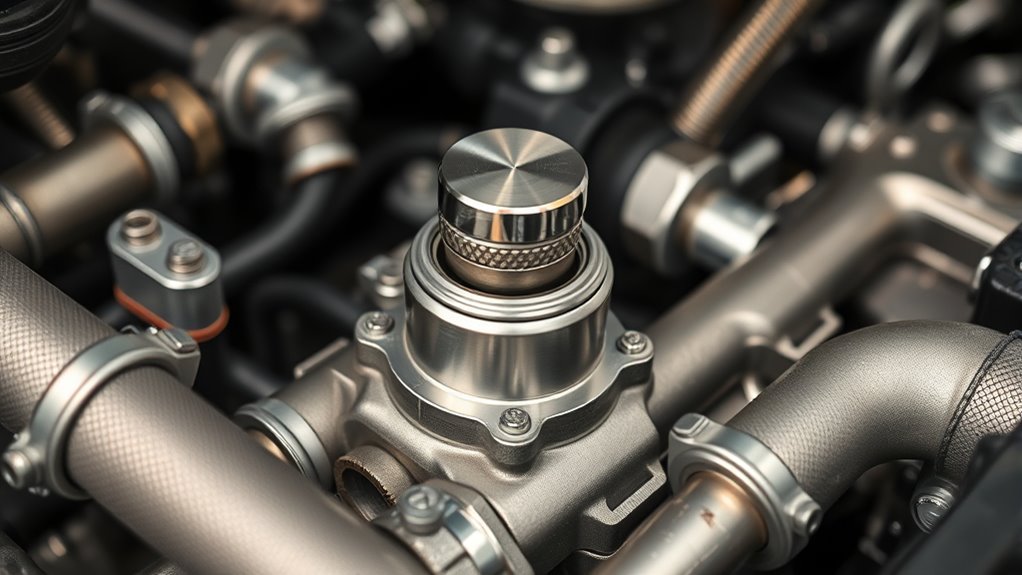

Exhaust Gas Recirculation (EGR) is a key emission control system that helps reduce nitrogen oxide (NOx) pollutants. It works by redirecting a portion of your engine’s exhaust gases back into the intake manifold, which lowers combustion temperatures. This process helps your vehicle meet environmental standards while maintaining performance. Proper EGR operation is essential for engine health and efficiency. If you keep exploring, you’ll discover how this system functions and how it benefits your engine.
Key Takeaways
- EGR reduces NOx emissions by recirculating a portion of exhaust gases into the intake manifold.
- The EGR valve regulates the flow based on engine load, speed, and temperature for optimal emission control.
- Proper EGR operation lowers combustion temperatures, preventing knocking and engine damage.
- During cold starts, the EGR valve remains closed to ensure proper ignition and combustion.
- Regular maintenance, such as cleaning, is essential to prevent clogging and ensure effective EGR function.

Exhaust Gas Recirculation (EGR) is a critical technology used in modern engines to reduce nitrogen oxide (NOx) emissions. When you understand how EGR works, especially the EGR valve operation, you’ll see how it plays a vital role in emission reduction strategies. The EGR system redirects a portion of your engine’s exhaust gases back into the intake manifold. This process lowers combustion temperatures, which directly reduces the formation of NOx gases that contribute to smog and air pollution. The EGR valve acts as the regulator for this process, controlling the amount of exhaust gases recirculated based on engine load, speed, and temperature.
The EGR valve operation is essential because it determines how much exhaust gas is introduced into the combustion chamber. When you start your engine, the valve remains closed during cold starts to ensure proper combustion. As the engine warms up, the valve gradually opens, allowing exhaust gases to mix with incoming air. This mixture cools the combustion process, leading to lower peak temperatures. The EGR valve is typically controlled electronically or mechanically, responding to signals from the engine control unit (ECU) to optimize performance and emissions. Proper valve operation ensures a balanced flow of gases, preventing issues like rough idling, knocking, or incomplete combustion, which could otherwise lead to increased emissions or engine damage.
Additionally, advancements in automation technologies are enabling more precise control of EGR systems, contributing to better emission management and engine efficiency. Regular maintenance of the EGR valve and associated components is crucial, as carbon buildup can cause sticking or clogging, impairing its operation and leading to increased emissions.

AULINK EGV589 EGR Valve EGR1273 For Chevy 1500 Astro Blazer Impala Express Silverado Tahoe,GMC K1500 Savana Sierra Yukon,Buick LeSabre Avenue Regal,Cadillac Deville Escalade,Isuzu Pontiac Olds Bravada
- OEM Part Numbers: Multiple OEM compatible numbers listed
- Vehicle Compatibility: Fits various Chevy, GMC, Buick, Cadillac, Isuzu, Oldsmobile, Pontiac models
- Enhanced Performance: Heavy-duty solenoids and stainless-steel components
As an affiliate, we earn on qualifying purchases.
As an affiliate, we earn on qualifying purchases.
Frequently Asked Questions
How Does EGR Affect Fuel Economy?
EGR system maintenance can boost your vehicle’s fuel efficiency by reducing nitrogen oxide emissions and optimizing combustion. When properly maintained, the EGR system helps improve fuel economy, especially during city driving or under load. Regularly checking and cleaning EGR components ensures it functions correctly, allowing you to enjoy better mileage and reduced emissions. A well-maintained EGR system is essential for consistent fuel efficiency improvement over time.
Can EGR Systems Cause Engine Knocking?
Imagine your engine as a orchestra; EGR systems are the conductor ensuring harmony. If the EGR valve isn’t maintained properly or has issues, it can cause engine knocking, much like a conductor missing cues. Regular EGR valve maintenance and troubleshooting prevent carbon buildup and clogging, reducing knocking risks. Keep your EGR system in tune, and your engine will run smoothly without disruptive knocking.
What Are Common EGR System Failure Symptoms?
You might notice rough idling, engine knocking, or a decrease in fuel efficiency if your EGR system fails. Common symptoms include carbon buildup from EGR valve cleaning, which can cause stalling or stuttering. You could also experience coolant leaks or overheating due to EGR cooler failure. Regularly inspecting and cleaning the EGR valve and checking the cooler can prevent these issues and keep your engine running smoothly.
How Does EGR Impact Emissions Standards Compliance?
EGR enhances emissions compliance by reducing nitrogen oxides, helping you meet strict standards. Regular EGR valve maintenance prevents blockages, while proper EGR system calibration guarantees ideal operation. When you keep these components in top shape, your vehicle minimizes harmful emissions, stays compliant, and avoids costly fines. Maintaining your EGR system ensures efficient engine performance, environmental responsibility, and peace of mind, all while keeping your vehicle running smoothly and within legal limits.
Is EGR Beneficial for Diesel Engines?
Yes, EGR is beneficial for diesel engines because it helps reduce nitrogen oxide emissions by recirculating a portion of exhaust gases back into the engine. When you use an EGR valve, it lowers combustion temperatures, preventing excess NOx formation. This process not only helps you meet emissions standards but also improves overall engine efficiency and reduces environmental impact by controlling harmful pollutants effectively.
Conclusion
You now understand how exhaust gas recirculation helps reduce emissions and improve engine efficiency. Did you know that EGR systems can cut NOx emissions by up to 50%? That’s a significant impact for such a simple process. By controlling exhaust gases, you not only protect the environment but also enhance your vehicle’s performance. So, next time you think about emissions, remember that EGR plays a key role in cleaner, greener driving.