
Start by inspecting all connections, terminals, and relays for looseness or corrosion, as these are common causes of intermittent faults. Use a multimeter to check voltage stability and perform continuity tests on wiring to spot breaks or shorts. Vibration, temperature changes, and humidity often influence fault behavior, so test under different conditions. Systematically eliminating potential issues will help you identify the root cause—keep exploring to learn more ways to troubleshoot effectively.
Key Takeaways
- Begin by inspecting and tightening all electrical connections and terminals to ensure firm contact.
- Use a multimeter to verify power supply stability and check for voltage fluctuations.
- Conduct continuity tests on wiring harnesses to identify broken or open circuits.
- Examine components like switches, relays, and sensors for wear, corrosion, or damage.
- Test the system under different environmental conditions to reveal fault triggers caused by vibration or temperature changes.
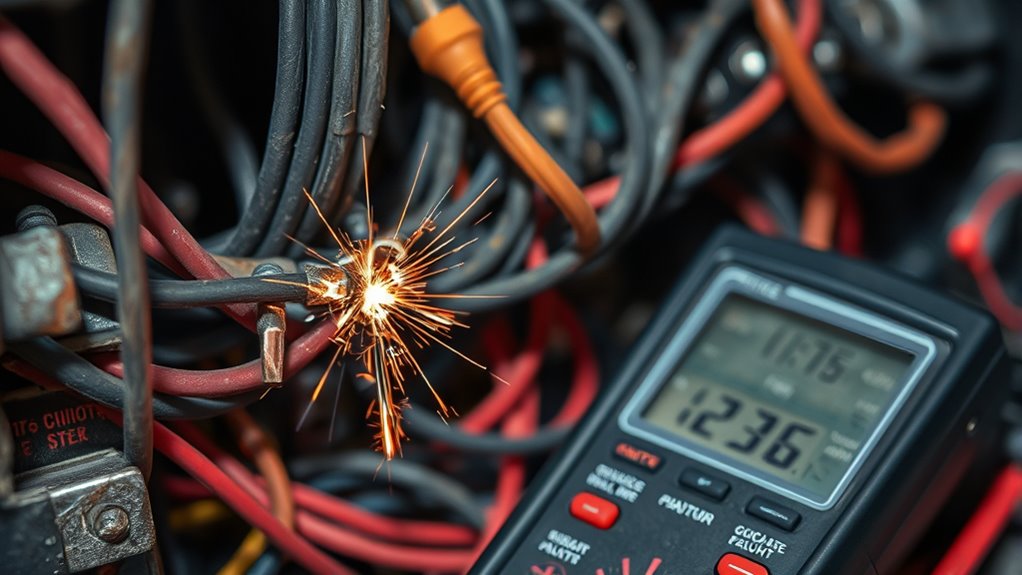
Have you ever experienced an electrical issue that suddenly disappears just as quickly as it appeared? If so, you know how frustrating it can be to diagnose. Intermittent faults are tricky because they don’t follow a clear pattern, and they often leave you guessing. The first step in tackling these issues is understanding how to approach them systematically. Diagnostic techniques are essential tools in your arsenal, helping you identify the root cause even when the problem isn’t consistently present. These techniques include using a multimeter to check voltage levels, continuity tests to spot broken connections, and specialized tools like thermal cameras to detect hotspots caused by poor contacts or overloaded circuits. By methodically applying these methods, you can narrow down the potential sources of the fault and avoid unnecessary replacements or guesswork. Recognizing the importance of a systematic approach can greatly improve your chances of pinpointing the fault efficiently. Knowing the common causes of intermittent electrical faults can also guide your investigation. Loose connections are a primary culprit; they might only make contact under certain conditions, such as vibration or temperature changes, causing the fault to appear sporadically. Corrosion and oxidation on terminals or connectors can also create intermittent issues, especially in humid environments. Worn-out switches or relays are notorious for causing flickering signals or power drops, especially over time. Frayed or damaged wiring can develop short circuits or open circuits intermittently as the insulation shifts or wears down. Additionally, faulty sensors or control modules can trigger intermittent faults in complex systems, where the issue isn’t visibly obvious but manifests through erratic operation.
When you start troubleshooting, it’s important to *contemplate* these common causes and use diagnostic techniques accordingly. For example, if you suspect a loose connection, inspect and tighten all relevant terminals, then verify with a multimeter that the connection is stable. If corrosion is suspected, clean contacts thoroughly and check for any signs of rust or buildup. For wiring issues, carefully examine the entire run for signs of damage, and use continuity testing to verify integrity. Remember, intermittent faults often involve components that are sensitive to environmental factors, so testing under different conditions—such as varying temperature or vibration—can help reveal hidden problems.
Frequently Asked Questions
How Can I Prevent Intermittent Electrical Faults From Recurring?
To prevent intermittent electrical faults from recurring, you should perform regular preventive maintenance and wiring inspections. Check all connections for looseness or corrosion, and replace damaged wires promptly. Keep an eye on circuit breakers and fuses to make sure they’re functioning correctly. By routinely inspecting and maintaining your electrical system, you reduce the risk of faults developing and ensure safer, more reliable operation of your equipment.
What Tools Are Best for Diagnosing Intermittent Issues?
You should use an oscilloscope for detailed signal analysis and thermal imaging to spot hidden overheating issues. Oscilloscope testing helps you observe fleeting voltage or current anomalies, while thermal imaging reveals hot spots that might indicate loose connections or failing components. Combining these tools allows you to effectively diagnose intermittent electrical issues, pinpoint their source, and prevent future faults from recurring. Always confirm your equipment is properly calibrated for accurate results.
Are Certain Environments More Prone to Electrical Faults?
You’ll find that environments with high humidity or temperature fluctuations are more prone to electrical faults. Studies show that up to 60% of issues stem from environmental factors, making installation conditions essential. Moisture, dust, and vibrations can weaken connections or cause corrosion, leading to intermittent faults. So, when inspecting, pay close attention to these conditions, as they substantially impact your system’s reliability and safety.
How Long Does It Typically Take to Find the Root Cause?
Finding the root cause of an intermittent electrical fault can take anywhere from a few hours to several days, depending on the complexity. You need diagnostic patience and a thorough troubleshooting timeline to identify the issue effectively. Rushing can lead to missed clues, so take your time methodically testing components and systems. Ultimately, a careful, systematic approach helps you pinpoint the fault faster and avoid future problems.
When Should I Call a Professional for Intermittent Faults?
You should call a professional when DIY troubleshooting reveals persistent issues or if you feel unsure about electrical safety. If your intermittent faults keep returning or worsen despite basic checks, it’s time to get expert help. Never risk your safety trying to fix complex electrical problems yourself. A licensed electrician can diagnose and repair faults safely, ensuring your home remains secure and functional without the dangers of amateur repairs.
Conclusion
Just like a detective untangling a mystery, you can uncover intermittent faults by methodically testing and observing. Remember, these issues often hide in plain sight, waiting for patience and persistence to reveal themselves—much like the whispers of a ghost in an old house. Stay vigilant, trust your instincts, and don’t give up. With each clue, you’re closer to restoring peace to your electrical system, turning chaos back into calm, just as dawn follows night.