To diagnose parasitic battery drain, start by turning off your vehicle and accessories. Use a multimeter set to measure current and disconnect the negative battery terminal. Connect the multimeter in series and note the current draw—normal drain is under 50 milliamps. If the reading is higher, remove fuses one at a time to identify which circuit causes the drain. Following these steps helps you locate the problem efficiently—keep exploring to learn more about pinpointing the exact issue.

Get business pricing on garage and car supplies
- Business-only prices and quantity discounts
- Tax-exempt purchasing
- Multiple users, one account, clear invoices
Key Takeaways
- Ensure the vehicle is fully off and accessories are off before testing the battery drain.
- Use a multimeter to measure current after disconnecting the negative battery terminal.
- Normal parasitic draw is under 50 milliamps; higher readings indicate a problem.
- Isolate the faulty circuit by removing fuses one at a time and observing current changes.
- Investigate specific components or relays once the problematic circuit is identified.
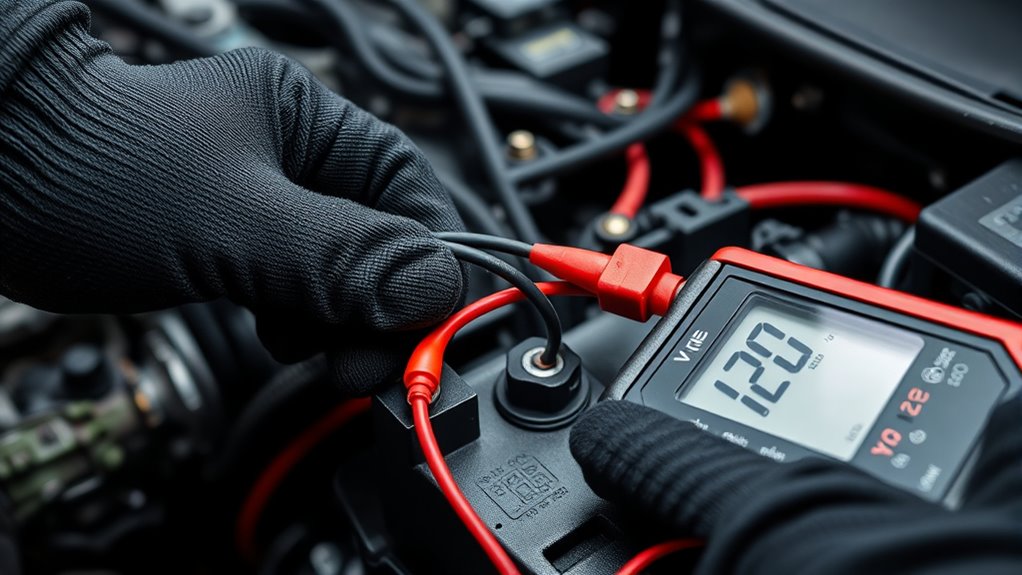
A parasitic battery drain occurs when a vehicle’s electrical system consumes power even when the car is turned off, gradually draining the battery and leaving you stranded. To diagnose this issue, you need to understand how to properly test your battery and electrical circuits. One of the most effective tools for this task is a testing multimeter. With a multimeter in hand, you can measure the current flowing from your battery to pinpoint the source of the drain. Before starting, ensure your vehicle is fully off, and all accessories are turned off, so you’re not measuring normal draw from essential systems like the clock or security system.
A parasitic battery drain slowly depletes your vehicle’s battery even when off.
To begin, set your multimeter to measure current, typically in amperes. You’ll need to disconnect the negative terminal of your battery to create a break in the circuit. Then, connect the multimeter’s leads—red to the negative battery post and black to the negative terminal wire. This setup allows you to measure the current flowing out of the battery. A normal parasitic draw is usually under 50 milliamps, but anything substantially higher suggests a circuit or component is drawing excessive power. If you notice a high reading, you’ll want to identify which circuit is responsible.
Identifying circuit draw involves systematically isolating different electrical components. Start by removing the fuse for the most likely circuit—such as those related to the interior lights, aftermarket accessories, or central locking system—and observe if the current drops. If it does, you’ve found the problematic circuit. Continue testing by replacing each fuse one at a time and noting changes in the multimeter reading. This process, known as identifying circuit draw, helps you narrow down the source of the drain without needing to dismantle the entire system.
Once you’ve pinpointed the circuit causing the excessive drain, you can further investigate the specific component responsible—such as a faulty relay, switch, or an aftermarket device. This methodical approach saves you time and prevents unnecessary replacements. Remember, always exercise caution when working with your vehicle’s electrical system; disconnect the battery before removing or inspecting components beyond testing. Proper testing procedures and a systematic approach to identifying circuit draw empower you to diagnose parasitic battery drain accurately. By doing so, you can prevent future battery failures and keep your vehicle running reliably, saving you time, money, and frustration on the road.
Frequently Asked Questions
What Are the Common Signs of Parasitic Battery Drain?
Like a silent predator, parasitic battery drain can sneak up on you. You’ll notice your car’s battery dies quickly, even after a full charge. Corrosion around battery terminals hints at trouble, while frequent alternator failure points to hidden issues. You might experience dimming lights or slow cranking. These signs signal your battery’s struggle against unseen drain, urging you to check for corrosion and verify your alternator’s health before it’s too late.
Can Parasitic Drain Cause Engine Stalling?
Yes, parasitic drain can cause engine stalling. If there’s an electrical short or alternator failure due to the drain, your battery won’t charge properly, leading to insufficient power for the engine. This can result in stalling, especially when you try to accelerate or idle. Identifying the drain early helps prevent these issues. Regular checks on your electrical system can save you from unexpected stalling caused by parasitic drain.
How Long Does a Typical Parasitic Drain Test Take?
A typical parasitic drain test takes about 30 minutes to an hour. During this process, you perform battery testing and follow diagnostic procedures to identify any electrical components drawing power when the vehicle’s off. You’ll need to disconnect the battery, use a multimeter to measure current flow, and systematically check circuits. Patience is key, as thorough testing guarantees you accurately pinpoint the source of the drain.
Are There DIY Methods to Fix Parasitic Drain?
A stitch in time saves nine, and DIY troubleshooting can often fix parasitic drain yourself. You can start by performing battery isolation to pinpoint the issue—disconnecting each fuse one at a time to see if the drain stops. If you find the culprit, you might repair or replace the faulty component. However, if you’re unsure, consulting a professional is wise to avoid further damage or safety risks.
When Should I See a Mechanic for Battery Issues?
You should see a mechanic for battery issues if your car struggles to start, the battery keeps dying, or you notice frequent electrical issues. If your battery is old or shows signs of corrosion, a professional can recommend a battery replacement. They’ll also check your electrical system to make sure everything functions properly. Don’t ignore these signs; timely professional help can prevent further damage and keep your vehicle running smoothly.
Conclusion
So, if you don’t catch that parasitic drain in time, your battery could die faster than a snowman in July. Ignoring those tiny, sneaky electrical gremlins might leave you stranded in the middle of nowhere, clutching a dead phone and a broken heart. By diagnosing and fixing it promptly, you’re not just saving your battery—you’re preventing an apocalypse of dead devices and endless frustration. Stay vigilant, or your car might just turn into a glorified paperweight!
Halloween Picks
halloween
As an affiliate, we earn on qualifying purchases.