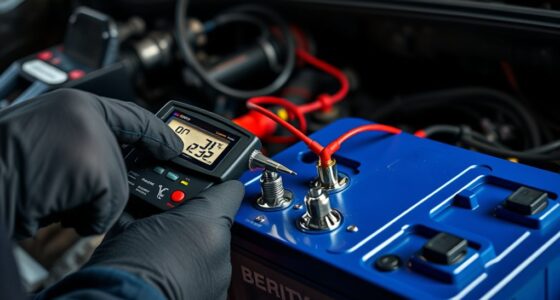
To perform parasitic draw testing with an amp clamp, you first turn off the vehicle and all accessories, then clamp the meter around the positive battery cable. Watch the amp reading; a typical draw is 25-50 milliamps. If it’s higher, remove fuses one at a time to see which circuit causes the drop, pinpointing the source of the drain. If you want to master the process step-by-step, there’s more to discover ahead.
Key Takeaways
- Use an amp clamp around the battery cable to measure current without disconnecting wires.
- Ensure the vehicle is off and accessories are off before testing to get accurate parasitic draw readings.
- Typical parasitic drain is 25-50 mA; higher readings indicate abnormal electrical activity.
- Identify the faulty circuit by removing fuses one at a time and observing the drop in current.
- An amp clamp provides quick, non-invasive diagnosis of excessive parasitic drain in modern vehicle systems.

If your vehicle’s battery keeps dying even after a full charge, parasitic draw testing can help identify the culprit. A common reason for this issue is excessive battery drain caused by an abnormal electrical system. When components stay active when they shouldn’t, they drain power from the battery, leading to repeated dead batteries and frustrating troubleshooting. Using an amp clamp during parasitic draw testing allows you to measure current without disconnecting wires, making the process faster and more accurate. Properly understanding electrical system components can further aid in diagnosing complex issues.
Start by ensuring the vehicle is turned off, with all accessories, lights, and electronics off. Open the hood and locate the main battery cable, usually attached to the battery’s positive terminal. Clamp the amp meter around this cable, making sure it’s secure. As you do this, the amp clamp will measure the current flowing through the cable. If the reading exceeds the typical parasitic draw level—usually around 25 to 50 milliamps—it indicates something in the electrical system is consuming more power than it should.
Next, you want to identify which circuit is responsible for the excessive drain. To do this, you’ll need to identify fuses and relays associated with various vehicle systems. With the amp clamp still in place, start removing fuses one at a time. After removing each fuse, observe the meter. If the amp reading drops substantially when a particular fuse is pulled, it pinpoints the circuit causing the abnormal battery drain. Once identified, you can investigate that circuit further to find the faulty component or wiring issue.
Using an amp clamp for parasitic draw testing offers a non-invasive and efficient way to diagnose electrical system issues. It eliminates the need to disconnect wires or use traditional multimeters, which can be cumbersome and risk damaging sensitive electronics. Plus, it provides real-time data, so you can quickly see the impact of removing each fuse and narrow down the problem area. This method is especially useful in modern vehicles with complex electrical systems, where multiple modules and sensors can drain power even when the vehicle is off.
Frequently Asked Questions
What Is the Ideal Parasitic Draw Current for Most Vehicles?
You should aim for a parasitic draw current of around 50 milliamps or less for most vehicles. This minimal electrical load helps prevent excessive battery drain when the vehicle is off. If your readings are higher, it indicates an abnormal electrical load that could drain your battery faster. Using an amp clamp, you can easily monitor this current to verify your vehicle’s electrical system isn’t causing unnecessary battery drain.
How Often Should Parasitic Draw Tests Be Performed?
You should perform parasitic draw tests regularly, ideally during routine battery maintenance or electrical system diagnostics, to catch potential issues early. Experts suggest testing every 3 to 6 months, especially if your vehicle has recent electrical work or exhibits unexplained battery drain. Regular testing helps prevent battery failure and guarantees your vehicle’s electrical system remains healthy, saving you time and money in the long run.
Can a Multimeter Be Used Instead of an Amp Clamp?
You can use a multimeter for parasitic draw testing, but it has limitations like lower sensitivity and difficulty measuring high currents directly. An amp clamp offers advantages such as non-contact testing, higher accuracy, and the ability to measure current without disconnecting circuits. While a multimeter works for basic checks, an amp clamp is more efficient and safer for measuring parasitic draws, especially in automotive applications.
What Are Common Causes of High Parasitic Draws?
Ever wonder why your car battery drains overnight? Common causes include faulty wiring that creates unintended electrical pathways or components that stay active when they shouldn’t. These issues lead to excessive battery drain, leaving you stranded. You should check for corrosion, loose connections, or malfunctioning switches. Addressing faulty wiring and ensuring all electrical components shut off can prevent high parasitic draws and keep your battery healthy longer.
How Long Does a Typical Parasitic Draw Test Take?
A typical parasitic draw test usually takes about 15 to 30 minutes. You’ll need to perform electrical diagnostics to identify battery drainage issues effectively. During the test, you’ll use an amp clamp to measure current flow and pinpoint any abnormal draws. This quick process helps you determine if a component is draining your battery excessively, allowing you to take appropriate action to prevent future problems.
Conclusion
Remember, a stitch in time saves nine. By mastering parasitic draw testing with an amp clamp, you can quickly identify and fix battery drain issues before they become costly problems. Regular checks help keep your vehicle running smoothly and prevent unexpected breakdowns. Don’t wait for problems to escalate—stay proactive and confident in your troubleshooting skills. With practice, you’ll find that catching small issues early makes all the difference in maintaining your vehicle’s health.