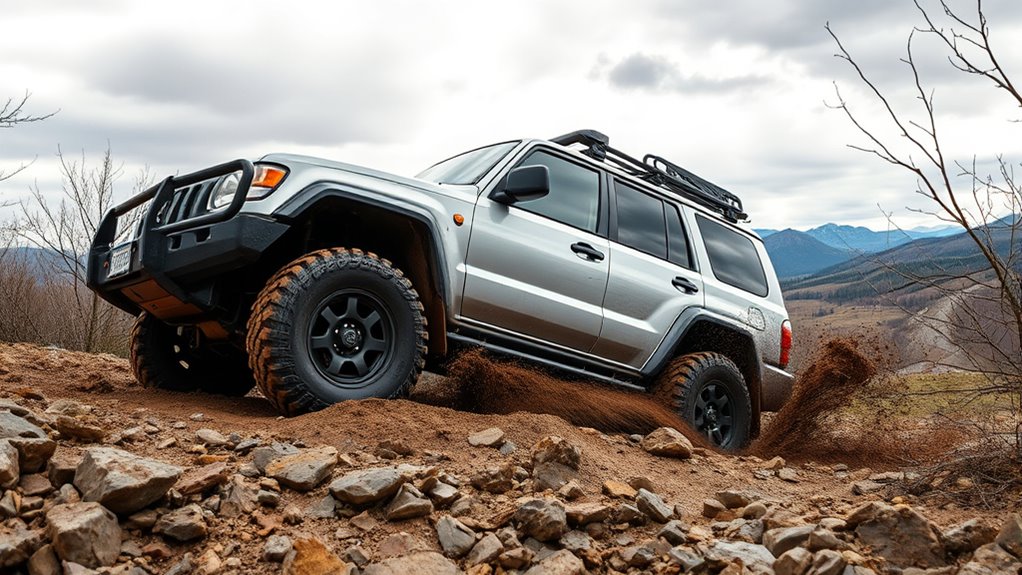

Four-wheel drive systems actively distribute power to all four wheels, giving you better grip and control on tough terrains. They sense wheel slip and automatically adjust torque to keep you moving smoothly over rocks, mud, snow, or steep inclines. With features like low-range gearing and electronic traction management, these systems boost your vehicle’s off-road capability and safety. Keep exploring to discover how modern 4WD technology can transform your driving experience across any landscape.
Key Takeaways
- Four-wheel drive systems distribute power to all four wheels to enhance traction on challenging terrains.
- They include features like low-range gearing and adjustable modes for off-road and difficult driving conditions.
- Traction control and electronic stability systems work together to prevent wheel slip and maintain vehicle stability.
- Modern 4WD systems incorporate electronic controls for easier switching between drive modes and improved performance.
- These systems enable vehicles to handle steep inclines, loose surfaces, and uneven terrains more confidently.

Have you ever wondered how four-wheel drive systems improve a vehicle’s performance on tough terrains? When you’re steering through rocky paths, muddy trails, or snowy roads, the key advantage of four-wheel drive (4WD) becomes clear. It enhances traction control by distributing power to all four wheels, giving you better grip and stability where two-wheel drive might struggle. This system actively senses when a wheel is slipping and automatically redirects torque to the wheels with better traction. As a result, your vehicle can maintain momentum on uneven or slippery surfaces, reducing the chances of getting stuck.
With 4WD engaged, your off-road capabilities considerably increase. You can confidently tackle steep inclines, loose gravel, and uneven terrain without worrying about losing control. The system allows you to switch between two-wheel drive and four-wheel drive modes, giving you flexibility depending on conditions. When off-road, engaging 4WD provides a more balanced power distribution, helping you climb over obstacles like rocks or logs with ease. It also offers low-range gearing, which supplies more torque at lower speeds. This feature is especially useful when crawling over challenging terrain, ensuring you maintain control without spinning your wheels or damaging your vehicle.
Engaging 4WD boosts off-road control with balanced power and low-range gearing for tough terrains.
Traction control becomes more effective with 4WD because it continuously monitors wheel slip and adjusts power accordingly. If one wheel begins to slip on a patch of mud or ice, the system can automatically apply braking or reduce power to regain grip. This active management keeps you moving forward smoothly, even in difficult conditions. Plus, many modern 4WD systems incorporate electronic stability controls and traction management, further enhancing your ability to stay on course. These features work together to prevent skidding or sliding, giving you confidence to explore remote or rugged environments.
Your vehicle’s off-road capabilities are also boosted by the drivetrain’s design. The extra weight and complexity of 4WD systems may add some fuel consumption, but the benefits in challenging terrains far outweigh this. It allows you to push your limits, confidently steering through terrains that would be risky or impossible for two-wheel drive vehicles. Whether you’re off-roading for adventure, hauling loads over rough ground, or simply driving in winter conditions, a four-wheel drive system makes a noticeable difference in how your vehicle responds. It transforms a regular vehicle into a versatile, capable machine ready to handle whatever terrain you encounter. Additionally, advancements in 4WD technology have further improved performance and ease of use, making it accessible for everyday driving as well as off-road adventures.
Frequently Asked Questions
How Does Four-Wheel Drive Differ From All-Wheel Drive?
You’ll notice that four-wheel drive (4WD) usually has a lock mode, allowing you to manually engage all four wheels for tough terrains, offering better control. All-wheel drive (AWD), on the other hand, automatically distributes power to all wheels without you needing to switch modes. With terrain management features, 4WD is ideal for off-road adventures, while AWD suits everyday driving on varying surfaces.
Can Four-Wheel Drive Improve Fuel Efficiency?
Four-wheel drive can decrease your vehicle’s fuel economy because the system’s complexity adds extra weight and resistance, requiring more power to operate. While it offers better traction and off-road capability, engaging four-wheel drive often leads to higher fuel consumption, especially when used on dry pavement. If you’re looking to conserve fuel, it’s best to use four-wheel drive only when necessary, as the system’s complexity impacts overall efficiency.
What Maintenance Is Required for Four-Wheel Drive Systems?
Ever wonder if your four-wheel drive system is running smoothly? You need to perform regular maintenance, including fluid checks and changing differential oil. These steps guarantee your system stays responsive and prevents costly repairs. Don’t ignore signs of wear, like strange noises or difficulty shifting. Keep your four-wheel drive in top shape by following the manufacturer’s maintenance schedule, so you’re always ready for any adventure that comes your way.
Are Four-Wheel Drive Systems Suitable for Urban Driving?
Four-wheel drive systems can be suitable for urban driving, especially if you value enhanced traction and stability in challenging conditions. However, they might compromise urban comfort and city fuel economy due to increased weight and drivetrain complexity. If you mostly drive in the city, consider whether the benefits outweigh the downsides. For daily commuting, a two-wheel drive might be more economical and comfortable, but four-wheel drive offers added security when roads get tough.
How Does Four-Wheel Drive Impact Vehicle Resale Value?
Four-wheel drive can boost your vehicle’s resale value by enhancing its off-road capability and appealing to buyers seeking adventure or reliability in tough conditions. As market demand for versatile vehicles grows, having four-wheel drive makes your car more attractive, especially in regions with rough terrains or unpredictable weather. You’ll likely find it easier to sell and may get a higher price, thanks to its increased functionality and appeal.
Conclusion
Now that you understand four-wheel drive systems, you see how they enhance traction, improve handling, and increase confidence on challenging terrains. You can choose between full-time and part-time systems, each offering unique benefits. You’ll appreciate how these systems deliver power to all wheels, providing stability, control, and safety. With this knowledge, you’re better equipped to select, use, and maintain your four-wheel drive, ensuring your adventures are smooth, secure, and unstoppable.