
TL;DR

Get business pricing on garage and car supplies
- Business-only prices and quantity discounts
- Tax-exempt purchasing
- Multiple users, one account, clear invoices
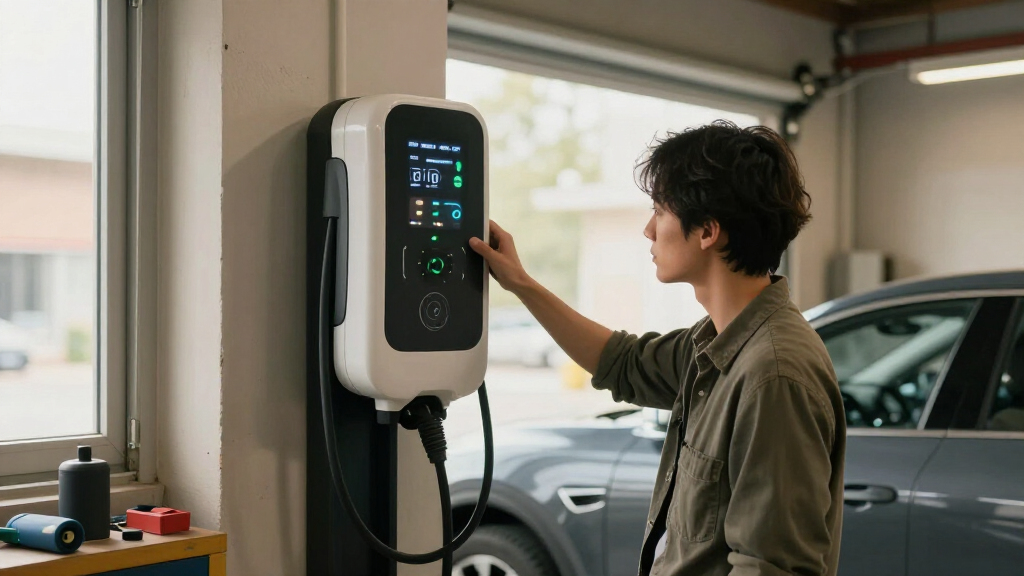
Geely has announced a new EV charger capable of delivering 2.2 megawatts of power, making it one of the most powerful chargers ever. The development could significantly reduce charging times but remains in early stages of deployment.
Chinese automaker Geely has introduced a new electric vehicle (EV) charger capable of delivering a peak power output of 2.2 megawatts, making it one of the most powerful chargers publicly announced to date. This development could dramatically cut charging times for electric vehicles, potentially transforming charging infrastructure and adoption rates. The charger’s high power capacity is confirmed by Geely, though details on deployment and compatibility are still emerging.
According to Geely, the new charger is designed to provide rapid charging for EVs, with a peak output of 2.2MW. This figure surpasses current industry standards, which typically range from 150kW to 350kW for fast chargers. The company claims that this power level could enable a typical EV to recharge up to 80% in approximately 10-15 minutes, depending on the vehicle’s battery capacity. Geely has not yet specified which models or brands will be compatible with this charger, nor has it announced plans for widespread deployment.The company states that the charger employs advanced cooling and safety systems to manage the high power flow safely. It also incorporates intelligent power management to optimize energy distribution and reduce grid impact. Geely’s announcement has generated significant interest among industry analysts and EV enthusiasts, as such a high-capacity charger could address one of the key barriers to EV adoption: long charging times.
Potential Impact on EV Charging Infrastructure
The introduction of a 2.2MW charger by Geely could significantly accelerate EV adoption by reducing charging times, especially for commercial fleets and high-mileage users. If scalable and compatible with a broad range of vehicles, this technology might shift industry standards and prompt other manufacturers to develop similarly high-capacity chargers. However, widespread deployment will depend on infrastructure upgrades and regulatory approval. This development also raises questions about grid capacity and energy management at a larger scale, as such high power levels demand substantial electrical infrastructure improvements. Overall, this innovation could mark a major step forward in making fast charging more practical and accessible, but its real-world impact remains to be seen.As an affiliate, we earn on qualifying purchases.
Background on EV Charging Technology Limits
Current fast chargers generally deliver between 150kW and 350kW, enabling 80% charges in approximately 20-30 minutes for most EVs. The industry has been gradually increasing charging speeds, but technical and safety challenges limit how high power levels can go. The move toward ultra-high-power chargers has been driven by automakers’ desire to reduce charging times and improve user convenience. Several companies, including Tesla and Electrify America, have announced chargers in the 350kW range, but 2.2MW represents a significant leap. Geely’s announcement aligns with broader industry trends toward ultra-fast charging, though such power levels are still largely experimental and not yet commercially widespread.Unconfirmed Deployment Plans and Vehicle Compatibility
It is not yet clear when or if Geely plans to deploy this charger at scale, nor which EV models will be compatible. Details on infrastructure upgrades or regulatory approvals are still emerging, and the practical safety and grid impact of such high power levels are under assessment.Monitoring Industry Adoption and Regulatory Approvals
Further details are expected in the coming months regarding deployment plans, partnerships with charging networks, and compatibility with EV models. Industry observers will also watch for regulatory approvals and grid infrastructure upgrades necessary to support 2.2MW charging stations. Geely may showcase pilot installations or partnerships at upcoming auto or energy industry events, providing more clarity on commercialization timelines.Key Questions
How does a 2.2MW charger compare to existing fast chargers?
Most current fast chargers deliver between 150kW and 350kW, enabling about 80% charge in 20-30 minutes. A 2.2MW charger is roughly 6-14 times more powerful, potentially reducing charging times significantly if compatible with vehicles and infrastructure.
Will all EVs be able to use this high-capacity charger?
It is not yet clear which vehicles will be compatible. Compatibility depends on vehicle battery systems and charging port standards. Further technical details from Geely are awaited.
What are the technical challenges of such high-power charging?
High-power charging requires advanced cooling, safety systems, and substantial electrical infrastructure upgrades. Managing heat, safety risks, and grid impact are key technical hurdles that must be addressed before widespread deployment.
Could this technology influence the broader EV industry?
If proven viable and scalable, this technology could set new standards for charging speeds, prompting other automakers and infrastructure providers to develop similar high-capacity solutions.
When might we see this charger in real-world use?
Deployment timelines are uncertain. Geely has not announced specific plans, but industry analysts suggest pilot projects or partnerships could emerge within the next 1-2 years, depending on regulatory and infrastructural developments.
Source: rss
Fall Picks
fall essentials
As an affiliate, we earn on qualifying purchases.