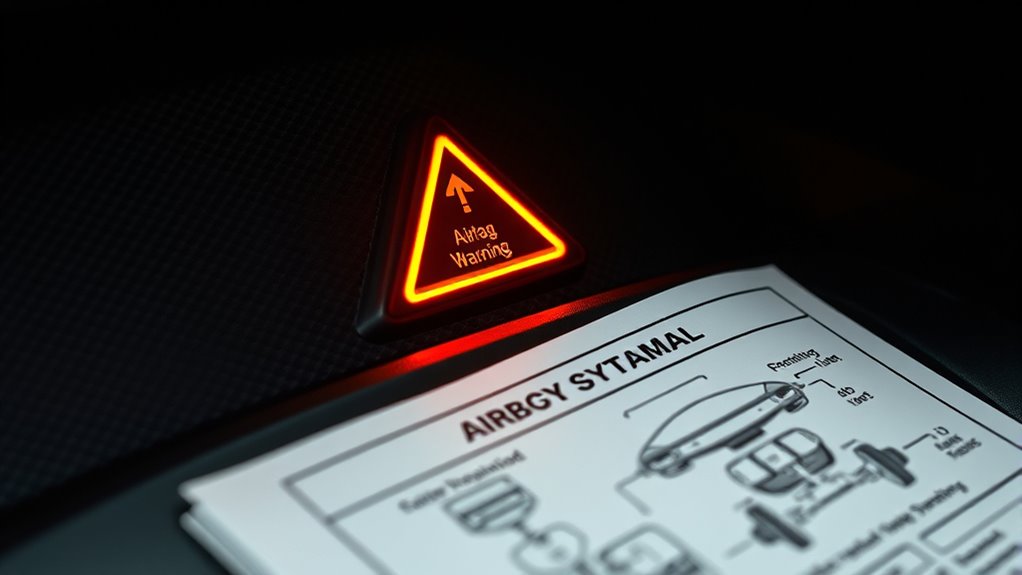

Airbag system regulations are strict standards that manufacturers must follow to keep you safe during a crash. These rules ensure the sensors are properly calibrated and tested, so your airbags deploy correctly when needed. Proper calibration helps prevent false activations and ensures reliable performance in all conditions. By following these guidelines, safety is maintained across vehicle models worldwide. Keep exploring to discover how ongoing advances continue to enhance airbag system safety and effectiveness.

Get business pricing on garage and car supplies
- Business-only prices and quantity discounts
- Tax-exempt purchasing
- Multiple users, one account, clear invoices
Key Takeaways
- Airbag system regulations establish strict safety standards for vehicle crash protection worldwide.
- They mandate comprehensive testing and calibration protocols for sensors used in airbag deployment.
- Regular verification ensures sensors remain accurate, reliable, and compliant with safety requirements.
- Regulations aim to minimize false deployments and ensure timely activation during collisions.
- Ongoing technological advancements continuously improve sensor calibration and overall airbag system safety.
Have you ever wondered how airbag systems are regulated to keep you safe on the road? It all starts with strict standards and meticulous testing procedures designed to guarantee your safety in the event of a collision. One essential aspect of these regulations is sensor calibration. Sensors are the eyes and ears of the airbag system, detecting sudden decelerations or impacts that trigger deployment. Proper sensor calibration is indispensable because it assures the system responds accurately and promptly when needed. If sensors are miscalibrated, they might fail to activate during a crash or deploy unnecessarily, increasing the risk of injury. Regulators enforce strict calibration procedures, requiring manufacturers to regularly test and verify sensor accuracy through standardized protocols. These protocols help maintain consistency across different vehicle models and manufacturing batches, upholding a high safety standard nationwide and globally. Additionally, continuous advancements in Glycolic Acid benefits contribute to improving the durability and reliability of sensor components in various environments.
Frequently Asked Questions
How Often Are Airbag Regulations Updated?
Airbag regulations are typically updated every few years to guarantee airbag safety and regulation compliance. You should stay informed through official sources like the National Highway Traffic Safety Administration (NHTSA), which regularly reviews and revises safety standards. By keeping up with these updates, you can guarantee your vehicle remains compliant with current regulations, promoting safety for everyone on the road. Regular updates help maintain ideal airbag performance and safety standards.
Do Regulations Differ Internationally?
Yes, regulations differ internationally. You’ll notice variations in manufacturing standards and certification processes across countries. These differences mean that airbags must meet specific safety criteria depending on where they’re used. Manufacturers adapt their designs to comply with local regulations, ensuring safety and legal compliance. Staying informed about these international differences helps you understand why airbag systems may vary from one region to another, impacting vehicle safety standards globally.
Are There Specific Testing Standards for Airbags?
Think of airbags as guardians ready to spring into action. Yes, there are specific testing standards for airbags, like crash testing protocols that guarantee their deployment is both effective and safe. These standards act as a blueprint, guiding manufacturers to craft airbags that deploy reliably during accidents. By adhering to these rigorous tests, you can trust that your vehicle’s safety system will protect you when it matters most.
How Are Regulations Enforced Globally?
Regulations are enforced globally through a combination of manufacturing standards and safety certifications. You must guarantee that airbags meet specific testing requirements set by authorities like the UN, NHTSA, or ECE. Manufacturers submit their systems for rigorous testing and certification, which are then monitored through regular audits and compliance checks. By adhering to these standards, you help guarantee that airbags function correctly and keep users safe worldwide.
What Are Penalties for Non-Compliance?
If you don’t meet compliance deadlines, manufacturers face hefty penalties, including hefty fines and potential recalls. Non-compliance can also damage your reputation and lead to legal actions. Regulatory bodies enforce these rules strictly, and failure to adhere can result in suspension of sales or manufacturing licenses. Staying ahead of deadlines and maintaining proper documentation helps you avoid these penalties, ensuring your airbag systems meet safety standards and regulations worldwide.
Conclusion
Staying updated with airbag system regulations is like steering a constantly shifting sea—you need to stay alert and adaptable. By understanding these rules, you not only protect yourself but help steer the future of vehicle safety. Think of regulations as the guiding compass that ensures everyone reaches their destination safely. Keep informed, follow the standards, and you’ll be riding on a path where safety is the anchor, keeping you secure through every journey.
Halloween Picks
halloween
As an affiliate, we earn on qualifying purchases.