
To prevent underbody rust, regularly inspect your vehicle for early signs like bubbling paint or rust spots, especially around welds and joints. Apply a high-quality rustproof coating before winter and reapply as needed to maintain protection against moisture, salt, and debris. Keeping the underside clean and addressing any damage promptly helps extend your vehicle’s lifespan. Want to discover simple steps to keep your car rust-free longer? Continue for more tips.
Key Takeaways
- Regularly inspect the undercarriage for rust signs, especially around welds, seams, and joints prone to moisture buildup.
- Apply high-quality rustproof coatings before winter and reapply periodically for ongoing protection.
- Keep the underbody clean by washing off mud, salt, and debris that accelerate corrosion.
- Consider professional inspections to detect early rust and ensure thorough coating reapplication.
- Maintain a proactive rust prevention routine to extend vehicle lifespan and prevent costly repairs.
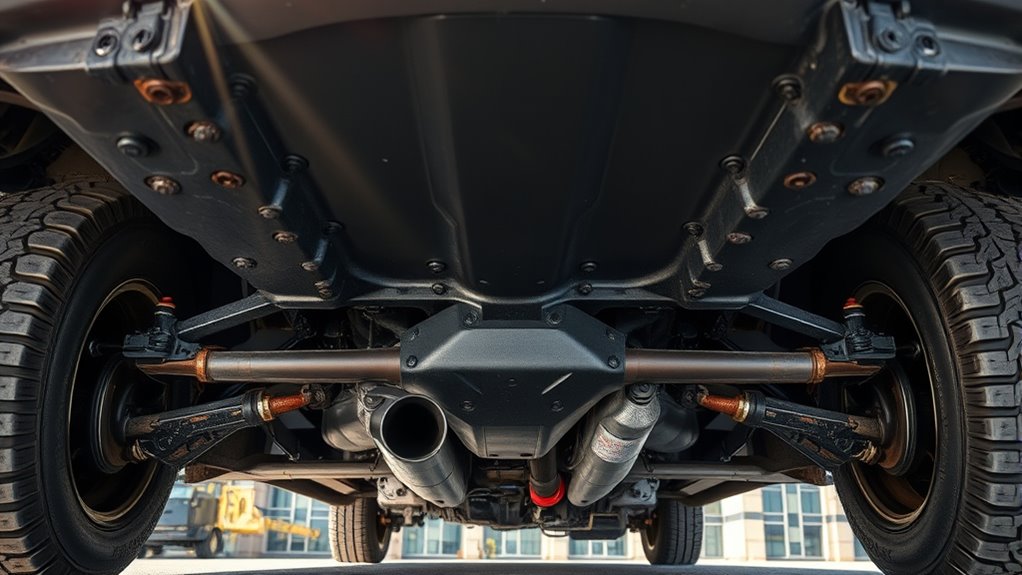
Rust on your vehicle’s underbody can develop quickly if you don’t take proactive steps to prevent it. The underside of your car is constantly exposed to moisture, road salt, mud, and debris, all of which accelerate corrosion. Ignoring these factors can lead to costly repairs down the line. To protect your vehicle effectively, start with a good rustproof coating. This coating creates a barrier that shields metal surfaces from moisture and corrosive elements. Applying a high-quality rustproof coating isn’t a one-time fix; it’s an ongoing process. Regular reapplication, especially before winter or after harsh weather conditions, ensures maximum protection.
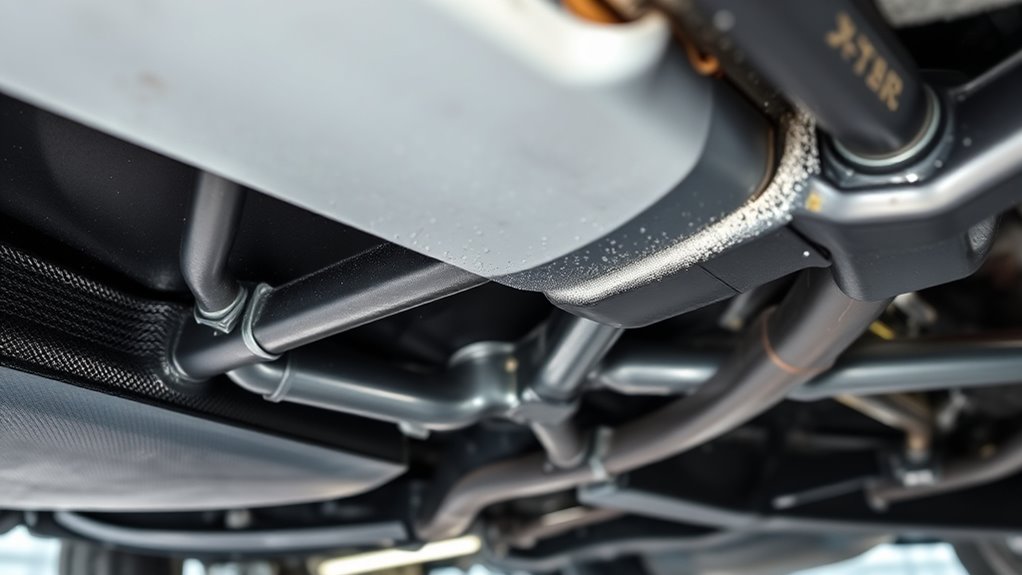
However, applying a rustproof coating alone isn’t enough. You also need to perform regular undercarriage inspections. These inspections let you catch early signs of rust or damage before they become serious problems. During an inspection, look for bubbling paint, rust spots, or loose parts. Pay special attention to areas around welds, seams, and joints, where moisture tends to collect. If you notice any rust or deterioration, address it immediately. Removing rust early and applying a fresh coating can prevent it from spreading and causing structural issues.
You might consider doing your own undercarriage inspections with the right tools, like a flashlight and a mirror, but it’s often best to have a professional check your vehicle periodically. Professionals can spot subtle signs of corrosion and recommend repairs or treatments you might overlook. They can also reapply rustproof coatings more thoroughly, ensuring every vulnerable spot is protected. When your mechanic inspects the undercarriage, ask about the condition of the rustproof coating and whether it needs touch-up or reapplication. Regular maintenance helps extend the lifespan of your vehicle and keeps it looking and functioning like new. Additionally, understanding the role of corrosion resistance in prolonging vehicle durability can guide you in choosing the right protective measures for your car.
Frequently Asked Questions
How Often Should Underbody Rust Prevention Be Reapplied?
You should reapply underbody rust prevention every 1 to 2 years as part of your vehicle maintenance routine. Regular rust prevention frequency helps protect your car from corrosion caused by road salt, moisture, and debris. Check your vehicle annually, especially after winter or harsh weather, and reapply if you notice wear or damage. Staying consistent with rust prevention guarantees your vehicle stays protected and maintains its value longer.
Can Underbody Rust Prevention Be Used on All Vehicle Types?
Did you know that over 75% of vehicle owners face rust issues at some point? Yes, underbody rust prevention can be used on most vehicle types, but you should check product variations for compatibility. Some products are designed specifically for cars, trucks, or SUVs. Always verify the label to make sure it suits your vehicle’s make and model, so you get the best protection without any issues.
Are DIY Underbody Rust Prevention Methods Effective?
DIY underbody rust prevention methods can be effective if you apply rust prevention sprays properly and thoroughly. You need to clean and dry the area first, then use high-quality rust prevention sprays designed for underbody protection. While DIY applications might not last as long as professional treatments, they’re a good, cost-effective way to delay rust development. Just remember, regular reapplication and maintenance are key to maintaining rust resistance.
What Are the Signs That Rust Prevention Is Failing?
Your rust prevention could be failing if you notice bubbling paint, flaking, or rust spots on the underbody—these signs are like alarms blaring. Regular corrosion detection and preventative maintenance are key. If you see these issues, it’s time to act before the rust spreads like wildfire. Keep an eye out, and don’t ignore small problems—they can quickly turn into costly repairs if left unchecked.
Is Underbody Rust Prevention Safe for the Environment?
Underbody rust prevention is generally safe for the environment when proper products and application methods are used. Many treatments are designed with chemical safety in mind, minimizing harmful environmental impact. However, you should always check product labels and follow disposal instructions carefully. If you’re concerned, opt for eco-friendly options that reduce chemical runoff. Proper application and disposal help make sure your rust prevention doesn’t harm the environment or pose risks to wildlife.
Conclusion
By taking proactive steps to prevent underbody rust, you’re shielding your vehicle like a guardian defending a fortress. Each treatment acts as a safeguard, preserving its strength and integrity through time’s relentless march. Remember, your car’s underbody is the foundation of its resilience—nurture it wisely. When you invest in rust prevention, you’re not just protecting metal; you’re safeguarding the journey ahead, ensuring your vehicle remains steadfast and true, mile after mile.