If your O2 sensor is failing, you might notice rough engine performance, poor acceleration, and increased fuel consumption. Your check engine light could turn on, and your vehicle may emit higher levels of pollutants. You could also experience engine stalling or hesitation, along with reduced emissions efficiency. Over time, ignoring these signs can damage your catalytic converter and reduce your vehicle’s lifespan. To understand these symptoms better and how to address them, keep exploring further.

Get business pricing on garage and car supplies
- Business-only prices and quantity discounts
- Tax-exempt purchasing
- Multiple users, one account, clear invoices
Key Takeaways
- Check engine light activates and onboard diagnostics detect O2 sensor issues.
- Engine runs rough, hesitates, or stalls due to air-fuel imbalance.
- Increased fuel consumption and unburned fuel odors indicate faulty sensor signals.
- Higher emissions and potential failure in emissions tests suggest sensor failure.
- Long-term problems include catalytic converter damage and reduced engine lifespan.
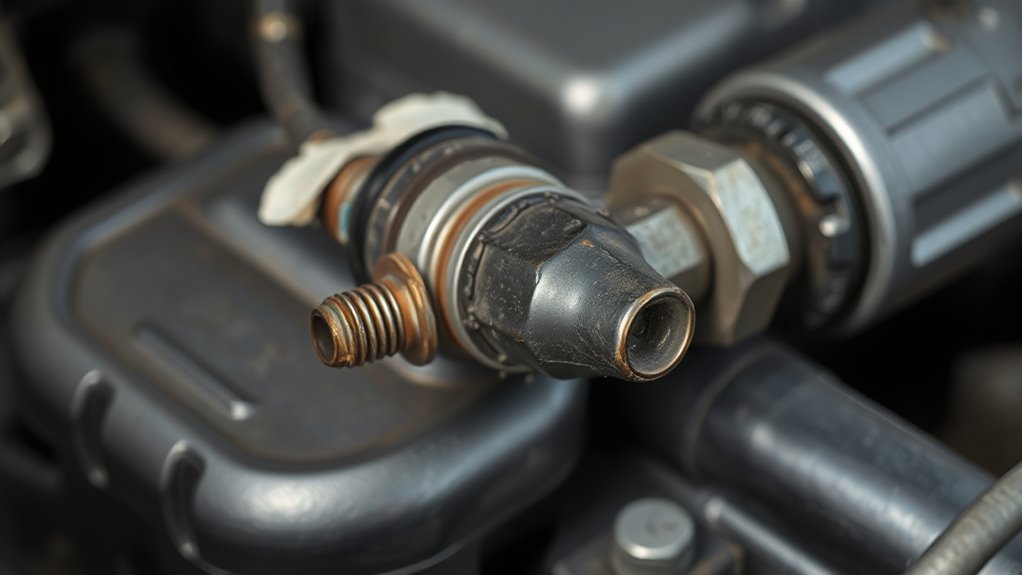
Have you noticed your vehicle running rough or experiencing poor fuel economy? These signs could point to an issue with your oxygen sensor, which plays an essential role in your vehicle’s engine management system. One of the primary functions of the O2 sensor is to provide real-time data to your vehicle’s engine control unit (ECU), helping it optimize the air-fuel mixture for efficient combustion. When the sensor isn’t functioning properly, it can disrupt this balance, leading to several noticeable symptoms. Performing sensor diagnostics can help determine if a faulty O2 sensor is the culprit. Since the sensor also impacts emission control, a malfunction can cause your vehicle to emit higher levels of pollutants, potentially leading to failed emissions tests and increased environmental impact.
A failing oxygen sensor can cause rough running, poor fuel economy, and increased emissions.
If your O2 sensor is failing, you might notice your check engine light turning on unexpectedly. This light acts as an early warning system, indicating that your vehicle’s onboard diagnostics have detected a problem with the sensor or related components. When the sensor sends incorrect signals, your engine may run too rich (excess fuel) or too lean (insufficient fuel), which can cause rough idling, hesitation during acceleration, or even stalling. These symptoms occur because the ECU relies heavily on accurate sensor data to adjust fuel delivery and ignition timing, and faulty signals throw off this delicate balance.
Poor fuel economy is another common symptom of a failing O2 sensor. If the sensor is giving incorrect readings, your vehicle may burn more fuel than necessary, costing you money at the pump. Similarly, you might notice increased emissions or a smell of unburned fuel, indicating the sensor isn’t helping maintain proper combustion. Sometimes, the engine may run hotter or cooler than usual, which can further affect performance and longevity.
Over time, a faulty O2 sensor can cause damage to other parts of your vehicle’s emission control system, such as the catalytic converter. Because the sensor’s primary job is to help regulate emissions, an inoperative sensor can lead to increased pollutant output and potential legal issues with emissions testing. Replacing a bad sensor not only restores smooth engine operation but also ensures your vehicle remains compliant with environmental regulations. It’s vital to address these symptoms promptly, as ignoring them could lead to expensive repairs down the line. Regular sensor diagnostics and maintenance can help keep your vehicle running efficiently, saving you money and reducing your environmental footprint.
As an affiliate, we earn on qualifying purchases.
Frequently Asked Questions
Can O2 Sensor Failure Affect Fuel Economy?
Yes, a failing O2 sensor can reduce your fuel economy. When the sensor malfunctions, it disrupts sensor diagnostics and affects your vehicle’s emission control system. This causes the engine to run inefficiently, often leading to increased fuel consumption. You might notice your car uses more gas than usual. Replacing a faulty sensor restores proper emission control, improves fuel efficiency, and helps your vehicle run smoothly again.
How Long Do O2 Sensors Typically Last?
You might be surprised, but O2 sensors typically last between 60,000 to 100,000 miles. Don’t assume they’ll last forever; sensor lifespan varies based on driving habits and conditions. Most experts recommend following your vehicle’s replacement intervals to keep your engine running smoothly. Regular maintenance guarantees your sensor functions properly, preventing issues like reduced fuel efficiency and increased emissions. Stay proactive to avoid unexpected breakdowns and costly repairs.
Is O2 Sensor Failure Dangerous to Drive With?
Driving with a failing O2 sensor can be dangerous because it affects your vehicle’s emissions and fuel efficiency, potentially leading to engine damage. You should get sensor replacement promptly after diagnostic testing confirms the issue. Ignoring this can cause poor engine performance, increased emissions, and costly repairs later. Regular maintenance and quick action guarantee your vehicle runs smoothly, keeping you safe and compliant with emissions standards.
Can Bad O2 Sensors Cause Engine Stalling?
Bad oxygen sensors can cause your engine to stall, acting like a sneaky puppet master pulling your strings. When oxygen sensor malfunctions occur, they disrupt the air-fuel mixture, leading to rough idling and stalling. You’ll also notice the check engine light flickering on your dashboard. Ignoring these signs can lead to further engine damage, so it’s best to get your oxygen sensors checked and replaced promptly to keep your ride smooth.
How Much Does It Cost to Replace an O2 Sensor?
Replacing an O2 sensor typically costs between $150 and $300, depending on your vehicle and location. The cost estimation includes parts and labor, with sensors priced around $50 to $150 each. You can save money by doing the sensor replacement yourself if you’re comfortable with car repairs. Otherwise, a professional mechanic can handle it quickly, ensuring proper installation and ideal engine performance.
Conclusion
So, next time your dashboard lights up with warning signs, you might be tempted to ignore the O2 sensor’s silent cry for help. After all, who needs perfect fuel efficiency or a smooth ride? Ironically, neglecting these symptoms could lead to costly repairs—proof that sometimes, the smallest sensors have the biggest impact. Pay attention now; your car’s quiet hints might just save you from an unexpected, expensive surprise later.
Halloween Picks
halloween
As an affiliate, we earn on qualifying purchases.