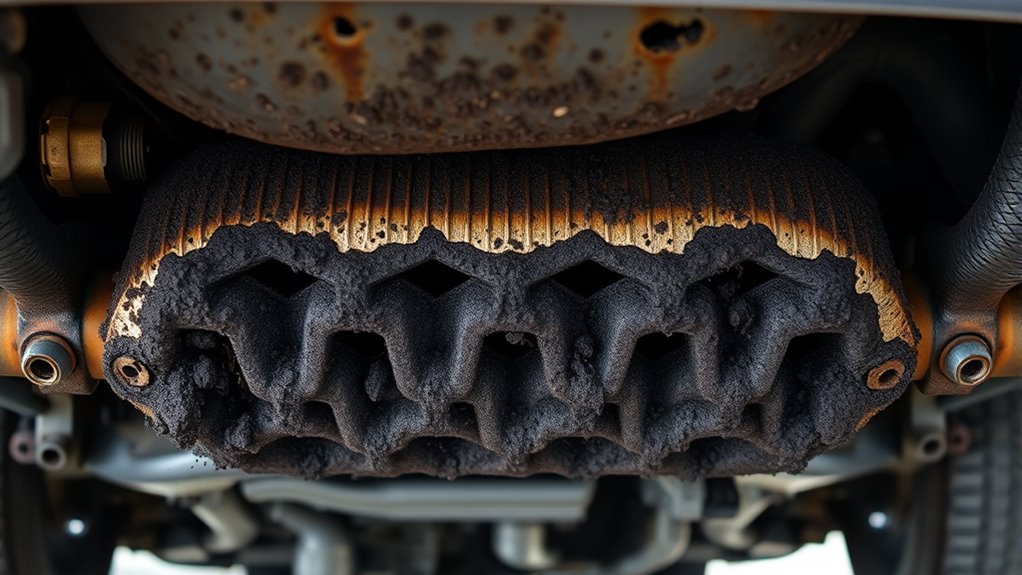

A clogged catalytic converter restricts exhaust flow, which can cause your engine to lose power, accelerate sluggishly, and fuel efficiency to drop. The buildup of debris and carbon from emissions can trigger increased backpressure, misreadings from oxygen sensors, and even damage to engine components over time. If you ignore these signs, it could lead to costly repairs or emissions failures. To understand how to prevent and fix this issue, explore the details ahead.
Key Takeaways
- Clogging occurs due to debris and carbon buildup, restricting airflow and increasing exhaust backpressure.
- It leads to reduced engine performance, sluggish acceleration, and decreased fuel efficiency.
- A clogged converter can cause oxygen sensors to misread exhaust gases, affecting emissions and ECU adjustments.
- Mechanical stress from backpressure may damage engine components like pistons, valves, or turbochargers.
- Regular maintenance, diagnostics, and timely cleaning or replacement prevent severe clogging and system damage.

Catalytic converter clogging occurs when accumulated debris and carbon deposits restrict airflow through the exhaust system. This buildup can considerably impact your vehicle’s performance, fuel efficiency, and emissions. As the exhaust flow becomes obstructed, it causes increased exhaust backpressure, which your engine struggles to overcome. You might notice sluggish acceleration, reduced power, or even rough idling. One key factor that worsens this issue involves the oxygen sensors. These sensors monitor the amount of oxygen in the exhaust gases and send signals to your vehicle’s engine control unit (ECU). When the catalytic converter is clogged, the oxygen sensors can misread the exhaust composition because the restricted flow causes inconsistent oxygen levels. This misreading often prompts the ECU to adjust fuel mixture improperly, leading to further inefficiency and sometimes increased emissions. In severe cases, the oxygen sensors may become contaminated or fail prematurely due to the excessive buildup, compounding the problem.
The increased exhaust backpressure caused by a clogged converter puts extra strain on your engine and exhaust system. Your engine has to work harder to push exhaust gases out, which can cause overheating and undue wear on components like the turbocharger (if equipped) or internal engine parts. Over time, this added stress can lead to more substantial mechanical issues, such as damaged pistons or valves. Recognizing the early signs of a clogged catalytic converter can save you money and prevent engine damage. For example, if you experience frequent stalling, a noticeable decline in fuel economy, or the check engine light comes on with codes related to oxygen sensors or exhaust flow, it’s worth investigating further. Additionally, the importance of proper airflow in the exhaust system cannot be overstated for maintaining optimal engine performance.
Regular maintenance and timely diagnostics are essential to prevent or address catalytic converter clogging. When you notice symptoms like poor acceleration or increased emissions, it’s vital to have your vehicle inspected. A mechanic can evaluate the exhaust backpressure using specialized tools and check the oxygen sensors for proper functioning. Sometimes, cleaning the catalytic converter or replacing it is necessary to restore ideal airflow and performance. Ignoring these issues can lead to more severe problems, including engine misfires, increased pollutant emissions, or even irreversible damage to your vehicle’s exhaust system. Staying attentive to signs of clogging and ensuring your oxygen sensors are functioning correctly helps you maintain a smooth-running engine and keeps emissions within legal limits. Ultimately, proactive maintenance and awareness of how debris impacts airflow will help you avoid costly repairs and keep your vehicle running efficiently.
Frequently Asked Questions
How Can I Prevent Catalytic Converter Clogging?
To prevent catalytic converter clogging, you should regularly maintain your vehicle, ensuring proper fuel efficiency and emissions reduction. Use quality fuel and avoid short trips that don’t allow the engine to warm up fully. Keep your engine tuned, replace air filters promptly, and address any engine issues early. These steps help keep your catalytic converter clean, improve fuel efficiency, and reduce harmful emissions, ultimately extending its lifespan and maintaining excellent vehicle performance.
What Are the Signs of a Clogged Catalytic Converter?
You notice your vehicle’s exhaust system emitting unusual odors, experiencing a decrease in power, or facing frequent stalling, right? These are signs of a clogged catalytic converter. When your emission control system is compromised, it can cause overheating, poor acceleration, and increased emissions. Pay attention to these symptoms—your car’s health depends on maintaining a smooth, functional exhaust system to guarantee ideal performance and environmental compliance.
How Long Does a Catalytic Converter Typically Last?
A catalytic converter typically lasts between 70,000 and 100,000 miles, but this can vary based on your vehicle’s condition and driving habits. To guarantee it meets emission standards, regular maintenance helps prevent clogging. When it’s time for replacement, recycling processes recover valuable metals, making it eco-friendly. Keep an eye on signs of trouble, like reduced performance, to extend its lifespan and stay compliant with emission standards.
Can a Clogged Converter Cause Engine Damage?
Some might think a clogged catalytic converter only affects emissions, but it can actually harm your engine. Poor catalytic converter maintenance can lead to increased backpressure, causing engine performance impact and potential damage. If you notice sluggish acceleration or overheating, don’t ignore it. A clogged converter can cause misfires or even damage your engine components, so addressing this issue promptly is essential to avoid costly repairs.
Is It Safe to Drive With a Clogged Catalytic Converter?
It’s not safe to drive with a clogged catalytic converter because it impacts your vehicle’s engine performance and increases automotive emissions. A clogged converter can cause poor acceleration, stalling, and even damage your engine over time. You might also fail emissions tests. If you notice these issues, have a mechanic inspect and replace the converter promptly to keep your vehicle running smoothly and reduce harmful emissions.
Conclusion
So, next time your engine stalls or your car coughs, don’t forget—your precious catalytic converter might be throwing a tantrum from all that clogging. Maybe it’s tired of working overtime for free, or perhaps it’s just auditioning for a role in “The Great Car Breakdown.” Either way, neglecting it might just turn your ride into a fancy paperweight. So, give your converter some love—or prepare for a very expensive lesson in ignoring your car’s pleas.