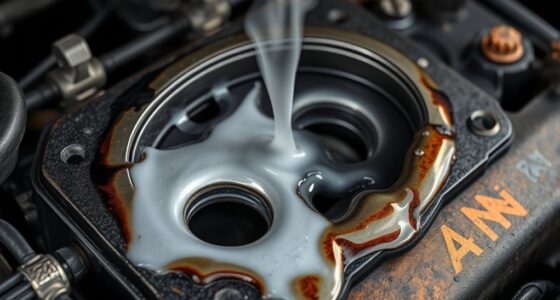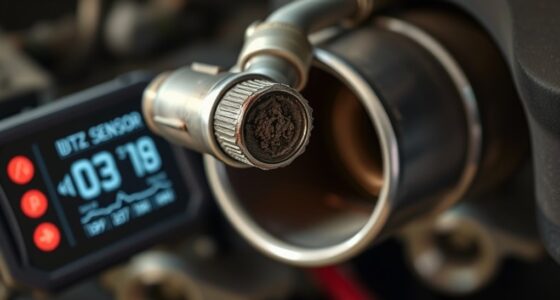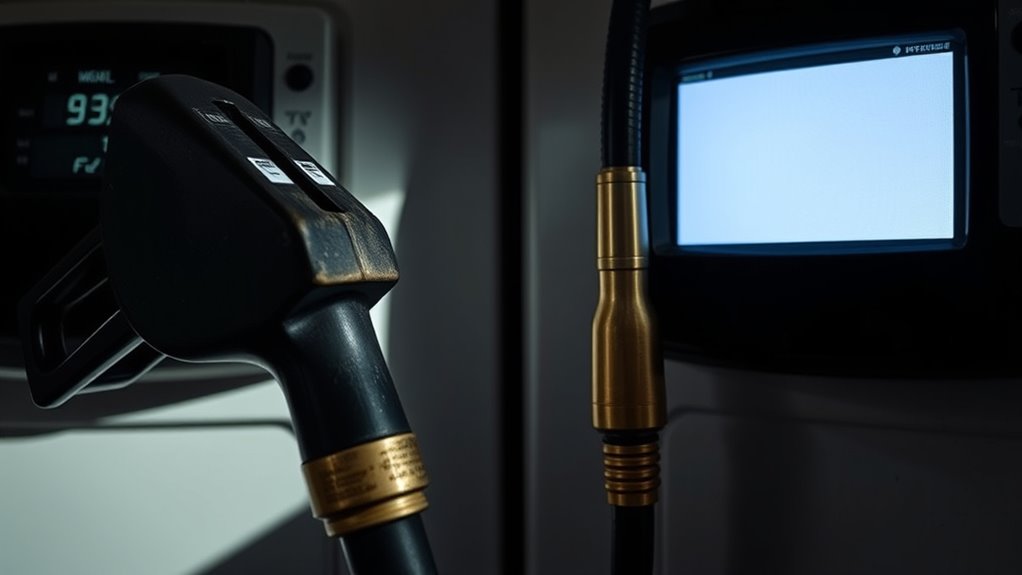

A weak fuel pump causes symptoms like hard starts, engine sputtering, loss of power, and inconsistent performance, often with lower fuel pressure. In contrast, a dead pump results in the engine cranking but not starting at all, no fuel flow, and no humming sound when you turn the key on. Recognizing these signs helps determine whether you need a repair or replacement. Continue to explore to learn detailed diagnostic steps and how to fix each issue effectively.
Key Takeaways
- A weak pump causes slow starts and engine sputtering; a dead pump results in no start and zero fuel pressure.
- Listen for a humming sound when turning the key; absence indicates a dead pump, while a weak pump may produce a faint or inconsistent noise.
- Measure fuel pressure; low pressure suggests weakness, while zero pressure confirms a dead pump.
- Check for fuel flow; no flow indicates a dead pump, whereas reduced flow indicates weakness.
- Repairing a weak pump may involve replacing the fuel filter or fixing wiring, while a dead pump typically requires tank removal and replacement.
When your vehicle struggles to start or stalls unexpectedly, it’s often due to issues with the fuel pump. Understanding whether the problem is a weak pump or a dead one is vital, as it affects how you approach diagnosis and repair. Diagnostic signs can help you determine the severity of the issue. For instance, if your car takes longer than usual to start or sputters during acceleration, these are indicators of a weak fuel pump. You might also notice a loss of power under load or inconsistent engine performance. Conversely, if the engine cranks but refuses to start altogether, it could point to a dead fuel pump. In such cases, the pump may not be delivering any fuel at all, or it might have completely failed. Additionally, monitoring the fuel pressure with a gauge can provide valuable information about the pump’s condition. Performing diagnostic procedures involves a systematic approach. First, check for any obvious signs like a blown fuse or wiring issues that could be temporarily affecting the pump. Listening for the fuel pump’s humming sound when turning the key to the “on” position is an immediate, simple test. If you don’t hear it, that’s a strong sign the pump isn’t functioning. Next, measuring fuel pressure with a gauge provides more definitive insights. A weak pump will produce lower-than-recommended pressure, indicating it’s struggling to supply fuel properly. A dead pump, however, will generate no pressure at all. If pressure readings are insufficient, replacing the pump might be necessary. Always consult your vehicle’s repair manual for specific pressure ranges and procedures. When it’s time for repair procedures, a weak fuel pump often just needs a replacement of the pump or cleaning of the fuel filter, which can become clogged over time and hinder flow. In some cases, a faulty relay or wiring issue is to blame, and fixing these can restore function without replacing the entire pump. If the pump is dead, however, you’ll need to remove the fuel tank to access and replace the faulty unit. This process involves safely draining the tank, disconnecting fuel lines, and removing mounting hardware. After installation, you should verify the new pump’s operation by checking fuel pressure and ensuring the engine starts smoothly. Recognizing the Diagnostic signs early can help prevent further engine damage and ensure a timely repair.
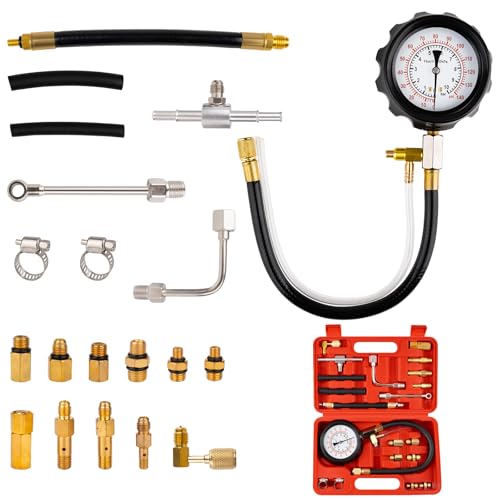
0-140PSI Fuel Pressure Tester Kit, Fuel Injector Injection Pump Pressure Gauge, Fuel Pump Pressure Tester Diagnostic Tool for Gasoline Cars, Trucks, Motorcycles and RVs
- Compatibility Note: Check vehicle manual for compatibility
- Wide Compatibility: Suitable for most gasoline engines
- Accurate Testing: High-precision sensors for reliable readings
As an affiliate, we earn on qualifying purchases.
As an affiliate, we earn on qualifying purchases.
Frequently Asked Questions
Can a Weak Fuel Pump Cause Starting Problems?
Yes, a weak fuel pump can cause starting problems. When your fuel system’s pump isn’t delivering enough pressure, your vehicle struggles to start or stalls shortly after. Regular vehicle maintenance helps identify issues early. If you notice difficulty starting, it’s essential to have your fuel pump checked, as a weak pump can lead to more serious engine problems over time. Addressing this quickly keeps your vehicle running smoothly.
How Can I Test if My Fuel Pump Is Dead?
You can test if your fuel pump is dead by checking the fuel pressure with a gauge; if there’s no pressure, it’s likely dead. Listen for pump noise when turning the key; a silent pump indicates a problem. If you hear a faint hum or no sound at all, test the relay and wiring. These steps help you determine if your fuel pump is dead or just weak.
What Are the Common Signs of a Failing Fuel Pump?
You might notice your vehicle struggles to start, stalls randomly, or experiences hesitation during acceleration. Sometimes, a clogged fuel filter can mimic these symptoms, making it harder for the pump to deliver fuel properly. Electrical issues, like a faulty relay or wiring problems, can also cause the pump to fail. If you see these signs, it’s time to check your fuel pump, filter, and electrical connections to prevent further damage.
Is It Safe to Drive With a Weak Fuel Pump?
You shouldn’t drive with a weak fuel pump because it can cause your engine performance to suffer, leading to stalling or difficulty starting. A weak pump also affects fuel efficiency, making your vehicle less economical. Continuing to drive may cause further damage or unsafe situations. It’s best to get it inspected and repaired promptly to guarantee safe driving and sustain ideal engine performance.
How Long Does a Typical Fuel Pump Last?
They say time and tide wait for no one, and the same applies to your fuel pump. Typically, a fuel pump lasts between 100,000 to 150,000 miles with proper maintenance. To extend its life, follow maintenance tips like regular fuel filter changes and keeping your tank at least a quarter full. This helps maintain fuel efficiency and prevents premature failure, ensuring your vehicle runs smoothly and reliably for years to come.
Conclusion
Understanding the difference between a weak and dead fuel pump can save you time and money. Did you know that approximately 60% of vehicle breakdowns are caused by fuel pump issues? If your car struggles to start or stalls unexpectedly, it might be a weak pump rather than a dead one. Addressing these problems early keeps your engine running smoothly and avoids costly repairs. Stay vigilant, and don’t ignore signs of fuel pump trouble to keep your vehicle on the road.