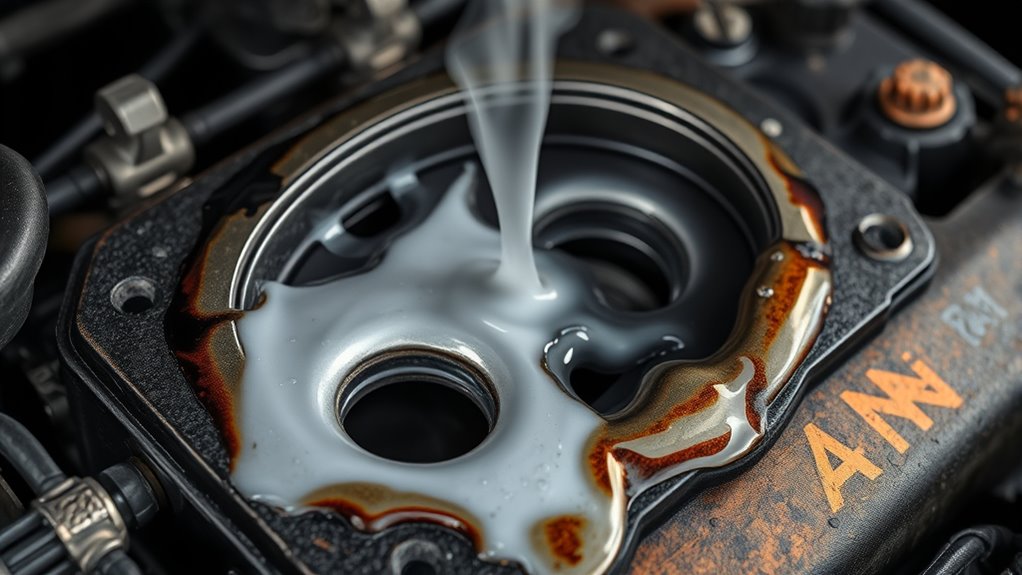

If your head gasket is failing, you might notice coolant leaking or puddles beneath your vehicle, along with a sweet smell. Your engine could overheat, especially during long drives or idling, and you might see white smoke from the exhaust. Oil may appear milky or frothy, and you could experience loss of power or rough idling. Keep an eye on these signs—more details can help you catch the issue early and avoid serious engine damage.

Get business pricing on garage and car supplies
- Business-only prices and quantity discounts
- Tax-exempt purchasing
- Multiple users, one account, clear invoices
Key Takeaways
- Coolant leaks, puddles, and a sweet smell indicate head gasket failure.
- Engine overheating and rising temperature gauge readings are common symptoms.
- White smoke from the exhaust and a sweet odor suggest coolant entering combustion chambers.
- Milky or frothy oil on dipstick signals coolant contamination from gasket damage.
- Loss of engine power and rough idling often accompany gasket failure.

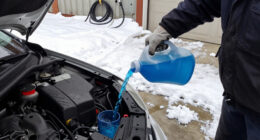
Have you ever wondered how to tell if your engine’s head gasket is failing? One of the most noticeable signs is coolant leaks. If you spot a puddle of coolant underneath your car or notice a sweet smell coming from the engine bay, it could be a sign that the head gasket isn’t sealing properly. Coolant leaks often occur when the gasket develops small cracks or breaks, allowing coolant to escape from the cooling system. This leakage can lead to low coolant levels, which might not be immediately obvious but can cause serious issues if left unchecked. Keep an eye on your coolant reservoir and radiator for any unexplained drops in fluid levels.
Coolant leaks and sweet smells signal possible head gasket failure—watch for puddles and check your coolant levels regularly.
Another critical symptom tied to head gasket failure is engine overheating. When the gasket fails, it can allow coolant to mix with engine oil or escape entirely, reducing the coolant’s ability to regulate temperature. As a result, your engine runs hotter than normal, and you might notice the temperature gauge creeping into the red zone. Overheating isn’t just uncomfortable; it’s dangerous. It can cause severe engine damage, including warped cylinders or a cracked engine block. If you notice your engine running hotter than usual, especially after a long drive or during idle, it’s time to investigate further.
You might also observe white smoke billowing from the exhaust pipe. This smoke is often a telltale sign of coolant burning in the combustion chamber, which occurs when the head gasket fails and allows coolant to seep into the engine’s cylinders. Along with white smoke, you might notice a sweet smell from the exhaust or a drop in engine performance, such as loss of power or rough idling. These symptoms can be confusing, but they all point toward a compromised head gasket.
Additionally, milky or frothy engine oil is another warning sign. When coolant leaks into the oil passages, it dilutes the oil, creating a milky appearance on the oil fill cap or dipstick. This contamination can compromise lubrication, leading to increased engine wear or even failure if not addressed promptly. You might also experience bubbling in the radiator or coolant reservoir, which indicates that combustion gases are escaping into the cooling system.
Recognizing these symptoms early can save you significant repair costs and prevent severe engine damage. Regularly check your coolant levels, monitor engine temperature, and pay attention to changes in engine performance. If you notice any of these signs, it’s wise to have a professional mechanic diagnose the issue promptly. Addressing head gasket problems early helps keep your engine running smoothly and extends its lifespan.
As an affiliate, we earn on qualifying purchases.
Frequently Asked Questions
Can a Head Gasket Failure Cause Engine Misfires?
Yes, a head gasket failure can cause engine misfires. When the gasket fails, it can lead to engine overheating and oil contamination, both of which disrupt proper combustion. The overheating may cause the engine to run unevenly, while contaminated oil can impair engine components, resulting in misfires. If you notice these symptoms, it is crucial to have your vehicle checked promptly to prevent further damage.
How Long Can I Drive With a Blown Head Gasket?
You shouldn’t drive long with a blown head gasket because it can cause severe engine overheating and oil contamination. If you notice these issues, stop driving immediately to prevent further damage. A blown head gasket leads to coolant leaks and mixing of oil and coolant, which quickly deteriorates engine performance. Continuing to drive risks costly repairs, so it’s best to have your vehicle inspected and repaired as soon as possible.
Is There a Quick Fix for Head Gasket Failure?
You can attempt a quick fix for head gasket failure with a temporary repair using gasket sealants. These sealants can help seal small leaks and buy you some extra time, but they’re not permanent solutions. Apply the sealant carefully, following instructions, and keep in mind that this is only a short-term fix. For lasting results, you’ll need to get the gasket professionally repaired or replaced.
What’s the Average Cost to Repair a Head Gasket?
The average cost for head gasket repair typically ranges from $1,000 to $2,000, depending on your vehicle and labor rates. You should get a detailed cost estimation from a trusted mechanic to understand what’s included. Keep in mind, head gasket repair involves significant labor, and prices can vary based on the engine type and the extent of damage, so budgeting accordingly is wise.
Can Low Coolant Levels Indicate Head Gasket Problems?
You might notice low coolant levels, which can indicate a head gasket problem. A coolant leak caused by a blown gasket often leads to engine overheating, making you suspect something’s wrong. When the head gasket fails, it allows coolant to escape or mix with oil, reducing coolant in the system. Keep an eye on coolant levels and engine temperature—these signs could be warning you about a potential head gasket issue.
Conclusion
If you notice signs like overheating, coolant leaks, or white smoke, don’t ignore them—these are your car’s way of sounding the alarm, like a modern-day Cassandra warning of impending doom. Head gasket failure can escalate quickly, so catch it early before your engine becomes a Trojan horse, bringing chaos to your ride. Stay vigilant, and treat these symptoms as a siren call to act swiftly—your vehicle’s health depends on it.
Halloween Picks
halloween
As an affiliate, we earn on qualifying purchases.