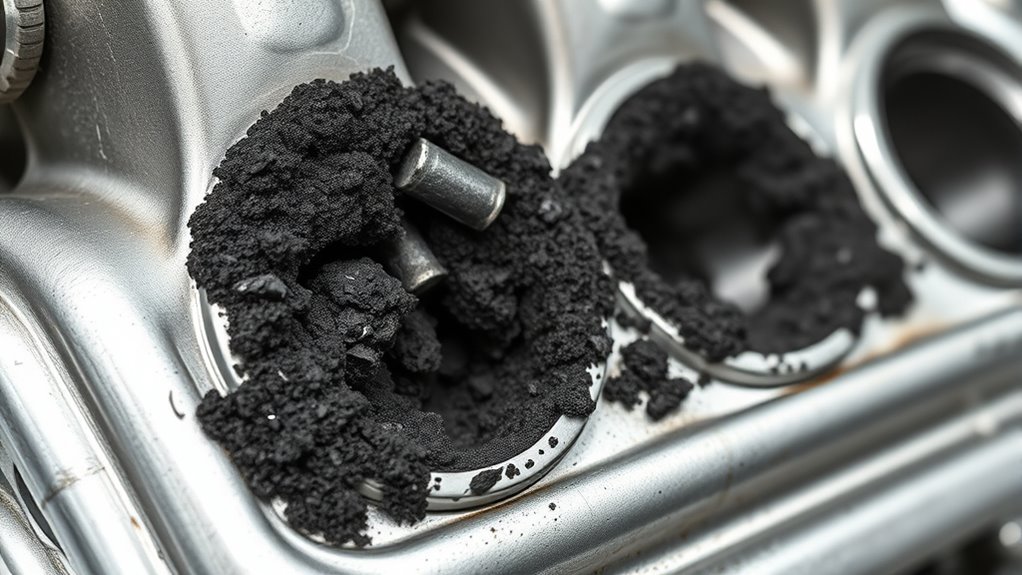

Intake carbon build-up happens when carbon deposits accumulate on your engine’s intake valves, throttle body, and other components, gradually blocking airflow and causing rough idling, sluggish acceleration, and higher fuel consumption. This buildup results from everyday driving habits like short trips and stop-and-go traffic, which promote carbon formation. Continuing to ignore these issues can lead to decreased engine efficiency and costly repairs. If you want to learn more about preventing or treating this problem, keep exploring your options.
Key Takeaways
- Intake carbon build-up occurs from deposits on valves and throttle body, caused by short trips and stop-and-go driving.
- Symptoms include rough idling, stalling, decreased power, and increased fuel consumption.
- It disrupts airflow, reducing engine efficiency and causing higher emissions.
- Regular cleaning and fuel additives help prevent and reduce carbon deposits.
- Addressing build-up restores engine performance, improves fuel economy, and prevents costly repairs.

Have you ever wondered why your engine runs rough or stalls unexpectedly? One common culprit is intake carbon build-up, a sneaky issue that can considerably impact your vehicle’s performance. Over time, carbon deposits can accumulate on the intake valves, combustion chambers, and throttle body, disrupting the airflow essential for efficient combustion. This build-up can choke the intake system, causing your engine to work harder than it needs to, which directly affects fuel efficiency and engine performance. When the airflow is restricted, your engine’s ability to burn fuel properly diminishes, leading to decreased power, sluggish acceleration, and even rough idling. Recognizing the signs early can save you money and keep your vehicle running smoothly.
Intake carbon build-up develops gradually, often unnoticed until it becomes severe. Modern engines rely heavily on precise air-fuel ratios, and when carbon deposits block airflow, this balance is thrown off. You might notice your vehicle requires more fuel to maintain the same performance, or it might stall at idle more frequently. These symptoms are clues that your intake system needs attention. The build-up acts like a barrier, preventing fresh air from entering the combustion chamber efficiently. As a result, your engine struggles to produce ideal power, and your fuel consumption increases because it compensates for the reduced airflow. This inefficiency not only wastes fuel but also puts extra strain on engine components, accelerating wear and tear.
Fortunately, intake carbon build-up isn’t inevitable, and there are steps to prevent or reduce it. Regular maintenance, including periodic cleaning of the intake valves and throttle body, can keep deposits at bay. Using fuel additives designed to clean carbon within the combustion chamber can also help, especially if you frequently drive short distances or in stop-and-go traffic, which promotes carbon accumulation. If you suspect considerable build-up, professional cleaning methods such as walnut blasting or chemical treatments can restore your engine’s airflow and performance. Addressing this issue promptly ensures your engine runs as intended, maximizing fuel efficiency and preserving engine health.
In essence, intake carbon build-up is a silent enemy that diminishes engine performance and fuel efficiency over time. By staying vigilant and maintaining your vehicle properly, you can prevent severe deposits from forming and keep your engine running smoothly. When you notice signs like rough idling, reduced power, or increased fuel consumption, don’t wait—taking action now can save you from costly repairs and maintain your vehicle’s reliability for miles to come. Proper care ensures your engine breathes freely, delivering the performance you expect and the efficiency you deserve.
Frequently Asked Questions
How Can I Prevent Carbon Build-Up in My Engine?
To prevent carbon build-up in your engine, regularly perform detergent cleaning on your intake system to break down deposits. Make sure to maintain your air filter by cleaning or replacing it as needed, since a clean filter ensures proper airflow and reduces contaminants that cause build-up. Additionally, use high-quality fuel and drive your car at highway speeds periodically to burn off residues, keeping your engine cleaner and running smoothly.
What Are the Signs of Severe Intake Carbon Deposits?
When your engine starts whispering its frustrations, signs of severe intake carbon deposits become clear. You’ll notice engine misfires and rough idling, as if your car’s trying to communicate discomfort. You might also see a drop in fuel efficiency and a sluggish response. These signs indicate that carbon buildup is interfering with ideal performance, prompting you to contemplate cleaning or professional maintenance to restore smooth operation and prevent further issues.
Does Using Fuel Additives Reduce Carbon Build-Up?
Yes, using fuel additives can help reduce carbon build-up. These additives clean your fuel injectors and improve the combustion cycle, preventing deposits from forming. When you add a fuel additive regularly, it helps keep the intake valves and combustion chamber cleaner, which maintains ideal engine performance. Just ensure you’re choosing a high-quality additive and following the manufacturer’s instructions for best results in reducing carbon deposits.
How Often Should I Have My Intake Manifold Cleaned?
You should have your intake manifold cleaned every 30,000 to 50,000 miles, depending on your driving habits. Following a regular maintenance schedule helps prevent carbon build-up that can affect engine performance. If you notice rough idling, reduced power, or poor fuel economy, it may be time for an intake cleaning sooner. Consult your vehicle’s manual or a mechanic to determine the best frequency for your specific car.
Can Carbon Build-Up Affect My Vehicle’s Fuel Efficiency?
Carbon build-up can definitely affect your vehicle’s fuel efficiency by reducing engine performance and impairing emissions control. When carbon accumulates in the intake manifold, it restricts airflow, causing your engine to work harder and use more fuel. Regular cleaning helps maintain ideal engine performance and ensures emissions stay within limits. So, if you notice decreased mileage or rough idling, it might be time for an inspection to prevent long-term damage.
Conclusion
Just like a knight must rid their sword of grime to stay sharp, you need to clear out carbon build-up to keep your engine running smoothly. Neglecting this can turn your smooth ride into a battle of sluggishness, much like a hero’s weapon losing its edge. Stay vigilant, clean regularly, and your engine will serve you faithfully, echoing the timeless wisdom of the ancients: a well-maintained tool is a powerful tool. Keep your engine shining bright!