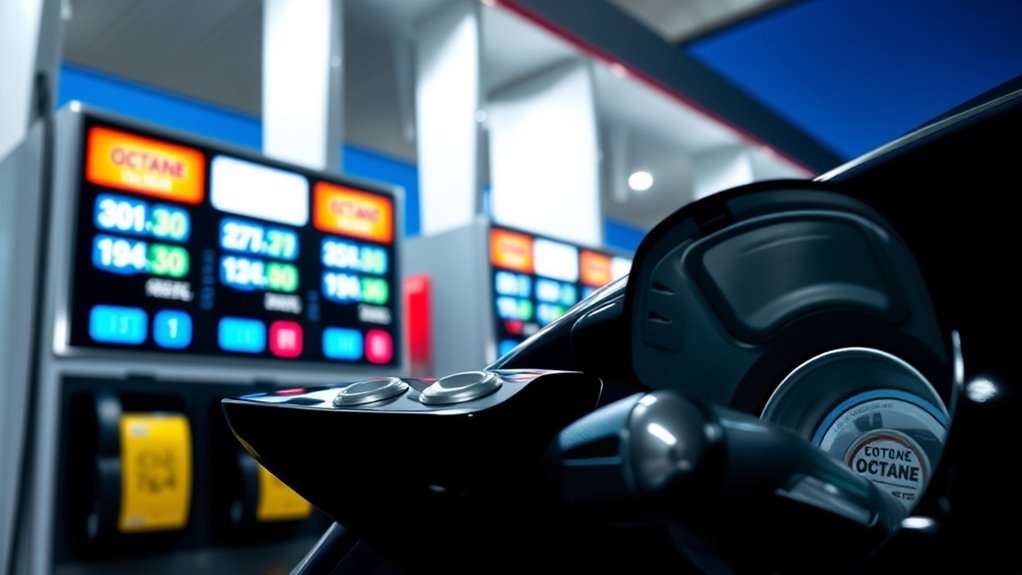

To select the right fuel octane, check your vehicle’s owner’s manual or the sticker inside your fuel door for the recommended rating. Using the proper octane guarantees your engine runs smoothly, prevents knocking, and maintains its longevity. Lower octane can cause damage, while higher than needed offers no benefits and wastes money. Knowing your engine’s needs helps you save on repairs and improve efficiency—keep going to discover how to make the best choice for your vehicle.
Key Takeaways
- Always check your vehicle owner’s manual or fuel door sticker for the recommended octane rating.
- Use the fuel octane specified by the manufacturer to ensure optimal engine performance.
- Higher octane fuel is necessary only for high-performance, turbocharged, or luxury engines requiring premium fuel.
- Using lower octane than recommended can cause knocking, engine damage, and reduced efficiency.
- Avoid paying extra for higher octane fuel if your vehicle doesn’t require it, to save costs and prevent unnecessary wear.
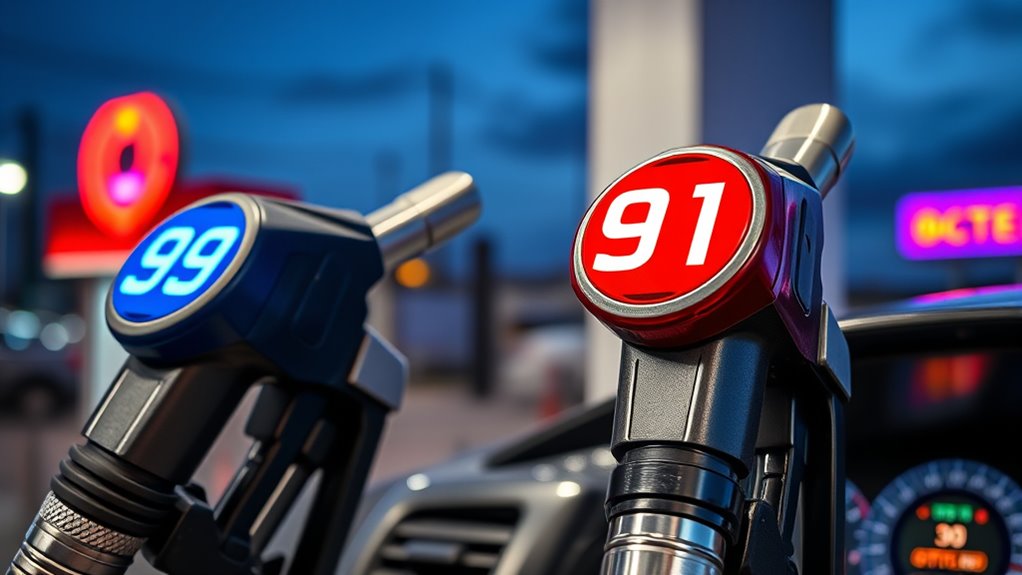
Selecting the right fuel octane is vital for maintaining your vehicle’s performance and efficiency. The octane rating of fuel directly impacts how well your engine runs and how much gas you’ll burn, making it indispensable to choose the correct type for your car. Using the proper octane level helps enhance engine performance, ensuring smooth acceleration, better power delivery, and reduced knocking or pinging sounds. When your engine runs smoothly, it not only performs better but also conserves fuel, leading to improved fuel economy over time.
Most vehicles come with a recommended octane rating specified by the manufacturer, often found in the owner’s manual or on a sticker inside the fuel door. Sticking to this recommendation is the best way to guarantee your engine operates at its best. If you regularly use fuel with an octane rating lower than what’s recommended, your engine could experience knocking, which can damage internal components over time and reduce overall performance. Conversely, using a higher octane fuel than necessary usually doesn’t provide any tangible benefits and can be an unnecessary expense. It’s a common misconception that higher octane fuels always improve performance; in reality, they’re designed to withstand greater compression, which only applies to high-performance or turbocharged engines.
Follow your vehicle’s recommended octane to prevent engine damage and avoid unnecessary fuel costs.
Understanding your vehicle’s needs can help you make smarter choices. If your engine is naturally aspirated and designed for regular unleaded fuel, sticking to the recommended octane will deliver the best balance of performance and fuel economy. Some high-performance or luxury vehicles may require premium fuel for ideal operation, as their engines are built with higher compression ratios that benefit from higher octane ratings. If you’re unsure, consult your owner’s manual or ask your mechanic. They can tell you whether your engine truly needs premium, or if regular unleaded will do just fine. Additionally, awareness of small mistakes related to fuel choice can help prevent long-term engine issues and optimize your vehicle’s lifespan.
Choosing the right octane isn’t just about engine health; it’s also about saving money. Using the correct fuel ensures your engine runs efficiently, which helps you get more miles per gallon. Over time, consistently using the proper octane can prevent damage and reduce maintenance costs, ultimately saving you money. On the other hand, consistently using a higher octane than required won’t necessarily improve performance or fuel economy, but it may cause you to spend more on fuel without any real benefit.

Oктис – 2 Oktis-2 Portable Fuel Analyzer Tester Meter Octane Number Gasoline Petrol Control Oktis-2
- Cost Savings: Reduces car maintenance and fuel costs
- Fuel Quality Assurance: Ensures high-quality gasoline at any station
- Octane Measurement: Measures gasoline octane number accurately
As an affiliate, we earn on qualifying purchases.
As an affiliate, we earn on qualifying purchases.
Frequently Asked Questions
How Does Fuel Octane Affect Engine Efficiency?
Higher fuel octane improves engine efficiency by preventing knocking, which allows your engine to run more smoothly and efficiently. Octane stability guarantees the fuel maintains its performance over time, while fuel additives can enhance combustion and protect engine components. When you choose the right octane level, you’re optimizing power output and fuel economy, reducing engine wear, and ensuring your vehicle runs reliably. Always follow your vehicle’s recommended octane for best results.
Can Using a Higher Octane Fuel Damage My Engine?
Using a higher octane fuel won’t damage your engine if it’s not designed for it, but it can cause engine knocking if it’s incompatible. Higher octane fuels resist knocking better, so using them in a car that doesn’t require it won’t improve performance and might be a waste of money. Always check your vehicle’s fuel compatibility to confirm you’re using the right octane, preventing potential engine issues.
Is Premium Fuel Necessary for All Vehicle Types?
You don’t need premium fuel for all vehicle types. Check your owner’s manual to see if your engine requires higher octane. Using premium with detergent additives can help keep your engine cleaner, but if your car runs fine on regular fuel, there’s no benefit. Also, follow fuel storage tips by keeping your tank full and storing fuel in a cool, dry place to maintain fuel quality and prevent issues.
How Can I Tell if My Engine Requires Higher Octane?
You suspect your engine might need higher octane, but how can you be sure? Start with octane testing—observe if your engine experiences knocking or pinging during acceleration or under load. If it does, it’s a sign to switch to a higher octane fuel. Pay attention to your vehicle’s response; smoother operation usually indicates the correct octane level. Don’t ignore the warning signs—they could save your engine.
Does Octane Rating Impact Fuel Economy?
Yes, octane rating can impact your fuel economy, especially if your vehicle’s engine isn’t designed for high-octane fuel. Many octane myths suggest higher octane always improves mileage, but that’s not true for most cars. Using unnecessary fuel additives or premium fuel won’t boost efficiency and can be costly. Stick to your manufacturer’s recommendations to avoid wasting money and guarantee peak performance.
Conclusion
Choosing the right fuel octane might seem small, but it’s your car’s heartbeat. Using the wrong octane can cause knocking and damage, robbing you of smooth, reliable performance. It’s the difference between a engine that hums effortlessly and one that struggles. Think about your car’s health and your safety—these small choices shape your driving experience. Don’t settle for less. Select wisely, and keep your journey steady and strong.