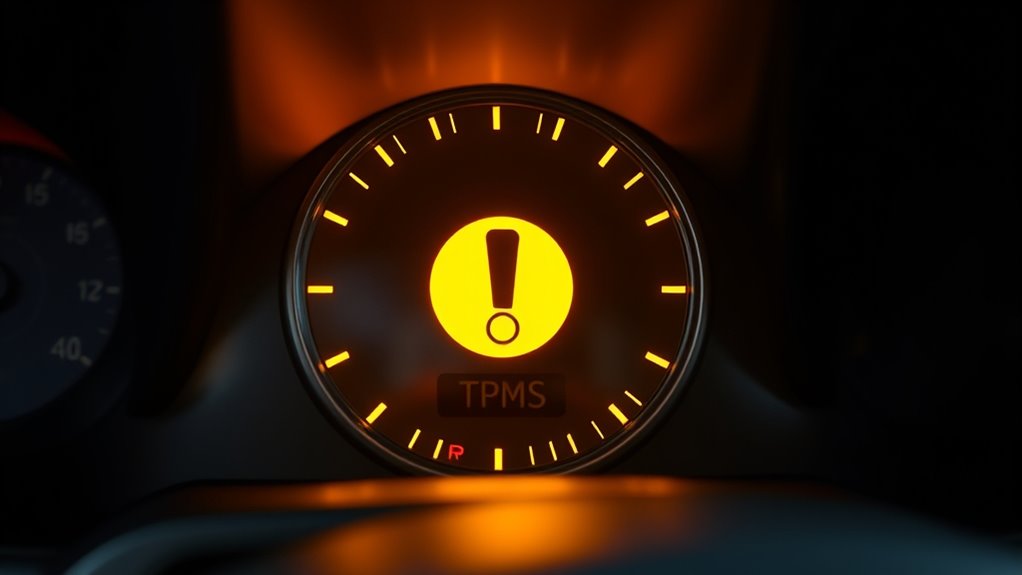

If your TPMS light turns on, it means your tire pressures are outside the safe range, which could be due to underinflation, overinflation, or sensor issues. It’s important to check all your tires with a reliable gauge and adjust the pressure as needed. Sometimes, the light stays on even with proper pressure because of calibration problems or sensor errors. To keep your vehicle safe, learning how to address these issues is helpful if you continue exploring.
Key Takeaways
- The TPMS light indicates tire pressure levels are outside the safe range, signaling potential under- or overinflation.
- It may turn on due to temperature changes affecting tire pressure, not necessarily a problem.
- Persistent illumination usually requires checking and correcting tire pressures, then recalibrating the system.
- Sensor calibration is essential for accurate readings and may need professional adjustment after tire changes or sensor replacement.
- Ignoring the warning can impact vehicle safety and performance; prompt inspection and calibration are recommended.

Have you ever wondered what it means when your TPMS light suddenly turns on? The Tire Pressure Monitoring System (TPMS) is designed to alert you when your tire pressure drops below or rises above safe levels. When the warning light appears on your dashboard, it’s a sign that one or more tires may be underinflated or overinflated, potentially affecting your vehicle’s safety and performance. But before jumping to conclusions, it’s important to understand what actions you should take.
First, you should perform a tire pressure check. Use a reliable tire pressure gauge to verify the pressure in each tire, including the spare if your vehicle has one. Sometimes, the TPMS light can turn on due to a simple fluctuation in temperature or minor pressure changes, which can be corrected by adding or releasing air as needed. If your tires are properly inflated but the light remains on, the problem could be related to sensor calibration. Over time, TPMS sensors can become misaligned or lose their calibration, causing false warnings. In such cases, recalibrating the sensors is necessary to ensure accurate readings. Many modern vehicles allow you to do this yourself through the vehicle’s settings menu, but some might require professional assistance. Proper sensor calibration ensures the system functions correctly and can prevent unnecessary alerts.
Sensor calibration is an important step because it ensures the sensors correctly interpret the tire pressure data they receive from each wheel. If the sensors aren’t calibrated properly, they may send incorrect signals, leading to unnecessary alerts or, worse, missing a genuine issue. To perform sensor calibration, consult your vehicle’s owner’s manual for specific instructions, or visit a mechanic who can handle the process efficiently. During calibration, the sensors are typically reset or relearned, aligning their readings with the actual tire pressures. This process is especially important after rotating tires, replacing sensors, or adjusting tire pressures.
Frequently Asked Questions
How Often Should I Check My Tire Pressure if the TPMS Light Is On?
If your TPMS light is on, you should check your tire pressure immediately and then at least once a week. Regular tire maintenance and pressure monitoring help guarantee safety and fuel efficiency. Keep your tires properly inflated according to the manufacturer’s recommendations. Don’t ignore the light; consistent pressure checks help prevent uneven wear and potential blowouts, keeping you safe on the road.
Can Driving With a Flashing TPMS Light Damage My Tires?
Driving with a flashing TPMS light is like sailing through a storm without a compass—risking tire damage and safety issues. It doesn’t directly harm your tires, but neglecting it can lead to uneven wear, making your tires vulnerable. Regular tire rotation and brake maintenance help keep your vehicle balanced and safe. So, don’t ignore that blinking light; address it promptly to steer clear of costly repairs and ensure smooth sailing.
Does the TPMS Light Indicate a Specific Tire or All Tires?
The TPMS light usually indicates a problem with your tire pressure or a sensor malfunction. It doesn’t specify which tire is affected, so it could be all or just one. When the light comes on, check your tire pressure first, as low pressure can trigger it. If the pressure is fine, you might have a sensor malfunction. Always inspect all tires and consider a professional check if the light stays on.
What Are the Common Causes for a TPMS Light to Turn on Unexpectedly?
Did you know that over 30% of TPMS alerts are caused by sensor malfunctions or low tire pressure? When your TPMS light turns on unexpectedly, it’s often due to a faulty sensor or a tire losing pressure. You should check all tires promptly; sometimes, a sensor error triggers the warning even if the pressure is fine. Ignoring it can lead to uneven tire wear or reduced fuel efficiency.
How Long Can I Drive With the TPMS Warning Before It’s Unsafe?
You should avoid driving long if your TPMS warning is on, as it indicates potential tire issues. Typically, you can drive a short distance—around 50 miles—while monitoring tire pressure and performing regular tire maintenance. However, if the warning persists or your tires look low, it’s best to check for proper sensor calibration and inflate tires to recommended pressure levels. Ignoring it could lead to unsafe driving conditions.
Conclusion
When the TPMS light twinkles, it’s time to take action. Don’t delay—detect, diagnose, and decide to prevent potential problems. Remember, a simple check can save you from serious setbacks down the road. Stay savvy, stay safe, and stay ahead by paying attention to that persistent warning. Keep your tires in tip-top shape, and you’ll enjoy a smoother, safer ride every mile of the way. Trust your tires, and tackle the trouble before it takes hold.