
Winter tires provide better traction on snow and ice because their specialized tread design and softer rubber stay flexible in cold temperatures, enhancing grip and safety. All-season tires work well in mild conditions but tend to harden and lose traction in harsh winter weather. If you face frequent snow and ice, winter tires are the smarter choice, though you’ll find more details below to help you decide what suits your needs best.
Key Takeaways
- Winter tires have specialized tread patterns and softer rubber for better grip in snow and ice, unlike all-season tires.
- All-season tires perform adequately in mild winter conditions but tend to harden and lose traction in severe cold.
- Winter tires provide superior snow traction due to deeper grooves and increased siping, enhancing safety on icy roads.
- All-season tires offer convenience by eliminating the need for seasonal tire changes but may compromise safety in harsh winter weather.
- Choosing winter tires is recommended in areas with frequent snow and ice, while all-season tires suit milder winter climates.

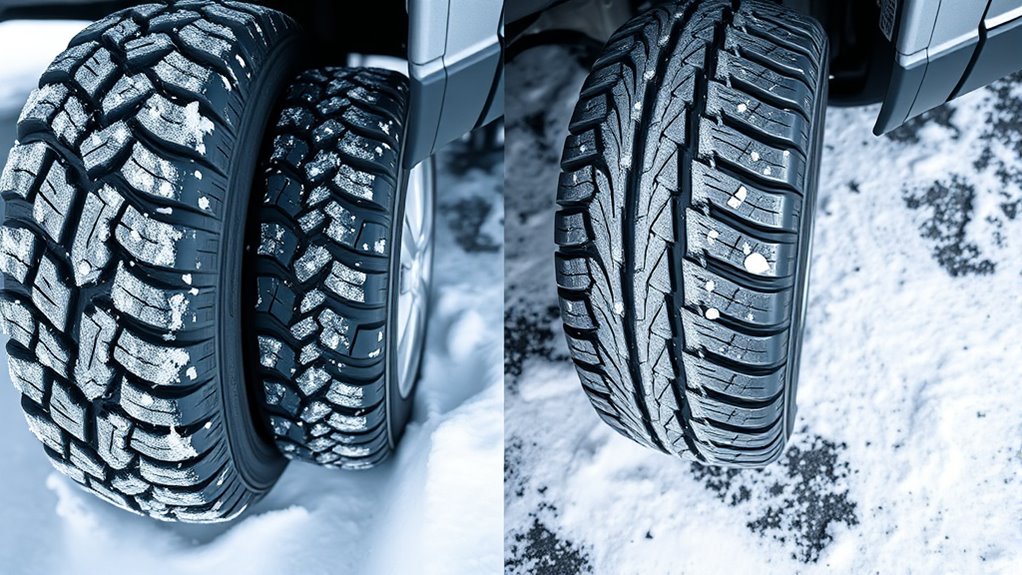
When winter weather hits, choosing the right tires can make all the difference in your safety and driving performance. One of the key factors to consider is how well your tires provide snow traction. Snow traction refers to a tire’s ability to grip icy and snowy surfaces, helping you stay in control when roads are slick and unpredictable. The design of the tread plays an essential role here. Winter tires typically feature a specialized tread design that’s optimized for snow and ice conditions. These tires often have deeper grooves, more siping—those tiny slits in the tread blocks—and a softer rubber compound that remains flexible in cold temperatures. All these elements work together to cut through snow and provide better contact with the road, reducing the risk of slipping or skidding.
Your choice between winter tires and all-season tires hinges largely on these differences in tread design. All-season tires are engineered to perform well across a broad range of conditions, including dry, wet, and light winter weather. Their tread design usually features moderate grooves and siping, which provide decent traction in snow but aren’t specialized for harsh winter conditions. As a result, they tend to harden in low temperatures, losing some grip and decreasing snow traction. On the other hand, winter tires are purpose-built for cold climates. Their tread design is aggressive, with more pronounced patterns and siping that can bite into snow and ice. This design allows winter tires to maintain flexibility and grip even in freezing temperatures, critically improving your safety.
If you live in an area where snow and ice are common during winter, investing in winter tires makes sense. Their tread design is tailored to handle the challenges of winter roads, giving you better snow traction and reducing your chances of losing control. Conversely, if your winters are mild and snow isn’t a regular concern, all-season tires might suffice. They provide convenience and decent performance year-round, eliminating the need for tire swaps. However, don’t assume all-season tires will perform adequately in severe winter conditions; their tread design is simply not optimized for that level of snow traction. Additionally, it’s important to recognize that snow traction can vary based on the tire’s rubber compound and tread pattern, emphasizing the importance of selecting tires suited for your specific winter conditions.
Frequently Asked Questions
How Long Do Winter Tires Typically Last?
Winter tires typically last between 3 to 5 seasons, but it depends on tire storage and tread wear. If you store them properly in a cool, dry place and avoid exposure to sunlight, they’ll last longer. Check the tread regularly; once it’s worn down to 2/32 inches, it’s time to replace them. Proper maintenance and storage can help maximize their lifespan and guarantee safe driving during winter months.
Are All-Season Tires Suitable for Icy Conditions?
All-season tires are like a jack-of-all-trades, but they’re not the best choice for icy conditions. Their tire tread design and rubber compound formulation aren’t optimized for snow and ice, which can reduce traction and safety. While they handle light winter conditions reasonably well, for icy roads, you’re better off with winter tires. They’re specifically designed with deeper tread patterns and softer rubber compounds to grip icy surfaces effectively.
Can I Switch Between Winter and All-Season Tires Easily?
Yes, you can switch between winter and all-season tires easily if you prepare properly. Before seasonal tire swaps, make certain you store your tires in a cool, dry place, preferably in tire storage bags or covers. When changing, use a proper jack and tools to avoid damage. Regularly check your tire pressure and tread to ensure safety. This way, your shifts are smooth, and your tires stay in good condition year-round.
Do Winter Tires Improve Fuel Efficiency?
Winter tires generally don’t improve fuel efficiency; in fact, they can slightly decrease it due to increased rolling resistance. However, their superior tire performance in cold, snowy conditions provides better grip and safety. If you want fuel savings, all-season tires might be more efficient during milder months. But in winter, winter tires enhance tire performance, ensuring safer driving even if it means a small trade-off in fuel efficiency.
Are There Legal Requirements for Winter Tires in Certain Regions?
You’re playing with fire if you ignore regional mandates and tire regulations—they often require winter tires during specific months or in certain areas. Laws vary widely, so check local rules before hitting the road. Falling behind on regulations can cost you fines or insurance issues. It’s better to be safe than sorry, especially when the law steps in to keep everyone safe on icy or snowy roads.
Conclusion
Choosing between winter tires and all-season tires is like deciding whether to wear warm boots or versatile sneakers. Winter tires grip icy roads with confidence, offering safety and control, while all-season tires adapt to varying conditions but may slip on snow and ice. Your decision shapes your driving experience—comfort and convenience or maximum safety. Ultimately, it’s about what you value most: reliable performance in harsh winter conditions or the flexibility of year-round use.