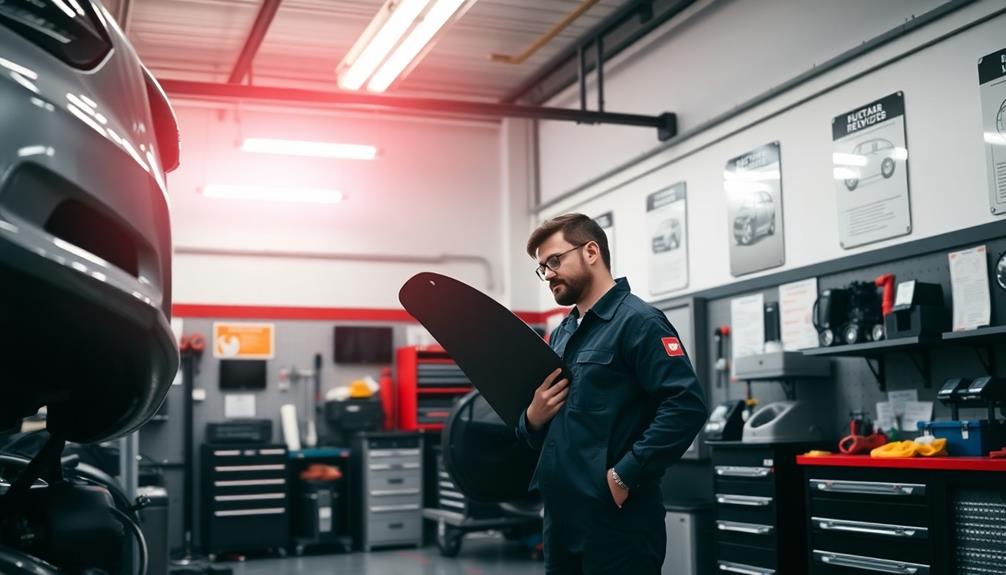

A body technician is a skilled professional who repairs and restores vehicles after accidents or damage. You’ll work on fixing dents, aligning panels, and carefully restoring the vehicle’s original look and safety. Your job involves precise craftsmanship, including sanding, painting, and shaping metal parts to match the original design. If you keep exploring, you’ll discover how this role combines technical expertise with artistry to bring vehicles back to their best.
Key Takeaways
- A body technician repairs and restores vehicles after accidents, focusing on appearance and structural integrity.
- They use specialized tools and techniques to fix dents, replace panels, and align vehicle parts precisely.
- Their work involves meticulous sanding, buffing, and painting to ensure seamless, like-new finishes.
- They ensure the vehicle’s safety and proper function by restoring correct fit, alignment, and structural strength.
- Combining technical skill and craftsmanship, they restore both the vehicle’s look and safety standards.

A body technician plays a essential role in restoring vehicles after accidents or damage, guaranteeing they look and function like new. When you bring your car in for repairs, it’s the body technician who takes on the meticulous task of repairing dents, replacing panels, and aligning parts to restore the vehicle’s original appearance. Their work goes beyond simple repairs; it involves a detailed understanding of vehicle structure, paint matching, and the use of specialized tools. You might think their job is purely mechanical, but it also requires a keen eye for detail and craftsmanship, especially when blending paint or restoring complex body lines.
A body technician meticulously restores vehicle appearance and integrity through detailed repairs, paint matching, and precise craftsmanship.
While the core of a body technician’s job involves structural repairs, many also incorporate techniques that resemble bodywork massage therapy and bodywork techniques—concepts you might associate with healing and relaxation. These techniques aren’t about relaxation for humans but are about precision and finesse in handling the vehicle’s surface. For example, they use fine sanding, buffing, and paint polishing techniques that require a gentle touch to achieve a seamless finish. These methods guarantee that the repaired areas are indistinguishable from the original paint, giving your vehicle a smooth, flawless look.
Your body technician also employs a variety of bodywork techniques that involve shaping and molding metal or plastic parts, much like sculpting. They use specialized tools to carefully manipulate damaged panels, straighten bent frames, and fill imperfections. This process demands a steady hand and a detailed understanding of the materials they work with, similar to how a massage therapist applies pressure to release tension. Their precision prevents further damage and guarantees the safety and integrity of the vehicle. Additionally, their work often integrates sustainability practices to minimize environmental impact during repairs.
Throughout the repair process, the technician’s skills guarantee that your vehicle not only looks good but also functions safely. They work diligently to align doors, hoods, and other components, making sure everything fits perfectly. This attention to detail is essential because even minor misalignments can affect vehicle performance and safety. When you pick up your repaired car, you want to feel confident that it’s been restored to its pre-accident condition, and that’s exactly what a skilled body technician delivers through their mastery of both structural repairs and bodywork techniques.
In essence, being a body technician involves much more than just fixing dents; it’s about restoring a vehicle’s integrity and appearance with precision and care. Their work combines technical expertise with a touch of artistry, ensuring that your vehicle not only looks great but is also safe to drive once again.
Frequently Asked Questions
What Certifications Are Required to Become a Body Technician?
You need to meet specific certification requirements to become a body technician. The certification process typically involves completing relevant training programs, gaining hands-on experience, and passing a certification exam. Many states or employers may also require a license or specialized certification, like a bodywork or massage therapy license. Make certain to research local regulations and choose accredited certification programs to ensure you’re qualified and compliant with all necessary standards.
How Long Does It Take to Train as a Body Technician?
Training as a body technician takes about one to two years, like shaping a sculpture from raw material. You’ll need to complete technical courses and an apprenticeship, which act as the guiding hands molding your skills. The duration depends on your dedication and the program’s structure. During this time, you’ll develop the precision and expertise needed to restore and maintain vehicle bodies, transforming raw talent into mastery.
What Tools and Equipment Does a Body Technician Use Daily?
You use various collision repair tools daily, including sanders, paint sprayers, and measuring devices. Accurate paint matching is essential, so you rely on color matching systems and spectrophotometers. You also work with body hammers, pry bars, and welding equipment to restore vehicle frames. Your goal is precision, ensuring each repair seamlessly blends with the original paint and structure, making the vehicle look brand new after every job.
What Are the Common Challenges Faced by Body Technicians?
Like a skilled painter blending colors, you face challenges such as achieving perfect paint blending and precise frame straightening. You often struggle with matching colors, working in tight spaces, and dealing with hidden damages that complicate repairs. Time constraints and customer expectations add pressure, requiring patience and precision. Staying updated with evolving techniques helps you overcome these hurdles, ensuring your work remains seamless and professional.
How Does Body Repair Insurance Work for Clients?
When dealing with insurance claims, you typically contact your provider to start the repair process. They’ll assign an adjuster to assess damages and approve coverage. You’ll need to submit necessary documents, like photos and estimates. Once approved, your body technician will handle repairs, keeping you informed throughout the process. This way, you understand how the insurance works to cover repairs and guarantee your vehicle gets back to normal efficiently.
Conclusion
Think of a body technician as the artist who restores the soul of a vehicle, turning dents and scratches into a flawless canvas. They’re the skilled navigators guiding your car back to its original glory, like a lighthouse guiding ships through stormy seas. When you trust a body technician, you’re handing over your vehicle’s broken pieces to someone who will piece them together with care and precision. They don’t just fix cars; they breathe new life into them.