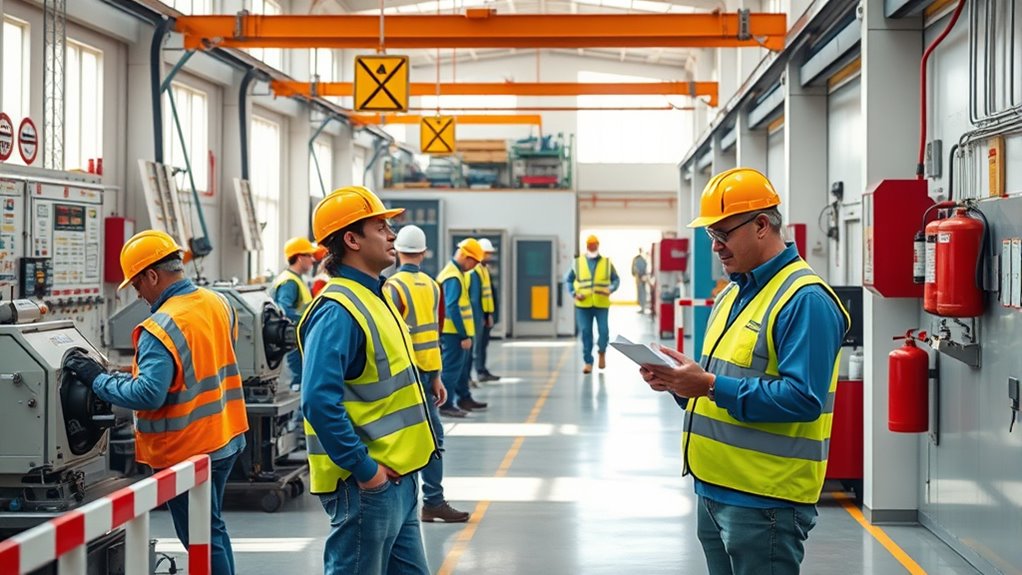

A strong shop safety culture relies on clear communication, ongoing safety training, and shared responsibility. When everyone understands hazards and follows proper procedures, accidents become less likely. Encouraging open dialogue and reporting unsafe behaviors helps prevent risks before they happen. Building trust and emphasizing safety as a core value creates a proactive environment. Focusing on continuous improvement and teamwork guarantees a safer workspace—if you want to discover how to develop this culture, keep exploring for more insights.
Key Takeaways
- Establish a safety-first mindset through ongoing training, clear hazard communication, and active employee participation.
- Promote open communication channels for hazard reporting and unsafe behaviors without fear of reprisal.
- Implement consistent safety procedures, signage, and labeling to ensure hazard awareness and prevention.
- Regularly conduct safety meetings, refresher courses, and updates to reinforce safety awareness.
- Cultivate collective responsibility where all employees understand their role in maintaining a safe working environment.
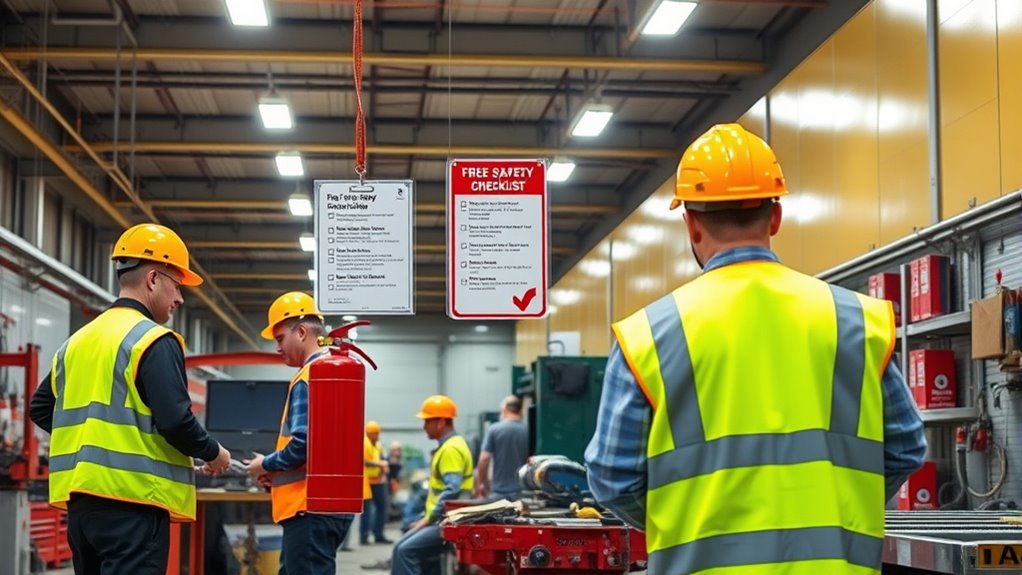
Have you ever wondered why some workplaces consistently stay accident-free while others struggle with safety issues? The key often lies in the shop’s safety culture, which is built through deliberate efforts like hazard communication and thorough safety training. When safety becomes a core value, everyone in the shop understands their role in maintaining a safe environment. It’s not just about following rules but creating a mindset that prioritizes well-being over shortcuts or complacency. This mindset starts with clear hazard communication. You need to know what risks are present, how to spot them, and how to address them properly. Proper hazard communication involves labeling chemicals accurately, posting safety signs, and ensuring everyone understands the information. When hazards are clearly communicated, workers can take proactive steps to prevent accidents rather than reacting after the fact. It reduces confusion and minimizes the chance of mistakes that could lead to injury. But communication alone isn’t enough; safety training is equally essential. Regular, targeted training sessions help reinforce safe practices and teach new skills as tools and processes evolve. You should be encouraged to ask questions and participate actively in these sessions, which helps embed safety into your daily routine. Effective safety training covers everything from proper equipment use to emergency procedures, ensuring you’re prepared for unexpected situations. It also fosters a sense of shared responsibility, making safety everyone’s job rather than just management’s. When safety training is ongoing and engaging, it keeps safety top of mind and helps identify potential hazards before they cause harm. Additionally, a safety-conscious shop promotes open communication, where you feel comfortable reporting hazards or unsafe behaviors without fear of reprisal. This openness is essential in building trust and reinforcing a safety-first culture. When everyone is involved and committed, safety procedures become second nature. Remember, safety isn’t static; it’s a continuous process. Regular safety meetings, updates on hazard communication, and refresher training keep safety at the forefront. When you’re aware of hazards and confident in how to handle them through proper training, you help create a workplace where accidents are rare. A thorough understanding of home theatre projectors and their features can also contribute to safer and more effective use of equipment in various settings. Ultimately, a strong safety culture is built on clear communication, ongoing education, and collective commitment. The more you understand and participate, the safer your shop becomes for everyone. Achieving an accident-free environment isn’t just about policies—it’s about cultivating a mindset and behaviors that prioritize safety every day.
Frequently Asked Questions
How Can Small Shops Implement Safety Culture Effectively?
You can implement safety culture effectively by prioritizing safety equipment and hazard identification. Make sure everyone uses the right safety gear consistently and knows how to spot potential hazards. Conduct regular safety training and encourage open communication about risks. Lead by example, reinforce safety protocols, and involve employees in safety discussions. This proactive approach helps create a safer environment, reducing accidents and fostering a strong safety culture in your small shop.
What Role Do Employees Play in Maintaining Shop Safety?
You play a crucial role in maintaining shop safety by embracing employee accountability and practicing safety leadership. Stay vigilant, report hazards immediately, and follow all safety protocols. Encourage your coworkers to prioritize safety and lead by example, fostering a culture where everyone feels responsible. Your proactive approach helps prevent accidents and promotes a safer work environment, making safety a shared priority every day.
How to Handle Safety Violations Without Damaging Team Morale?
You handle safety violations by addressing them promptly with positive reinforcement and clear communication. When you notice a violation, talk to the team member privately, explain the safety concern, and emphasize the importance of following protocols. Recognize their efforts when they improve, fostering a supportive environment. This approach encourages accountability without damaging morale, helping everyone stay committed to safety while feeling valued and motivated.
What Are the Latest Technology Tools for Shop Safety?
Imagine your shop as a vigilant guardian, always watching over you. Latest tech tools include automated safety systems that detect hazards in real-time, alerting you instantly. Wearable safety devices act like personal bodyguards, monitoring your movements and essential signs, ensuring safety at every step. These innovations create a dynamic safety net, empowering you to work confidently while reducing risks and promoting a proactive safety culture in your workspace.
How Often Should Safety Training Be Refreshed in a Shop?
You should refresh safety training at least annually to keep everyone aware of safety protocols, including PPE protocols and safety audits. Regular updates help reinforce best practices, address new hazards, and verify compliance. Conduct safety audits regularly to identify areas for improvement. When you consistently update training, you create a safer environment, reduce accidents, and promote a safety-first mindset among your team.
Conclusion
By embracing a strong safety culture, you’re building a shield that protects everyone in your shop. Think of safety practices as the roots of a mighty tree—deeply embedded, supporting growth and resilience. When you prioritize safety, you create an environment where accidents are less like lightning strikes and more like a gentle breeze. Keep safety at the core, and watch your shop thrive with the confidence that everyone’s well-being is in good hands.