When bonding glass, it’s crucial to use adhesives that meet safety standards to guarantee strength, flexibility, and durability. Proper adhesion prevents failures, delamination, and accidents, especially in critical applications like automotive or architectural glass. Choosing certified adhesives that resist environmental stresses guarantees long-lasting safety and performance. By understanding these safety measures and best practices, you can help make your glass structures secure. Keep exploring to find out how to optimize your bonding techniques for maximum safety.
Key Takeaways
- Using certified adhesives that meet industry safety standards ensures strong, durable, and reliable glass bonds.
- Proper surface preparation and curing techniques enhance bond strength and safety in glass applications.
- Selecting adhesives with appropriate tensile strength, flexibility, and transparency reduces risk of delamination or failure.
- Compliance with safety certifications and standards minimizes hazards like cracks, leaks, or structural failure.
- Staying updated on industry trends and best practices guarantees long-term safety and performance of bonded glass structures.
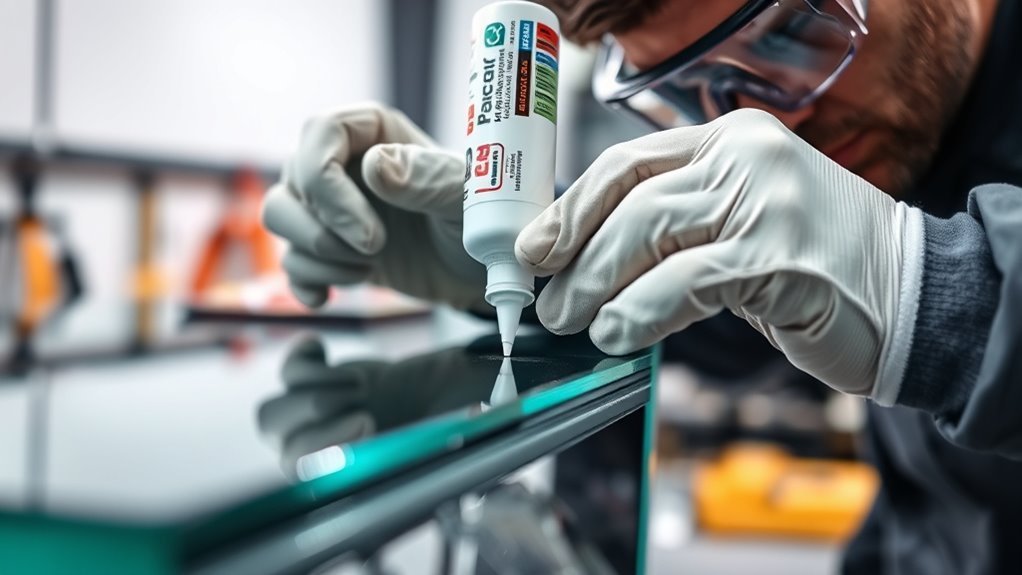
Glass bonding plays an essential role in guaranteeing the safety and durability of glass structures and assemblies. When you work with glass, understanding the importance of proper bonding techniques becomes necessary, especially because the adhesive properties of the materials you choose directly influence the strength and longevity of the bond. High-quality adhesives are formulated to provide excellent adhesion to glass surfaces, guaranteeing a secure connection that withstands environmental stresses like temperature changes, moisture, and mechanical impact. These adhesive properties, such as tensile strength, flexibility, and transparency, are critical for maintaining the integrity of the bonded glass, particularly in applications like automotive windshields, architectural facades, and display cases.
Choosing adhesives that meet or exceed safety standards is non-negotiable. Safety standards, often outlined by industry regulators and standards organizations, ensure that the bonding materials you use are reliable and safe for their intended purpose. These standards set minimum requirements for adhesive performance, including durability, resistance to UV radiation, and environmental stability. By adhering to these standards, you minimize risks such as delamination or failure, which could lead to dangerous accidents or costly repairs. When selecting bonding agents, always verify they are certified and tested according to relevant safety standards to guarantee they can handle the stresses they will face during use.
In practical terms, the right adhesive properties combined with compliance to safety standards give you confidence that the glass assembly will perform safely over time. For example, structural glazing in buildings demands adhesives that can withstand wind loads and thermal expansion without compromising safety. Similarly, in automotive applications, adhesives must meet strict standards for safety and performance to prevent windshield failure during a collision or sudden impact. When you prioritize adhesives with proven safety credentials, you’re actively reducing the risk of catastrophic failure, protecting both users and property.
Furthermore, understanding the safety standards applicable to your project helps you make informed decisions about the types of adhesives to use and the proper application techniques. Proper surface preparation, correct curing times, and environmental controls all contribute to achieving excellent bonding results. Additionally, awareness of industry trends and innovations in adhesive technology can help you select the most effective solutions for your specific needs. By following these guidelines and selecting adhesives with appropriate properties, you ensure that your glass installations not only look good but also perform reliably, aligning with safety regulations and protecting everyone who interacts with them. Ultimately, investing in the right bonding agents and adhering to safety standards is fundamental to creating safe, durable glass structures that stand the test of time.
Frequently Asked Questions
What Are the Environmental Impacts of Glass Bonding Chemicals?
You should be aware that glass bonding chemicals can have significant environmental impacts. Their environmental toxicity may harm aquatic life and ecosystems if not managed properly. Additionally, chemical runoff during application or disposal can contaminate soil and water sources. To minimize these effects, you need to follow safety guidelines, use eco-friendly products when possible, and ensure proper waste management practices. This way, you help protect the environment from potential damage caused by these chemicals.
How Long Does Glass Bonding Typically Last Under Normal Conditions?
Glass bonding typically lasts between 10 to 20 years under normal conditions. Durability testing shows that factors like temperature fluctuations, exposure to moisture, and the quality of the adhesive influence longevity. You can extend the lifespan by ensuring proper surface preparation and using high-quality adhesives. Regular inspections help catch any early signs of failure, ensuring your bonded glass remains secure and durable over time.
Are There Any Health Risks Associated With Glass Bonding Adhesives?
Yes, there are some health concerns related to glass bonding adhesives, mainly due to chemical exposure. You might experience irritation or allergic reactions if you breathe in fumes or come into direct contact with the chemicals. To stay safe, guarantee proper ventilation during application, wear protective gloves and masks, and follow the manufacturer’s safety instructions. These precautions can help minimize any potential health risks associated with chemical exposure.
Can Glass Bonding Be Reversed or Removed Easily?
While glass bonding can be tricky, it’s not impossible to undo. You typically use removal techniques like heat, solvents, or gentle scraping to weaken the bond strength. Keep in mind, the easier the removal, the less likely you’ll damage the glass. Patience and proper tools are key—so, if you’re determined to detach, proceed carefully, and you’ll successfully separate the bonded surfaces without breaking a sweat.
What Certifications Ensure the Safety of Glass Bonding Products?
You can guarantee the safety of glass bonding products by checking for certifications that meet quality standards. Certification processes verify that products adhere to safety regulations and industry benchmarks, such as ASTM, ANSI, or ISO standards. Look for labels or documentation indicating these certifications, as they demonstrate the product has undergone rigorous testing and quality control. This gives you confidence that the bonded glass is safe and reliable for your specific application.
Conclusion
When bonding glass, safety isn’t just a suggestion—it’s a necessity. Many believe that standard adhesives are enough, but research shows specialized glass bonding techniques considerably reduce breakage and injury risks. By choosing the right materials and following proper procedures, you can guarantee your glass projects are both sturdy and safe. So, trust the science: proper bonding isn’t just about aesthetics, it’s your best defense against accidents. Prioritize safety—your peace of mind depends on it.