
TL;DR

Get business pricing on garage and car supplies
- Business-only prices and quantity discounts
- Tax-exempt purchasing
- Multiple users, one account, clear invoices
A Robot Cantina YouTube video shows a modified Harbor Freight Predator 212cc engine producing 4,800 watts of continuous power, compared with 3,600 watts in a test of the stock engine. The builder also reported longer running time on the same fuel amount, though the supplied report does not detail the testing conditions or independently verify the results.
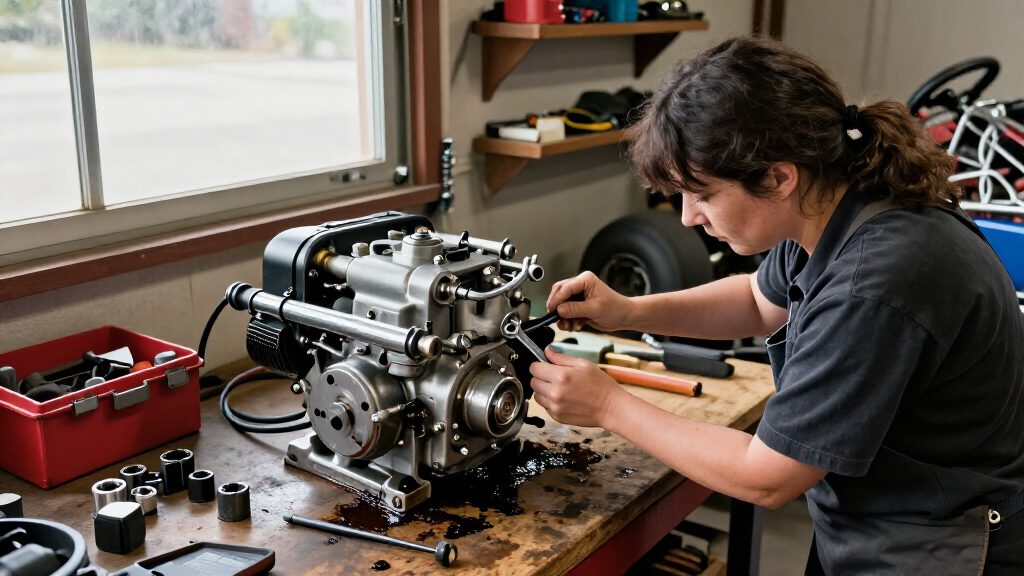
A modified Harbor Freight Predator 212cc small engine produced 4,800 watts of continuous power in a test described by the Robot Cantina YouTube channel, up from 3,600 watts in a run with the factory engine. The builder used traditional hot-rod changes to the carburetor, airflow and ignition timing, offering a small-engine example of techniques long used on larger engines.
According to The Drive’s account of the video, the project revisits an earlier build by Jimbo of Robot Cantina. The engine is a Predator 212 with a hemispherical cylinder head, a version the report says Harbor Freight sells from the factory. The report distinguishes it from other versions by its thick, rectangular cast-aluminum valve cover; non-hemi models use an octagonal stamped-steel cover.
The modifications focused on fuel delivery and breathing rather than computer controls. Jimbo fitted an adjustable carburetor to tune the low-speed mixture and main jet needle, then added a larger air filter and billet velocity stack. A short exhaust header replaced the stock muffler. The report says he also set ignition timing to 29 degrees before top dead center.
The video’s reported power comparison is 3,600 watts for the stock engine and 4,800 watts for the modified one, a 33.3% increase between those test results. The Drive also cites a separate figure of 9.3 horsepower for the modified setup, compared with the engine’s stated stock rating of 6.5 horsepower. In a fuel-use test, the modified engine reportedly ran for one hour and 15 minutes on 700 milliliters; the standard engine stopped after one hour and eight minutes. These are results reported by the builder and the article, not an independently documented laboratory test.
What the Small-Engine Test Shows
The result is a practical demonstration of how basic mechanical tuning can affect a widely available utility engine. Adjusting fuel delivery, improving intake and exhaust flow, and changing ignition timing are familiar performance methods; here, they are applied to a compact single-cylinder engine without relying on an ECU tune or electronic fuel injection.
For hobbyists, the reported figures may help explain why the Predator platform attracts builders working on small vehicles, tools and other projects. But the test does not establish that every Predator 212 will gain the same output or fuel economy. Results can depend on the engine’s condition, parts, setup and test method, and the source does not provide enough information to assess those variables in detail.
Products Worth Considering

DEWALT 20V MAX Brushless 3-Tool Cordless Combo Kit with Drill, Impact Driver, Oscillating Multi-Tool, 3 Batteries and Charger

DEWALT 20V MAX 7-Tool Combo Kit (DCK751P1) – Drill, Impact Driver, Reciprocating Saw, Circular Saw, Oscillating Tool, Random Orbital Sander,

DEWALT FLEXVOLT ADVANTAGE 20V MAX Combo Kit with Hammer Drill & Impact Driver, 5.0-Ah, 2-Tool (DCK2100P2)
As an affiliate, we earn on qualifying purchases.
A Carbureted Engine, Not an ECU Project
The central appeal of this build is its mechanical simplicity. The source describes the Predator 212 as an engine without the computer controls that complicate tuning in many modern vehicles. That makes changes to the carburetor and ignition timing accessible to a hands-on builder, although it does not remove the need for careful setup and safe operation.
The Drive says Jimbo has used Predator engines in other projects, including a Honda Insight and a hybrid golf cart. It also contrasts this comparatively simple build with small-engine projects using turbochargers or electronic fuel injection. The article presents the modified 212 as an example of old-school methods working at a small scale, not as a claim that this is the most powerful or cost-effective route to modifying one.
Limits of the Reported Test
The available account does not specify the measurement equipment, test conditions or whether the stock and modified runs were conducted under identical conditions. It also does not provide a full parts list, detailed dyno data, engine temperatures or repeat-run results. The reported 9.3-horsepower figure and the wattage comparison are both attributed to the build’s testing; the source does not explain how those measurements relate to each other.
The fuel-economy result is also limited to the reported run: 700 milliliters for each engine, with different operating times. The source does not state the load, speed or other conditions during those runs. It is therefore not clear whether the results would carry over to sustained use or to other engines of the same model.
Further Testing Would Add Clarity
The next useful step would be repeatable, side-by-side testing that documents the load, measurement method and tuning for both engines. That could show how consistently the modified setup produces its reported output and whether the longer runtime persists under comparable operating conditions.
The supplied report identifies no announced follow-up test or independent verification. For now, the development is a builder’s demonstration captured in a video, and readers should treat the performance and fuel-use figures as reported results rather than a guaranteed outcome for a Predator 212 modification.
Key Questions
How much more power did the modified Predator 212 produce?
The Robot Cantina test, as reported by The Drive, measured 4,800 watts of continuous power for the modified engine and 3,600 watts for the stock engine, a 33.3% difference between those runs.
What modifications were made?
The reported changes included an adjustable carburetor, a larger air filter with a billet velocity stack, a shorty exhaust header and ignition timing set to 29 degrees before top dead center.
Did the modifications improve fuel economy?
The account says the modified engine ran for one hour and 15 minutes on 700 milliliters of fuel, compared with one hour and eight minutes for the standard engine. Test load and other conditions were not provided, so the result is not a general fuel-economy guarantee.
Are the reported results independently verified?
The supplied report describes results from the build’s video but does not cite independent testing or provide enough test details to assess the measurements fully.
Source: rss