
TL;DR

Get business pricing on garage and car supplies
- Business-only prices and quantity discounts
- Tax-exempt purchasing
- Multiple users, one account, clear invoices
ZF has introduced a High Revolution Drive that spins at up to 30,000 rpm and is designed to deliver comparable power from a smaller integrated unit. The company claims nearly 25% less weight and volume and half the magnet material versus a comparable ZF drive, while targeting production by 2030. No vehicle applications or production-model performance figures have been announced.
ZF has introduced an electric-vehicle drive unit that spins at up to 30,000 rpm, saying it can deliver comparable power in a smaller package. The company claims the High Revolution Drive is nearly 25% lighter and smaller than a comparable ZF unit and uses half the magnet material; production is targeted for 2030, but ZF has not named a vehicle that will use it.
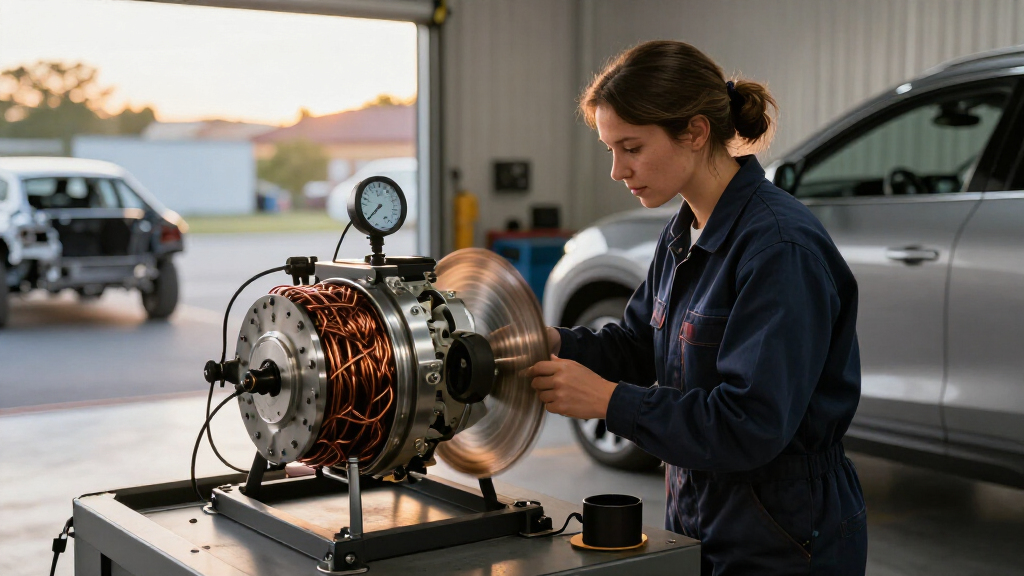
The High Revolution Drive combines the electric motor, power electronics and transmission in one housing. ZF says the faster-spinning motor can produce the required power with less hardware, while gearing reduces the motor’s speed and increases turning force sent to the wheels. The reported reduction ratio is about 18:1.
The version ZF presented produces up to 268 horsepower. After gearing, peak wheel torque is listed as 2,581 pound-feet, or 3,500 newton-metres. That figure is torque at the wheels after the gear reduction, not the motor’s un-geared output. ZF’s reference to a “two-stage transmission” describes successive reductions, not a two-speed gearbox.
For a planned production version, ZF gives a power range of 200 to 268 horsepower and says the unit can work with 400- and 800-volt vehicle platforms. The company compares it with one of its Select drive units, which spins at up to 18,000 rpm. ZF says efficiency remains almost 93%, similar to the comparison unit.
Why a Smaller Drive Unit Matters
Reducing the size and mass of an EV’s drive hardware could help automakers package vehicles more flexibly and lower vehicle weight. Less weight can support range, though ZF has not provided a specific range gain for a car fitted with this unit. Its claim concerns the drive unit, not a measured improvement in a complete vehicle.
The claimed reduction in magnet material could also matter for cost and sourcing. ZF says the new design uses half the magnet mass of its comparable unit, but has not disclosed the resulting price difference or identified which materials are affected. Whether automakers can pass any cost savings on to buyers is also unknown.
The unit is aimed at ordinary EV packaging needs rather than a headline-grabbing power record. Its stated output is within the range of production-oriented drivetrains, and the central pitch is that similar power can come from a lighter, more compact assembly. Those benefits remain manufacturer claims until production hardware and vehicle-level results are available.
Products Worth Considering

DEWALT 20V MAX 3-Tool Brushless Power Tool Combo Kit with Drill, Impact Driver, Oscillating Tool, 3 Batteries and Charger (DCK360D3)

Milwaukee M18 FUEL Automotive Combo Kit, 1/2-Inch High-Torque and 3/8-Inch Impact Wrenches

DEWALT 20V MAX Cordless Drill and Impact Driver Combo Kit (DCK240C2)
As an affiliate, we earn on qualifying purchases.
ZF’s Drive Unit and Its Baseline
ZF’s announced drive builds on its modular Select architecture. The company says reusing that platform could simplify installation, shorten development and help control costs while keeping manufacturing flexible. The drive integrates three major components, but unlike a Mercedes-Benz design referenced in the report, it does not house the brakes with them.
Comparisons with other motor announcements need care. Yasa has reported a prototype axial-flux motor producing more than 1,000 horsepower at a short-term peak and weighing 28 pounds, with continuous output estimated at 469 to 536 brake horsepower. That figure describes the motor alone. ZF’s weight comparison concerns an integrated drive unit, which also includes gearing and power electronics, so the numbers are not directly comparable.
ZF has also introduced repair kits intended to let workshops replace certain drive-unit components, such as gearbox bearings, rather than whole assemblies. The company has not said whether those kits relate to the High Revolution Drive or whether the new unit will be repairable in the same way.
“The production High Revolution Drive is planned to deliver 200 to 268 horsepower and support 400- and 800-volt platforms.”
— ZF
Vehicle Fit and Real-World Results
ZF has not named an automaker or production vehicle for the drive, and discussions with carmakers are underway. It has not disclosed a price, a vehicle-level range benefit, or details that would allow independent verification of the claimed weight and volume reductions. The near-93% efficiency figure is a company comparison, not a published test result for a customer vehicle.
The 2030 production target is a stated plan, not confirmation that the unit will reach the market on that schedule. It is also unclear whether the announced specifications will remain unchanged through development. ZF has not linked the drive to its separate repair kits or made a specific repairability commitment for this design.
Automaker Talks and Production Plans
ZF says it is in talks with automakers and is targeting production by 2030. The next useful milestones would be a named vehicle program, more detailed production specifications and independent or vehicle-level data on efficiency, weight, range and cost. Until those details emerge, the 30,000-rpm figure and the claimed packaging gains describe an announced design rather than a drive unit confirmed for sale in a particular EV.
Key Questions
What is ZF’s High Revolution Drive?
It is an integrated EV drive unit combining an electric motor, power electronics and transmission in one housing. ZF says the motor spins at up to 30,000 rpm.
Does 30,000 rpm mean the wheels spin that fast?
No. The motor’s speed is reduced through gearing before power reaches the wheels. ZF cites an approximately 18:1 reduction ratio.
How much power is the drive expected to produce?
ZF says a production version is planned for 200 to 268 horsepower. The version shown is rated at up to 268 horsepower.
Which EVs will use the new drive?
ZF has not named any vehicles or automakers. It says discussions with automakers are underway and targets production in 2030.
Will the smaller drive improve range or lower EV prices?
Less drive-unit mass could support range, and reduced magnet use could affect material costs. ZF has not given a specific vehicle-range gain, price reduction or evidence that savings will reach buyers.
Source: insideevs.com