
Before using a multimeter in your car, make certain the vehicle is off and the keys are removed. Wear insulated gloves and keep the workspace dry to prevent shocks. Set your multimeter to the correct DC voltage or continuity mode, then connect the probes carefully—red to positive, black to negative. Always follow safety guidelines to avoid short circuits or injuries. If you keep going, you’ll find detailed steps to test your car’s electrical system safely.
Key Takeaways
- Always turn off the vehicle and remove keys before testing electrical components.
- Set the multimeter to the correct DC voltage or continuity mode before use.
- Connect probes carefully: black to negative, red to positive terminals, avoiding metal contact.
- Wear insulated gloves if unsure about electrical system safety, and keep the workspace dry.
- Disconnect probes properly after testing and ensure terminals are clean for accurate readings.

Using a multimeter in a car can be a helpful way to diagnose electrical issues, but it is essential to prioritize safety. Before you start, make sure your vehicle is turned off and the keys are removed from the ignition. This prevents accidental short circuits or shocks while handling the multimeter. Always wear insulated gloves if you’re unfamiliar with the vehicle’s electrical system, and keep your workspace dry to avoid any risk of electric shock. Remember, a multimeter is a powerful tool, but mishandling it can cause damage to your vehicle or injury to yourself.
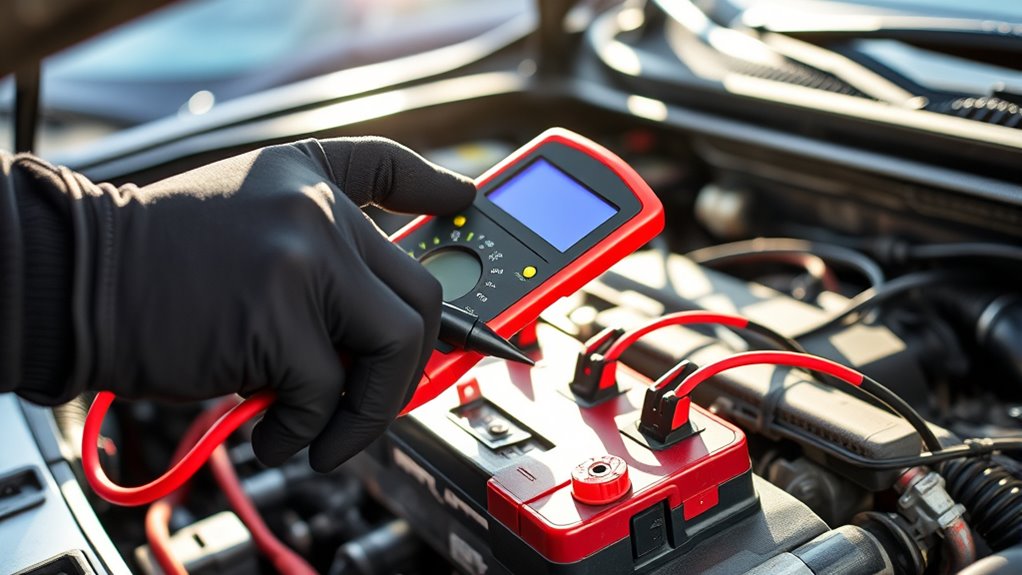
When testing the battery, set your multimeter to measure DC voltage, typically indicated by a V with a straight line and dashed line beneath it. Carefully connect the multimeter probes to the battery terminals—red to the positive (+) terminal and black to the negative (–) terminal. A healthy, fully charged car battery should read around 12.6 volts or slightly higher when the engine is off. If your voltage reading is considerably lower, it indicates a discharged or failing battery that may need replacement. After testing, disconnect the probes in reverse order—black first, then red—and make sure the terminals are clean and free of corrosion. Battery testing with a multimeter provides quick insight into your battery’s health without needing a dedicated tester. Additionally, understanding the correct multimeter settings is crucial to obtaining accurate readings and avoiding damage to the tool or vehicle components.
Fuse checking is another vital step when troubleshooting electrical problems. To do this safely, locate the vehicle’s fuse box, often found under the dashboard or in the engine compartment. Turn off your vehicle before removing any fuses. Using your multimeter set to continuity mode or the lowest resistance setting, carefully remove the fuse and touch the probes to the fuse’s metal contacts. If the multimeter beeps or shows zero resistance, the fuse is intact. If there’s no beep or the reading shows “OL,” the fuse is blown and needs replacement. Regular fuse checking helps identify blown fuses that could be causing issues like non-functioning lights or accessories. Always replace blown fuses with ones of the same amperage to prevent electrical damage.
Throughout the process, stay mindful of your surroundings and avoid touching metal parts that could conduct electricity unexpectedly. Never attempt to test or repair electrical components while the vehicle is running unless you are trained to do so. Using a multimeter safely in a car involves careful preparation, proper tool handling, and adherence to safety protocols. By focusing on battery testing and fuse checking, you can effectively diagnose many common electrical problems while minimizing risks. Remember, when in doubt, consult a professional to avoid causing damage or injury.
Frequently Asked Questions
Can I Use a Multimeter to Test My Car’s Starter Motor?
Yes, you can use a multimeter for starter motor testing. First, verify your multimeter is properly calibrated for accurate readings. Then, set it to measure voltage, and connect the probes to the starter motor terminals. When testing, look for proper voltage levels; if they’re low, it indicates a potential issue. Regular multimeter calibration helps maintain precision, making your starter motor testing more reliable and safe.
What Should I Do if My Multimeter Shows a Short Circuit?
If your multimeter shows a short circuit, first turn off the power and disconnect the multimeter. Check if your multimeter is properly calibrated—incorrect calibration can cause false readings. Always wear safety gear like gloves and eye protection to stay safe. Inspect your test leads and connections for damage. After ensuring everything’s in order, retake the measurement carefully and avoid touching live parts to prevent shocks.
Is It Safe to Test Live Wires Without Disconnecting the Battery?
Testing live wires without disconnecting the battery is like walking a tightrope over a stormy sea—you risk a dangerous shock or damage. For battery safety, always disconnect the battery when possible before testing, especially for sensitive measurements. If you must test live wires, use your multimeter carefully, keep one hand away from metal parts, and set it to the correct voltage range. Remember, live wire testing without proper precautions can be risky.
How Can I Prevent Damage to My Multimeter When Measuring High Voltage?
To prevent damage to your multimeter when measuring high voltage, always check its voltage rating and make sure it matches your measurement needs. Use a multimeter with proper insulation to handle high voltage safely. Avoid exceeding the maximum voltage rating, as this can damage the device. Additionally, keep your probes in good condition and handle the multimeter carefully to prevent accidental shorts or surges.
What Maintenance Is Required to Keep My Multimeter Functioning Properly?
You might think your multimeter is invincible, but it needs some love too. Regularly check its calibration to ensure accuracy and perform battery maintenance to keep it powered up. Clean the probes and contacts to prevent corrosion, and store it in a dry, safe place. These simple steps keep your multimeter functioning properly, so it’s always prepared to measure the tricky voltages in your car without causing chaos.
Conclusion
By following these safety tips, you can confidently use a multimeter in your car without risking injury or damage. Remember to always disconnect the battery before testing and wear protective gear. Isn’t it worth taking a few extra precautions to guarantee your safety and get accurate readings? Staying cautious helps you avoid costly mistakes and keeps your vehicle in top shape. So, why not prioritize safety every time you work on your car’s electrical system?