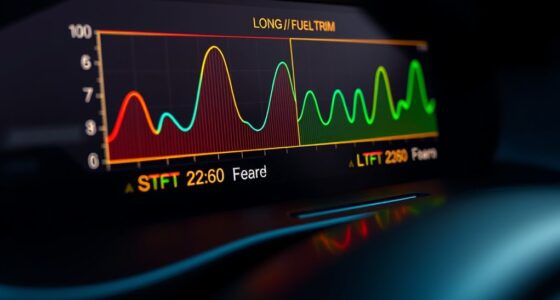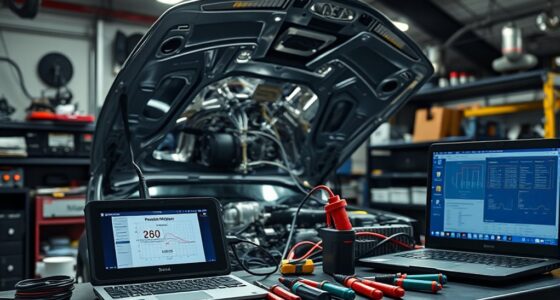

Live data gives you real-time info about your vehicle’s current performance, like temperatures and sensor readings, helping you verify if systems are working properly. Pending codes, on the other hand, highlight potential issues that haven’t been confirmed yet, acting as early warnings. Both tools are essential for accurate diagnosis and troubleshooting. If you want to understand how they work together and improve your repairs, keep exploring further details.
Key Takeaways
- Live data shows real-time sensor readings, while pending codes indicate potential issues not yet confirmed as faults.
- Live data verifies current system operation, whereas pending codes serve as early warnings for possible future problems.
- Using both tools enhances diagnostic accuracy by providing immediate condition insights and early fault detection.
- Live data may have processing delays; pending codes require further testing for confirmation.
- Combining live data and pending codes leads to more comprehensive vehicle diagnostics and effective troubleshooting.

When you’re diagnosing vehicle issues, understanding the difference between live data and pending codes is essential. These two tools serve different purposes in the diagnostic process and can notably influence your diagnostic accuracy. Live data provides real-time information straight from the vehicle’s sensors and systems, giving you an immediate snapshot of what’s happening under the hood. On the other hand, pending codes are diagnostic trouble codes (DTCs) that the vehicle’s computer has detected but hasn’t yet confirmed as faulty. Recognizing how these elements interact helps you make more precise diagnoses and avoid unnecessary repairs.
Understanding live data and pending codes enhances diagnostic accuracy and prevents unnecessary repairs.
Live data is invaluable because it allows you to see the vehicle’s current operating conditions, such as engine temperature, throttle position, oxygen sensor readings, and fuel trim levels. This real-time information helps you verify if the engine’s sensors are functioning correctly and whether certain systems are operating within normal parameters. Because you’re accessing live data directly from the vehicle’s modules, your diagnostic accuracy improves, reducing guesswork and helping you pinpoint issues more precisely. However, processing delays can occasionally occur when retrieving live data, especially on older or heavily-used scan tools. These delays might momentarily slow down your troubleshooting, but they rarely compromise the overall insight you gain from live data.
Pending codes, in contrast, are like alerts that a potential issue has been detected but hasn’t yet been confirmed as a fault. When a DTC is stored as pending, it indicates that the vehicle’s computer has noticed irregularities that could develop into more serious problems if not addressed. Pending codes are particularly useful because they can alert you to developing issues before they become severe, giving you an opportunity to intervene early. This early detection enhances your diagnostic accuracy by preventing misdiagnosis based on transient or false readings. But, since pending codes are not yet confirmed faults, you need to verify them through further testing or by observing whether they turn into confirmed trouble codes.
Understanding the interplay between live data and pending codes allows you to work more efficiently. Live data helps confirm whether sensor readings or system conditions are abnormal at the moment, while pending codes alert you to issues that may not be immediately visible but require attention. Both tools are critical; live data offers immediate insights, but processing delays can occasionally hinder rapid diagnostics. Pending codes, meanwhile, provide a warning of potential problems, encouraging preventative maintenance. Additionally, advancements in AI Security are contributing to more reliable diagnostic tools, reducing the likelihood of false readings and improving overall accuracy. By combining these two sources of information, you enhance your diagnostic accuracy, avoid unnecessary parts replacements, and improve your overall troubleshooting effectiveness.
Frequently Asked Questions
How Can I Clear Pending Codes From My Vehicle?
To clear pending codes from your vehicle, you can use diagnostic tools that communicate with your car’s onboard computer. Connect the scanner to the OBD-II port, turn on your ignition, and follow the device’s instructions to clear codes. This process resets the emission systems and clears pending codes, helping guarantee your vehicle passes emissions tests. Just make sure to address the underlying issues before clearing the codes to prevent future problems.
What Does It Mean if Live Data Shows Inconsistent Readings?
If live data shows inconsistent readings, it likely indicates sensor accuracy issues or faulty wiring, affecting data interpretation. You should check the sensors and their connections for damage or corrosion. Keep in mind that fluctuating readings can also result from environmental factors or engine conditions. Addressing these problems promptly guarantees more reliable live data, helping you diagnose and resolve vehicle issues effectively.
Are Pending Codes Always Indicative of Future Engine Problems?
About 70% of pending codes eventually turn into active trouble codes, signaling potential engine issues. Pending codes don’t always mean you’ll face problems soon, but they do warrant attention. Using diagnostic tools, you can monitor engine performance and catch issues early. If left unchecked, pending codes might indicate future engine problems, so it’s wise to address them promptly to prevent costly repairs.
How Frequently Should I Check Live Data for Diagnostics?
You should check live data regularly, ideally when diagnosing engine issues, to get real-time insights. Use your diagnostic tools that adhere to OBDII standards for accurate readings. Frequent monitoring helps you spot abnormal sensor readings early, preventing potential problems. Checking live data after repairs ensures everything functions correctly, and routine scans maintain excellent vehicle performance. Make it a habit to review live data whenever you notice performance changes or during scheduled maintenance.
Can Pending Codes Reset Themselves Without Repairs?
Pending codes can reset themselves if sensor malfunctions or software glitches resolve themselves, but that’s not always the case. Sometimes, these issues persist, and the codes stay until you address the underlying problem. If the sensor malfunction or software glitch is temporary, the pending codes might clear without repairs. However, it’s best to diagnose the root cause to prevent potential drivability issues or future sensor malfunctions.
Conclusion
Understanding the difference between live data and pending codes helps you make smarter decisions. Think of live data as the current heartbeat of your operations, while pending codes are like seeds waiting to grow. By staying aware of both, you can navigate your workflow with confidence and avoid surprises. Embrace this knowledge, and you’ll find yourself steering through your data landscape with the steady hand of a captain guiding a ship through calm and storm alike.