Using smoke and dye methods is an effective way to detect fluid leaks in various systems. Smoke testing introduces non-toxic smoke into suspect areas, making leaks visible by smoke escaping through openings. Dye tracing involves adding colored dye to the fluid, which reveals leaks when it appears outside the system under UV or visual inspection. Combining these techniques helps pinpoint leak locations quickly and accurately. If you want to learn more about how to use these methods effectively, keep exploring.
Key Takeaways
- Smoke testing introduces non-toxic smoke into systems to visually detect escape points of fluids or gases.
- Dye tracing involves adding colored dye to fluids, which reveals leaks when visible outside the system under UV or regular light.
- Combining smoke and dye methods quickly identifies leak presence and precisely locates leak points.
- These techniques are cost-effective, safe, and cause minimal disruption to the system being tested.
- Using both methods enhances accuracy and efficiency in diagnosing fluid leaks across various applications.
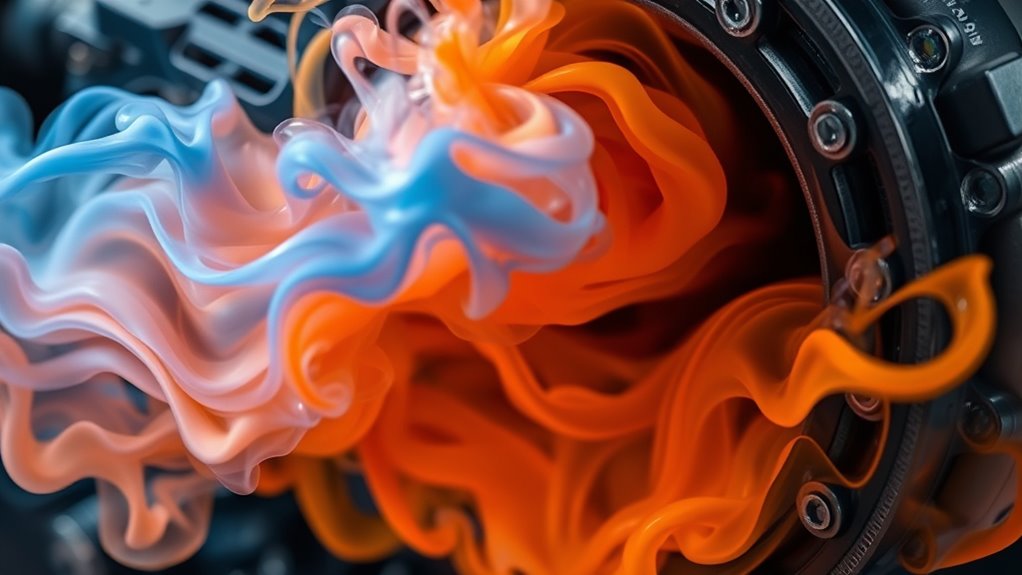
Detecting fluid leaks can be challenging, but using smoke and dye methods makes the process much easier. When you’re faced with an elusive leak, traditional inspection techniques might not reveal the source right away. That’s where leak detection tools like smoke testing and dye tracing come into play, providing clear evidence of where fluid is escaping. These methods work together to pinpoint leaks efficiently, saving you time and effort.
With smoke testing, you introduce non-toxic smoke into the system or area suspected of leaking. If there’s a leak, the smoke will escape through the opening, making it visible and easy to identify. This approach is especially useful for detecting air or gas leaks, but it also works well for fluid leaks in plumbing, HVAC systems, or even automotive applications. The key is to observe where the smoke exits, which indicates the exact location of the leak. You don’t need complicated equipment—just a smoke generator and a keen eye—and you’ll be able to swiftly identify the problem spots.
Introduce non-toxic smoke to quickly identify leak locations in plumbing, HVAC, or automotive systems.
Dye tracing complements smoke testing by allowing you to follow the path of a colored dye within the fluid system. When you suspect a leak, you introduce a dye into the fluid, then monitor the area with a UV light or simply inspect visually for discoloration. If dye appears outside the system or in unexpected locations, you’ve found your leak. This method is particularly effective for plumbing and fluid systems where direct observation is difficult. It’s simple to implement: just add the dye, wait for it to circulate, and then look for signs of leakage. This process allows you to confirm the leak’s location without invasive procedures, reducing downtime and potential damage.
Using both smoke and dye techniques for leak detection offers an all-encompassing approach. Smoke helps quickly identify the presence of a leak, especially in pressurized systems, while dye tracing provides confirmation and precise localization. Both methods are cost-effective and safe, with minimal disruption to your system. They’re also versatile, suitable for various applications from household plumbing to industrial equipment. When you combine these techniques, you gain a powerful toolkit for diagnosing leaks accurately and efficiently.
In essence, employing smoke and dye for fluid leaks streamlines the detection process. You can avoid the frustration of guesswork by visually confirming the leak’s whereabouts. Whether you’re troubleshooting a plumbing problem, maintaining HVAC systems, or inspecting automotive components, these methods make leak detection straightforward and reliable. With a little practice, you’ll be able to pinpoint leaks quickly, saving you time, money, and the hassle of unresolved issues. Additionally, understanding different leak detection methods can help you select the most suitable approach for your specific needs.
Frequently Asked Questions
Can Smoke and Dye Methods Detect Electrical Fluid Leaks?
Yes, smoke and dye methods can help detect electrical fluid leaks, especially if the leak affects electrical insulation. Smoke testing reveals pathways where fluids escape, aiding leak prevention. Dye injection highlights leaks in electrical systems, making them visible. These techniques enable you to identify issues quickly, ensuring your electrical system remains safe and leak-free, preventing potential damage or hazards related to fluid leaks in electrical components.
Are Smoke and Dye Techniques Safe for All Vehicle Types?
Smoke and dye techniques are generally safe for most vehicle types, but you should verify vehicle compatibility first. Some older or sensitive models might not respond well to certain dyes or smoke, so it’s best to consult with a professional. Also, consider the environmental impact—use eco-friendly dyes and ensure proper disposal. When used correctly, these methods provide safe, effective leak detection without harming your vehicle or the environment.
How Long Do Dye Traces Typically Remain Visible?
Dye traces typically stay visible for about 24 to 72 hours, depending on factors like fluid type and environmental conditions. You should recognize that chemical reactions in the dye can cause it to fade faster or last longer. Luckily, most dyes are environmentally safe, minimizing their environmental impact. To guarantee accurate results, check the dye’s instructions, and avoid prolonged exposure to water or sunlight, which can accelerate dye fading.
Can These Methods Identify Leaks in High-Pressure Systems?
Yes, these methods can identify leaks in high-pressure systems, but you need to take into account pressure limitations to ensure safety and effectiveness. Smoke testing and dye tracing generally work well, offering good detection accuracy if applied correctly. However, extremely high pressures might reduce their effectiveness or pose safety risks. Always verify system pressure ratings and follow safety guidelines to ensure accurate leak detection without damaging components.
What Maintenance Is Required After Leak Detection With Smoke and Dye?
After detecting a leak with smoke and dye, you should clean any residue thoroughly to prevent contamination. Inspect the area for damage and perform necessary leak repair procedures, guaranteeing all fittings are tight and seals are intact. Once repairs are complete, test the system again to confirm the leak’s resolution. Regular maintenance, including residue cleaning and leak repair checks, helps ensure system integrity and prevents future issues.
Conclusion
Using smoke and dye techniques makes detecting fluid leaks more accurate and efficient. These methods help you pinpoint leaks quickly, saving time and reducing guesswork. Did you know that studies show dye testing can improve leak detection success rates by up to 70%? Incorporating these tools into your maintenance routine not only enhances precision but also minimizes downtime. So, next time you face a leak, consider smoke and dye—they’re reliable solutions that deliver results.