TL;DR

Get business pricing on garage and car supplies
- Business-only prices and quantity discounts
- Tax-exempt purchasing
- Multiple users, one account, clear invoices
Public and media interest in reports that software faults can render modern cars inoperable is spiking. The long-established facts are that vehicles increasingly depend on software; the specific incident driving the current surge has not been confirmed.
Online searches and media coverage about software failures that can disable entire cars have surged in recent days, reflecting growing unease about how deeply software now governs modern vehicles. The phrase circulating widely — that a “simple software glitch can kill an entire car” — captures a real and long-established phenomenon: faults in vehicle code have repeatedly forced recalls, immobilized cars, or knocked out safety systems. What specifically triggered this latest spike in attention, however, has not been confirmed.
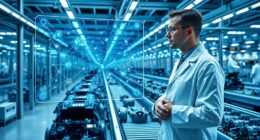
What is firmly established, independent of any single recent event, is the automotive industry’s structural shift toward software-defined vehicles. Modern cars can contain more than 100 million lines of code, controlling everything from engine management and braking assistance to infotainment, door locks, and over-the-air update mechanisms. Automakers including Tesla, Ford, GM, Toyota, and Volkswagen have all, in past years, issued recalls or service actions tied to software defects — some affecting safety-critical functions. Regulators such as the U.S. National Highway Traffic Safety Administration (NHTSA) routinely list software-related defects in recall campaigns, and faulty code has been a recurring factor in recalls affecting millions of vehicles globally.
The current wave of interest appears to center on the idea that a software fault — whether from a bad over-the-air update, a corrupted module, or a failed authentication check — can render a vehicle entirely inoperable, sometimes described colloquially as “bricking” a car. There is documented precedent for this category of problem: owners of several electric vehicle models have in past years reported cars immobilized after failed software updates, and manufacturers have on occasion had to physically service vehicles that could not be recovered remotely. These are long-standing, publicly reported patterns rather than new developments.
What cannot be verified at this time is the specific incident, recall, or report behind the current spike. No named automaker, dated event, regulatory filing, or official statement has been confirmed as the trigger for the renewed attention. Any description of a particular vehicle being disabled in recent days should be treated as unconfirmed until attributed to a manufacturer, regulator, or credible primary source.
Why Software-Dependent Cars Raise the Stakes
The significance of this trend lies in a shift in failure modes. Mechanical cars of past decades typically degraded gradually; a fault might strand a driver, but rarely disabled every system at once. In a software-defined vehicle, a single corrupted update or faulty module can potentially immobilize the car, disable safety features, or lock out the owner entirely. Because many functions are interdependent on shared computing platforms, faults can cascade in ways that are harder to isolate and repair.
This also raises economic and safety questions. Owners may face repair costs for problems that originate in manufacturer code rather than wear and tear, and independent repair advocates have argued that access to diagnostic software is increasingly a gatekeeping issue. On the safety side, software defects have prompted recalls involving braking, power steering, and airbag systems — categories where malfunction can be dangerous rather than merely inconvenient. Readers can check whether their own vehicle is affected by any open recall at NHTSA.gov/recalls using their vehicle identification number.
From Mechanical Faults to Firmware Failures
Software-related recalls are not new. Over the past decade, automakers have recalled vehicles for code defects affecting braking assist, collision warning, instrument cluster displays, and battery management. Tesla popularized over-the-air updates that can fix faults remotely, and most major manufacturers have since adopted similar capabilities. But OTA updates also introduced a new failure surface: an update that fails mid-install can leave a vehicle in a non-operational state, and several manufacturers have experienced this in isolated incidents reported by owners and covered by trade and consumer press.
In parallel, the industry has moved toward centralized electrical architectures — fewer, more powerful computers controlling more functions — led by so-called software-defined vehicle strategies at companies including Volkswagen, GM, and Mercedes-Benz. That consolidation improves features and update speed but concentrates risk: more systems depend on the same code base, so a single defect can affect a wider range of functions than in older, distributed designs.
“Welcome to 2026, where a simple software glitch can kill an entire car.”
— Widely circulated reader-facing framing driving current search interest
No Confirmed Incident Behind the Spike
The specific trigger for the current surge in searches and coverage is unknown. It is plausible that a recent owner report, viral post, or coverage of a recall drew attention, but no dated event, manufacturer statement, or regulatory filing has been identified as the source. It remains unclear whether any recent incident involves a full vehicle disablement, a limited recall, or simply renewed discussion of a known pattern. Readers should treat specific claims about particular models being disabled recently as unverified until a primary source — an automaker, NHTSA, or a documented owner report — confirms them.
Watch for Recalls and Regulatory Responses
Watchpoints for readers include NHTSA recall announcements and manufacturer service bulletins, which are the primary channels through which software defects affecting vehicles are formally disclosed. Owners concerned about their own car can search their VIN at NHTSA.gov/recalls at any time. Longer term, regulators in the U.S. and EU are continuing to examine over-the-air update practices, cybersecurity requirements for vehicles, and right-to-repair rules — policy areas where public concern about software-caused disablement could influence future standards. If a specific incident is confirmed as driving the current interest, this story will be updated with attributable details.
Key Questions
Can a software glitch really make an entire car stop working?
Yes, this has been documented. Failed software updates or corrupted modules have in past cases immobilized vehicles, sometimes requiring physical servicing rather than remote recovery. These are isolated but real incidents reported by owners and manufacturers.
Has a specific incident been confirmed as causing the current attention?
No. The trigger for the recent spike in searches and coverage is unconfirmed. No automaker statement, recall, or dated event has been verified as the source.
How can I check whether my car is affected by a software recall?
Enter your vehicle identification number (VIN) at NHTSA.gov/recalls. Any open recall, including software-related defects, will be listed along with repair instructions.
Are software-related recalls common?
Yes. Software defects have repeatedly appeared in recall campaigns over the past decade, affecting systems ranging from infotainment to braking assistance and battery management.
Do over-the-air updates make the problem worse or better?
Both. OTA updates let manufacturers fix defects remotely without a dealer visit, but a failed or faulty update can itself disable a vehicle, creating a new category of risk.
Source: rss
Fall Picks
fall essentials
As an affiliate, we earn on qualifying purchases.