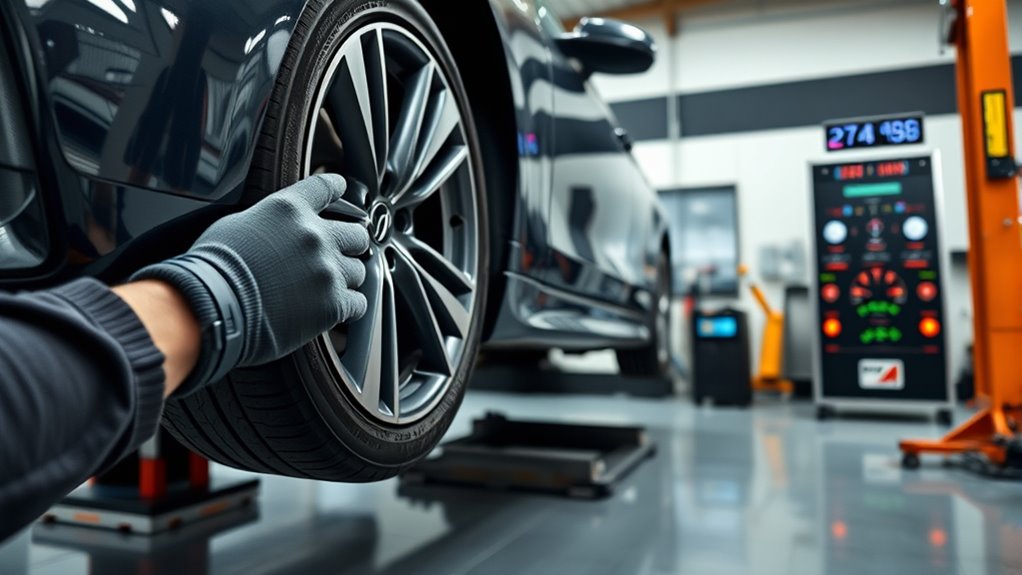

Wheel alignment keeps your vehicle handling safely, rides smoothly, and saves money by preventing uneven tire wear. It involves adjusting three key angles—camber, caster, and toe—to ensure your tires contact the road correctly and wear evenly. Proper alignment improves steering, stability, and fuel efficiency. Signs like pulling or uneven wear show it’s time for a check-up. Keep your vehicle in top shape by understanding these essentials—you’ll discover even more if you continue exploring.
Key Takeaways
- Wheel alignment involves adjusting the angles of the tires—camber, caster, and toe—for proper contact with the road.
- Proper alignment ensures even tire wear, improves handling, safety, and fuel efficiency.
- Signs of misalignment include uneven tire wear, vehicle pulling, and loose steering.
- Regular checks, at least once a year or after impacts, help prevent costly repairs and extend tire life.
- Proper alignment maintains vehicle stability, enhances safety, and supports overall suspension health.

Proper wheel alignment is vital for ensuring your vehicle handles safely and efficiently. When your wheels are properly aligned, you’ll notice smoother steering, better fuel economy, and a longer lifespan for your tires. Without correct alignment, you may experience uneven tire wear, which can lead to costly replacements and compromised safety. Plus, poor steering performance can make driving more difficult and dangerous, especially at higher speeds or during sharp turns. That’s why understanding the basics of wheel alignment is essential for maintaining your vehicle’s overall health.
Proper wheel alignment ensures safe handling, longer tire life, and better fuel efficiency.
Wheel alignment involves adjusting the angles of your wheels so they match the specifications set by your vehicle’s manufacturer. These angles include camber, caster, and toe. Camber refers to the tilt of the wheels inward or outward when viewed from the front. Caster is the angle of the steering pivot when viewed from the side, affecting steering stability. Toe describes whether the front of the wheels points inward or outward relative to the vehicle’s centerline. Proper adjustment of these angles ensures that your tires contact the road correctly, distributing weight evenly and preventing uneven wear patterns. Additionally, spiritual practices like meditation can help improve mental clarity and reduce stress, contributing to safer driving habits.
When your wheels are misaligned, you’ll likely notice uneven tire wear, such as bald spots on one side or excessive wear on the edges. This not only shortens the lifespan of your tires but also impacts steering performance. You might feel your vehicle pulling to one side or notice that steering requires more effort. Over time, misalignment can also cause your suspension components to wear out faster, leading to costly repairs. By keeping your wheels properly aligned, you help ensure that your tires wear evenly, which maintains ideal traction and safety while driving.
Regular wheel alignment checks are a wise way to prevent these issues. Many experts recommend having your alignment inspected at least once a year or whenever you hit a significant pothole or curb. If you notice your vehicle pulling unexpectedly or your steering feels loose or uneven, it’s time to get an alignment. Proper alignment doesn’t just improve steering performance; it also enhances your vehicle’s overall handling and safety. When your wheels are aligned correctly, your car responds more predictably to your steering inputs, giving you greater control and confidence on the road.
Frequently Asked Questions
How Often Should I Check My Wheel Alignment?
You should check your wheel alignment at least once a year, or whenever you notice issues like uneven tire pressure or your steering wheel pulling to one side. Regularly inspecting these signs helps maintain proper alignment, ensuring smoother driving and longer tire life. If you hit a pothole or curb, it’s a good idea to get your alignment checked promptly to prevent uneven tire wear and potential steering problems.
Can Poor Alignment Cause Uneven Tire Wear?
Yes, poor alignment can cause uneven tire wear. When your alignment is off, the tires don’t make proper contact with the road, leading to uneven tread wear. To prevent this, you should regularly perform tire rotations and get suspension inspections, especially if you notice uneven wear patterns. These steps help identify alignment issues early, extending your tires’ lifespan and ensuring safer driving.
What Are Signs of a Misaligned Wheel?
You’ll notice signs of a misaligned wheel if your steering feels off or pulls to one side. Uneven tire wear is common, and you might also see your vehicle drifting despite steering straight. Check your tire pressure regularly; improper pressure can mimic misalignment symptoms. If your car’s steering responsiveness feels less precise or if you notice uneven tread, it’s time to get a professional alignment to prevent further issues.
Does Wheel Alignment Affect Fuel Efficiency?
Yes, wheel alignment affects your fuel efficiency. When your wheels are properly aligned, your tires maintain ideal contact with the road, reducing rolling resistance. If your alignment is off, you might notice decreased steering responsiveness and uneven tire pressure, which can cause your engine to work harder and use more fuel. Regular alignment checks help guarantee your tires wear evenly, improving both steering and fuel economy over time.
Can I Align My Wheels Myself at Home?
You can attempt a DIY maintenance for wheel alignment at home, but it’s not recommended unless you’re experienced. You’ll need proper alignment tools, like a camber gauge or toe-in ruler, to get accurate results. Even small mistakes can affect your vehicle’s handling and tire wear. For best results and safety, consider visiting a professional who has specialized equipment and expertise to guarantee precise alignment.
Conclusion
Think of your car’s wheel alignment like tuning a guitar; when everything’s in sync, the music flows smoothly. Just like a musician checks their strings regularly, you should check your alignment to avoid uneven tire wear and poor handling. Skipping this step is like playing a out-of-tune instrument—frustrating and inefficient. Regular alignment keeps your ride smooth and safe, ensuring you hit all the right notes on every trip.