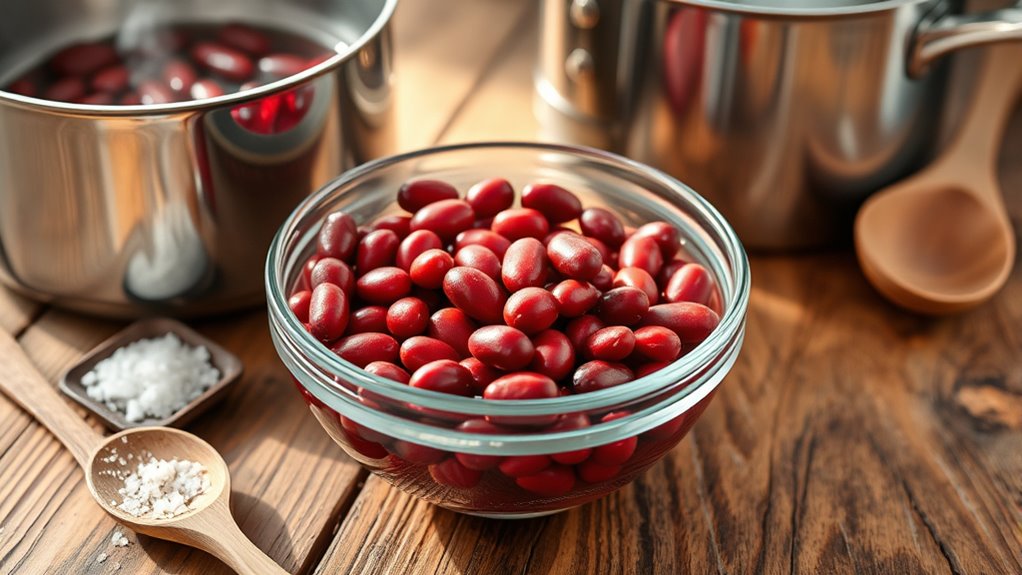

To make the most of legumes, soak them first to reduce cooking time and improve digestion. Rinse thoroughly, then simmer until tender, adding herbs or garlic for flavor—don’t salt early, as it can toughen skins. Store dried beans in a cool, dark place, and refrigerate or freeze cooked portions for longer use. Season with spices like cumin or chili for extra taste. Keep exploring to discover even more tips for cooking perfect, nutritious beans.
Key Takeaways
- Soak beans overnight to reduce cooking time and remove compounds that cause digestive discomfort.
- Rinse soaked beans thoroughly before cooking and add herbs, garlic, or onions to the cooking water for flavor.
- Simmer beans until tender, avoiding early salt addition to prevent toughening skins.
- Season beans with spices like cumin, paprika, or chili powder to enhance taste.
- Store cooked beans in airtight containers in the fridge for 3-4 days or freeze for longer preservation.

Are you looking to boost your nutrition and diversify your meals? Incorporating legumes into your diet is a fantastic way to do that. Legumes, including beans, lentils, chickpeas, and peas, are packed with nutritional benefits that support overall health. They’re rich in plant-based protein, fiber, vitamins, and minerals like iron and potassium. These nutrients help improve digestion, regulate blood sugar, and promote heart health. To maximize these benefits, proper preparation is key. Soaking your beans before cooking not only reduces cooking time but also enhances nutrient absorption. When you soak beans, you remove some of the compounds that can cause digestive discomfort, making them easier to digest. It’s a simple step that can make a significant difference in how you feel after eating them.
When it comes to storage tips, dried beans should be kept in an airtight container in a cool, dark, and dry place. Proper storage preserves their nutritional benefits by preventing moisture, pests, and spoilage. If you buy in bulk, consider dividing large quantities into smaller portions so you can open only what you need without exposing the rest to air and light, which can degrade their quality over time. Once cooked, beans should be stored in an airtight container in the refrigerator and consumed within three to four days to maintain freshness and safety. For longer storage, you can freeze cooked beans in portion-sized containers or freezer bags, extending their shelf life and making meal prep even more convenient.
When you’re ready to cook, rinse your soaked beans thoroughly to remove any dirt or residual compounds from soaking water. Depending on the type and age of the beans, cooking times can vary, but generally, they should be simmered until tender. You can add flavor by seasoning the cooking water with herbs, garlic, or onions, but avoid adding salt too early, as it can toughen the beans’ skins. Once cooked, beans are incredibly versatile—they can be added to salads, soups, stews, or mashed into spreads. Incorporating spices like cumin, paprika, or chili powder can elevate their flavor and make your meals more exciting. Remember, properly prepared and stored legumes are not only a nutritious addition but also a cost-effective way to diversify your diet. So, take the time to soak, cook, and season them well, and enjoy the many health benefits they offer.
Frequently Asked Questions
How Long Do Soaked Beans Stay Fresh in the Refrigerator?
Soaked beans stay fresh in your refrigerator for about 3 to 4 days. To maximize freshness preservation, store them in an airtight container and keep them at a consistent temperature. Be sure to check for any signs of spoilage, like a sour smell or slimy texture, before using. Keeping soaked beans cold and properly stored helps maintain their quality and reduces waste, making your meal prep more efficient.
Can I Cook Legumes Without Soaking Them First?
Yes, you can cook legumes without soaking, but it’s a bit tricky. Skipping soaking means longer cooking times and a risk of uneven doneness. To make it easier, try quick-soaking methods or adjust your cooking methods with more water and patience. Preparation tips like rinsing thoroughly and starting with boiling water can help. Be prepared for a slightly different texture, and keep an eye on your beans as they cook.
What Are Some Common Mistakes to Avoid When Seasoning Beans?
When seasoning beans, avoid over seasoning them, which can overpower their natural flavors. Be careful not to use too much salt, as it can make the beans taste harsh or salty. Instead, start with small amounts and taste as you go. Also, don’t forget to balance your seasonings with herbs and spices. This way, you enhance the beans without masking their delicious, earthy taste.
How Do I Reduce Gas Caused by Eating Beans?
Imagine your digestive system as a busy highway, and beans as tiny vehicles that sometimes cause traffic jams. To reduce gas, try using digestive aids like ginger or fennel seeds, and follow preparation tips such as soaking beans overnight and rinsing them thoroughly. Cooking beans slowly and discarding the soaking water helps break down complex sugars, easing your digestion and keeping traffic flowing smoothly on your internal highway.
Are There Any Legumes That Shouldn’T Be Soaked Before Cooking?
Some legume varieties, like lentils and split peas, don’t need soaking before cooking because they cook quickly and have thinner skins. Soaking exceptions include larger beans such as kidney, chickpeas, and soybeans, which benefit from soaking to reduce cooking time and improve digestibility. If you skip soaking these legumes, you may end up with longer cooking times and tougher textures, so follow specific guidelines for each legume variety.
Conclusion
Just like tending a garden, preparing legumes takes patience and care. I once forgot to soak a batch, only to watch them stubbornly stay firm—reminding me that proper prep release their true flavor and texture. When you soak, cook, and season your beans thoughtfully, you nurture a meal that’s hearty and satisfying. With each step, you cultivate not just beans, but a deeper appreciation for the simple magic of good food.