
A spice pairing cheat sheet helps you create balanced and flavorful dishes by understanding which spices work well together. Warm spices like cinnamon pair nicely with sweet ingredients, while herbs like cilantro add freshness when combined with spicy peppers. Balancing heat with dairy or acidity keeps dishes enjoyable, and mixing background spices like garlic or cumin adds depth. Keep practicing these principles, and you’ll discover more effective pairings that elevate your cooking a little more with each use.
Key Takeaways
- Pair warm spices like cinnamon with sweet ingredients such as fruit or honey for balance.
- Combine tangy herbs like cilantro with spicy peppers to add freshness and contrast.
- Use dairy or acidity (yogurt, lemon juice) to mellow heat from chili peppers.
- Match smoky spices like paprika with hearty ingredients for depth of flavor.
- Balance intense spices with subtle background flavors like garlic, cumin, or turmeric for layered taste.
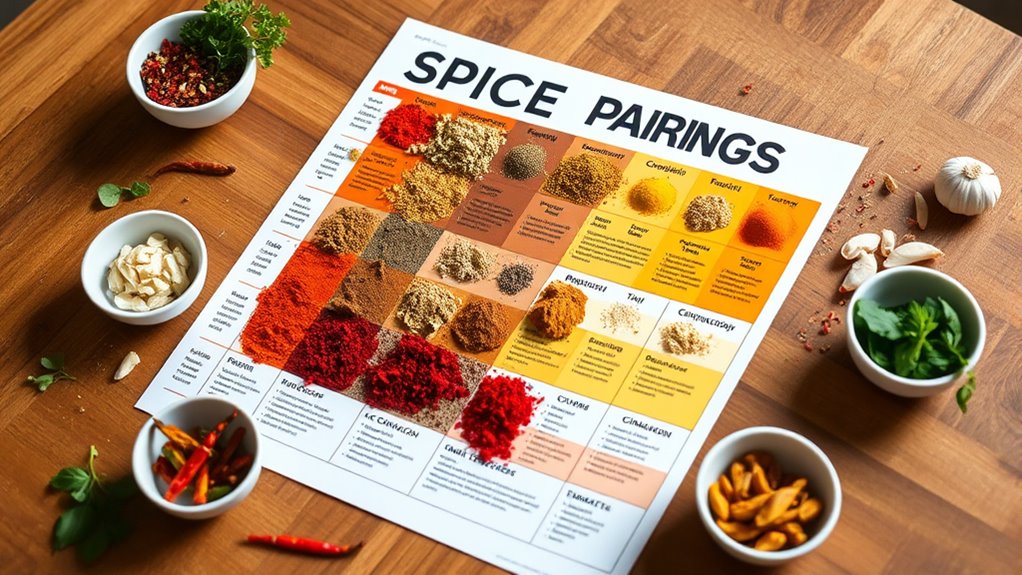
Ever wondered how to perfectly match spices with your dishes? Achieving the right combination isn’t just about picking what smells good; it’s about creating a balanced flavor profile that elevates your cooking. When you focus on flavor harmony, you’re ensuring each spice complements the others, resulting in a cohesive taste that excites the palate. For example, pairing warm spices like cinnamon with sweet ingredients creates a comforting harmony, while combining tangy herbs like cilantro with spicy peppers adds freshness and vibrancy. Understanding these relationships helps you craft dishes where every element works together seamlessly, making the overall flavor more compelling and satisfying.
Creating balanced flavor profiles by pairing warm spices with sweet ingredients and fresh herbs with spicy peppers enhances culinary harmony.
Heat balancing plays a pivotal role when working with spices. Not all heat from chili peppers or black pepper is the same; some can overpower a dish if not moderated. When you’re aware of how to balance heat, you prevent your food from becoming too fiery or numbing the other flavors. For instance, if you’re adding chili to a stew, consider balancing that heat with ingredients like dairy, sugar, or acidity—think yogurt, honey, or lemon juice. These help mellow the spiciness, allowing the flavors to shine without overwhelming your taste buds. Achieving this equilibrium makes each bite enjoyable and keeps the heat from dominating the dish.
In terms of flavor harmony, it’s also about understanding the role of each spice in your recipe. Some spices act as background enhancers, like garlic or cumin, providing depth without overpowering the main ingredients. Others, such as turmeric or paprika, add color and subtle flavor accents. When you combine spices thoughtfully, you create layers of taste that unfold with each bite. This process involves trial and error, but over time, you’ll develop an instinct for which spices work well together and how to adjust their quantities for ideal flavor harmony.
Balancing heat involves more than just reducing chili levels; it’s about considering the entire dish’s profile. If you’re working with complex flavors, you might want to add a splash of coconut milk to a spicy curry or a dollop of sour cream to a fiery dip. These ingredients help diffuse the heat while enriching the overall flavor. Remember, the goal is to enhance the dish’s inherent qualities without letting the heat overshadow the other ingredients. When you master flavor harmony and heat balancing, your dishes become more refined, inviting everyone to enjoy the full spectrum of tastes you’ve created.
In essence, understanding how to pair spices involves a mix of intuition and knowledge. Focus on creating harmony among flavors, and always be mindful of how heat interacts with other ingredients. With practice, you’ll develop a sense for balancing spice intensity and achieving flavor harmony, transforming simple recipes into memorable culinary experiences.
As an affiliate, we earn on qualifying purchases.
Frequently Asked Questions
How Do I Adjust Spice Levels for Sensitive Palates?
To adjust spice levels for sensitive palates, start by reducing the amount of chili or hot spices in your dish. Use mild spice options like paprika or milder peppers to achieve flavor enhancement without overwhelming heat. You can also add ingredients like yogurt or coconut milk to mellow the spice, making it more enjoyable. Taste as you go, and gradually increase spice if needed, ensuring the dish stays flavorful but gentle.
Can Spice Pairings Change Based on Cooking Methods?
Yes, spice pairings can change based on cooking techniques. For instance, grilling or roasting can deepen flavors, making spices like smoked paprika or cumin more prominent, while simmering or braising can mellow spicy elements, allowing milder herbs and spices to develop. You should adjust your spice choices according to the cooking method to enhance flavor development and create a balanced, harmonious dish that complements the specific technique used.
Are There Any Common Allergens in Spicy Ingredients?
Yes, some spicy ingredients contain allergenic ingredients that could trigger sensitivities. For example, chili peppers may cause reactions in people sensitive to nightshades, and mustard-based spices can affect those with mustard allergies. If you have spice sensitivities, always check ingredient labels and ask about allergenic ingredients in dishes. Being aware of common allergens helps you avoid adverse reactions while still enjoying flavorful spicy dishes.
What’s the Best Way to Store Spices Long-Term?
Imagine your spice jars sitting cozy in a cool, dark pantry, shielded from sunlight and heat. To guarantee long-term spice preservation, store your spices in airtight containers away from moisture and direct light. Use spice storage tips like labeling and keeping them in a consistent spot. This way, your spices stay vibrant and flavorful for months, making every dish burst with fresh, bold taste.
How Do I Balance Spice With Sweetness or Acidity?
To balance spice with sweetness or acidity, start by tasting your dish and adjusting gradually. For flavor balancing, add a touch of sugar or honey to mellow the heat and enhance sweetness. Alternatively, incorporate a splash of vinegar or citrus to cut through the spice with acidity. Focus on ingredient harmony by blending these elements thoughtfully, ensuring the spice complements rather than overwhelms the other flavors, creating a well-rounded dish.
Conclusion
Now that you know what spices go with what, you can confidently create bold, balanced, and flavorful dishes. You can experiment with heat, sweetness, and acidity, tailoring each dish to your taste. You can mix and match, compare and contrast, and refine your palate with every meal. With this cheat sheet in hand, you’re ready to spice up your cooking, elevate your flavors, and make every bite a delicious adventure.