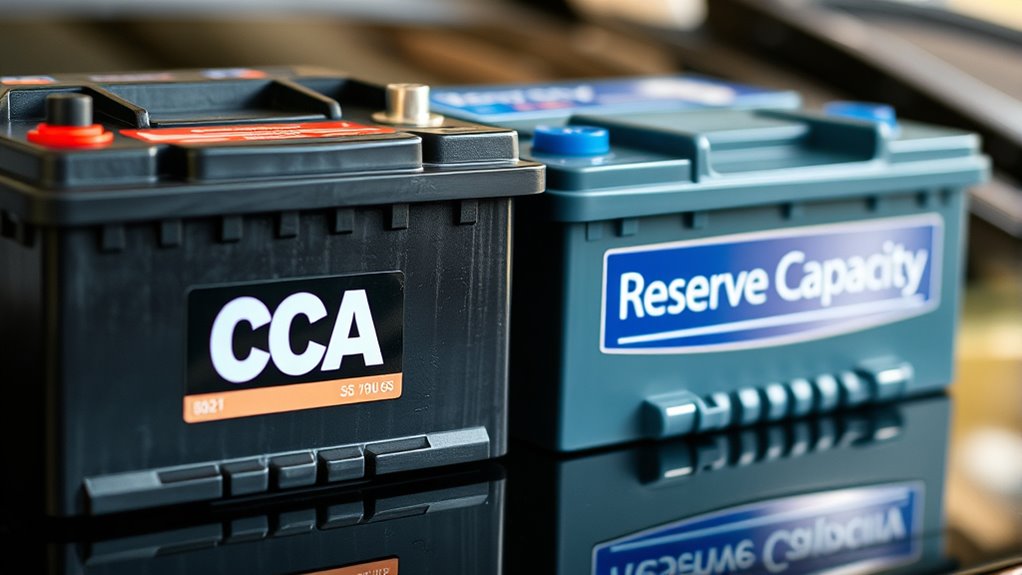

Battery CCA and Reserve Capacity both affect your vehicle’s performance, but they serve different purposes. CCA measures how well your battery can start your engine in cold weather, while RC shows how long it can power your accessories if the alternator fails. If you want reliable starts in winter, focus on high CCA. If you need long-lasting backup power, prioritize high RC. Want to learn how to choose the right one? Keep going for more details.

Get business pricing on garage and car supplies
- Business-only prices and quantity discounts
- Tax-exempt purchasing
- Multiple users, one account, clear invoices
Key Takeaways
- CCA measures a battery’s ability to start an engine in cold temperatures, indicating short-term power.
- RC (Reserve Capacity) shows how long a battery can power accessories if the alternator fails, reflecting overall capacity.
- High CCA is essential for cold climates requiring strong engine starts; higher RC ensures longer accessory power during failures.
- Both metrics are important; CCA focuses on immediate starting power, while RC emphasizes endurance and long-term use.
- Choosing the right battery depends on climate, driving conditions, and whether short-term power or extended capacity is more critical.
When choosing a car battery, understanding the difference between Cold Cranking Amps (CCA) and Reserve Capacity (RC) is crucial. These two metrics help you determine how well a battery will perform under various conditions, but they serve different purposes. CCA measures the battery’s ability to start your engine in cold temperatures, indicating how much power the battery can deliver in a short burst. RC, on the other hand, shows how long your battery can power your vehicle’s accessories if the alternator fails, reflecting its overall capacity and endurance. Understanding battery specifications is essential for making an informed decision.
Knowing these differences influences your choice, especially considering how charging methods impact your battery’s lifespan. For example, a battery with a high CCA is often used in colder climates where starting power is critical, but it might not necessarily have the same reserve capacity. Conversely, batteries with higher RC are better suited for vehicles that require long-lasting power when the engine is off or in situations where you might need to run accessories for extended periods. When selecting your battery, consider your typical driving conditions and the demands placed on your vehicle.
Charging methods play an essential role in maintaining your battery’s health and extending its lifespan. Properly charging your battery ensures it remains efficient and reliable over time. Fast chargers can be convenient but may stress the battery if not used correctly, potentially shortening its lifespan. Slow, steady charging helps preserve the battery’s chemistry, especially for deep-cycle batteries with high RC. Regularly checking your charging system, including the alternator and voltage regulator, ensures your battery stays in peak condition, reducing the risk of early failure and costly replacements.
Additionally, how you care for your battery influences its longevity. Avoid deep discharges and ensure your vehicle’s electrical system is functioning correctly. Keeping terminals clean and secure prevents unnecessary strain and corrosion, further extending your battery’s life. When your battery is well-maintained and charged appropriately, it performs better and lasts longer, saving you money in the long run.
high CCA car battery for cold climates
As an affiliate, we earn on qualifying purchases.
As an affiliate, we earn on qualifying purchases.
Frequently Asked Questions
How Do Climate Conditions Affect CCA and Reserve Capacity?
Climate conditions directly impact your battery’s CCA and reserve capacity. In cold weather, your battery’s CCA drops because it struggles to start your vehicle, so climate adaptation is essential. Hot climates can reduce your battery’s reserve capacity and shorten its longevity due to heat damage. By choosing a battery suited for your climate, you guarantee better performance, enhanced climate adaptation, and longer battery longevity, especially in extreme temperatures.
Can Both CCA and Reserve Capacity Be Improved?
You can definitely boost both CCA and reserve capacity with proper battery maintenance and smart charging techniques. Keep terminals clean, check for corrosion, and make sure your battery stays well-charged — don’t let it run on empty. Using the right charger and following manufacturer guidelines helps improve performance. While you can’t turn back the clock, consistent care keeps your battery in tip-top shape, giving you more reliable starts and longer life.
Which Is More Important for Cold Climates?
In cold climates, you should prioritize Battery CCA because it measures the battery’s ability to start your engine in low temperatures. Proper battery maintenance and using effective charging methods help maintain CCA, ensuring reliable starts. While reserve capacity is useful, especially for power backup, in cold weather, a high CCA is more critical to prevent starting issues. Regular checks and correct charging techniques keep your battery performing at its best.
How Do Usage Patterns Influence Battery Performance?
Your usage patterns considerably influence your battery’s performance and lifespan. Frequently starting your vehicle or leaving it idle can wear down the battery faster, especially if you don’t follow proper charging methods. To maximize battery life, avoid deep discharges and guarantee regular charging. Proper maintenance and understanding your usage habits help extend battery lifespan, keep it reliable, and prevent sudden failures, especially in demanding conditions.
Are There Specific Vehicle Types Better Suited for High CCA?
Think of your vehicle as a marathon runner. High CCA batteries are like extra energy reserves, perfect for vehicles with powerful engines or those in cold climates. If you drive a truck or SUV often, a high CCA battery boosts longevity and guarantees reliable starts. Focus on proper charging strategies to maintain this power, so your battery remains strong for the long haul, just like a runner ready for any challenge.
Conclusion
Understanding the difference between battery CCA and reserve capacity is like knowing the keys to a car—they keep your vehicle running smoothly. CCA measures how quickly your battery can start your engine in cold weather, while reserve capacity shows how long it can power your car if the alternator fails. Keep these specs in mind, and you’ll navigate your automotive needs with confidence, steering clear of surprises on the road. After all, a well-chosen battery is the heartbeat of your vehicle.
Halloween Picks
halloween
As an affiliate, we earn on qualifying purchases.