
Battery thermal management keeps your EV’s batteries within an ideal temperature range, ensuring safety, efficiency, and longer lifespan. You can choose between air or liquid cooling systems, with liquid cooling offering more uniform control. Proper temperature regulation prevents overheating, which can cause degradation or safety issues, and cold temperatures that reduce performance. Advanced systems monitor and adapt to changing conditions, especially in extreme climates. To learn how these strategies work together, keep exploring this important topic.
Key Takeaways
- Maintains optimal battery temperature to ensure safety, efficiency, and longevity of EV batteries.
- Utilizes cooling strategies like air and liquid cooling to regulate heat during operation.
- Continually monitors temperature with sensors, adjusting cooling dynamically based on real-time data.
- Prevents overheating and cold-related performance issues, especially in extreme weather conditions.
- Integrates thermal management with vehicle systems to adapt to environmental changes and maintain safe operation.

Effective battery thermal management is crucial for maintaining ideal performance and extending the lifespan of electric vehicle batteries. When you’re driving an EV, managing the battery’s temperature becomes a priority to ensure it operates efficiently under various conditions. One key aspect of this management is implementing effective cooling strategies that prevent the battery from overheating during high-demand situations or extreme weather. Without proper temperature regulation, batteries can suffer from reduced capacity, faster degradation, and even safety risks. That’s why you need to understand how different cooling methods work and how they contribute to optimal battery health.
Cooling strategies are designed to keep the battery within a safe temperature range, typically between 20°C and 40°C. You might be familiar with air cooling, which uses fans or vents to circulate air over the battery pack. While simple and cost-effective, air cooling may struggle to keep the battery cool in demanding conditions or during rapid charging. Liquid cooling, on the other hand, involves circulating coolant through channels embedded in or around the battery cells. This method provides more uniform and efficient temperature regulation, allowing the battery to stay within its ideal range even during high power output or extreme weather. Active cooling systems, which involve pumps and thermostats, give you precise control over temperature regulation, ensuring that the battery remains safe and performs consistently.
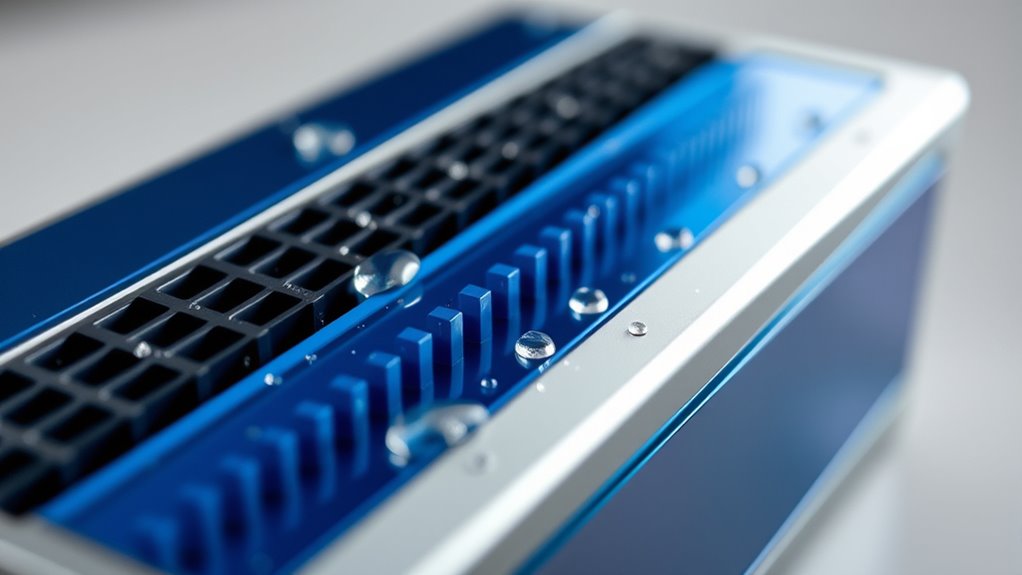
Liquid cooling provides efficient, uniform temperature regulation, keeping EV batteries within safe limits during high-demand or extreme weather conditions.
Temperature regulation isn’t just about preventing overheating; it also involves maintaining the battery’s temperature at a level that maximizes its efficiency and longevity. When the battery gets too cold, chemical reactions slow down, reducing power output and charging speed. Conversely, if it gets too hot, you risk accelerating chemical degradation and damaging the cells. Modern EVs employ sensors and control units that constantly monitor battery temperature, adjusting cooling levels as needed. This dynamic approach ensures that your battery remains at an ideal temperature, optimizing performance and extending its service life.
Furthermore, thermal management systems are increasingly integrated with other vehicle controls to adapt to driving conditions, climate changes, and charging demands, making sure the battery operates at peak efficiency under all circumstances. You should also consider how ambient conditions influence cooling strategies. In hot climates, more aggressive cooling may be necessary, while in colder environments, heating elements might be added to keep the battery warm enough for efficient operation. The combination of cooling techniques and temperature regulation systems works to protect your battery from extremes, ensuring safety and reliability. By understanding and appreciating these cooling strategies, you can better grasp the importance of effective thermal management in keeping your electric vehicle running smoothly for years to come.
Frequently Asked Questions
How Does Ambient Temperature Affect Battery Thermal Management?
Ambient temperature impacts your battery thermal management by affecting cooling efficiency. When the temperature is high, it becomes harder for your system to dissipate heat, risking overheating and reduced performance. Conversely, cooler ambient temperatures improve cooling efficiency, helping your battery stay within ideal operating ranges. You should monitor ambient conditions closely, especially in extreme weather, to guarantee your thermal management system maintains the right temperature and keeps your battery safe and efficient.
What Are the Latest Innovations in Cooling Technologies for Batteries?
You might think cooling tech has peaked, but new innovations prove otherwise. Phase change materials now offer rapid heat absorption, while liquid cooling systems become smarter with integrated sensors. These advancements keep batteries at *ideal* temps, even during intense use. Ironically, as batteries grow more powerful, cooling solutions evolve to become more efficient and compact, ensuring you get longer-lasting, safer performance without bulky systems.
How Does Thermal Management Impact Battery Lifespan?
Thermal management crucially impacts your battery’s lifespan by reducing battery degradation caused by excessive heat or cold. Proper thermal regulation slows down chemical wear and prevents damage from overheating, ensuring your battery stays healthy longer. When you maintain ideal temperature levels, you enhance performance and prevent early failure, ultimately extending the useful life of your battery. Effective thermal management is essential for preserving battery health over time.
Are There Specific Thermal Management Strategies for Fast Charging?
You might notice faster charging times when thermal optimization is applied during fast charging. To guarantee safety and battery health, strategies like active cooling, liquid cooling systems, and refined charging algorithms are implemented. These methods manage heat effectively, preventing overheating. By maintaining ideal temperatures, you can enjoy quick charging without compromising your battery’s lifespan, ensuring your device stays reliable and efficient over time.
What Safety Measures Are Integrated Into Thermal Management Systems?
You should know that thermal management systems incorporate safety measures like fire safety protocols and material durability. These systems include fire-resistant materials and fail-safe mechanisms to prevent overheating or fires. They also utilize durable components that withstand thermal stress, ensuring longevity and safety during fast charging. These measures protect you and the vehicle, reducing risks associated with thermal runaway and enhancing overall safety.
Conclusion
Proper battery thermal management keeps your battery safe and efficient, especially as electric vehicle adoption grows. Did you know that effective cooling can increase battery lifespan by up to 30%? By maintaining ideal temperatures, you prevent overheating and improve performance. So, whether you’re driving or charging, good thermal management ensures your battery stays healthy longer. Keep an eye on temperature control—it’s key to maximizing your battery’s lifespan and safety.