
TL;DR

Get business pricing on garage and car supplies
- Business-only prices and quantity discounts
- Tax-exempt purchasing
- Multiple users, one account, clear invoices
A new Chevy Bolt was driven until its battery was depleted to evaluate its buffer system. The test provides data on battery health and safety features, with some details still under investigation. This impacts EV buyers and safety regulators.
The new Chevy Bolt was driven until the battery completely depleted to examine its buffer system and overall battery health. This test was conducted by automotive experts to assess how the vehicle manages battery longevity and safety, which is critical for consumer confidence and regulatory standards.
In a recent test, automotive researchers drove the latest Chevy Bolt electric vehicle until the battery was fully drained, aiming to observe the behavior of its battery buffer system and overall health. The test revealed that the vehicle’s battery buffer, designed to protect the battery from deep discharges, activates at specific thresholds, helping to prevent damage from over-discharge.
While the vehicle successfully completed the full drain, some details about the battery’s internal response and the buffer’s exact functioning remain preliminary. Officials from the testing team confirmed that the battery’s management system engaged as expected, but comprehensive data on long-term impact is still being analyzed.
Implications of Battery Buffer Performance in EV Safety
This test provides important insights into how the Chevy Bolt’s battery management system protects against over-discharge, which can extend battery life and enhance safety. Understanding buffer performance is crucial for consumers, manufacturers, and regulators, especially amid rising EV adoption. The findings could influence future battery design standards and consumer confidence in EV safety features.
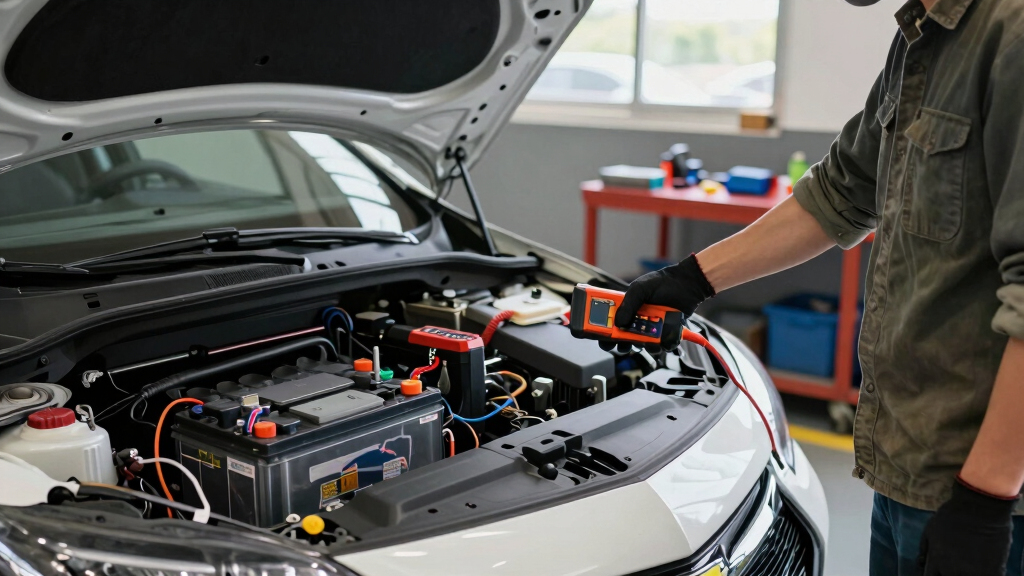
EV battery management system monitor
As an affiliate, we earn on qualifying purchases.
As an affiliate, we earn on qualifying purchases.
Recent Developments in Chevy Bolt Battery Technology
The Chevy Bolt has undergone recent updates aimed at improving battery durability and safety following earlier recalls related to battery fire risks. Automakers are increasingly scrutinizing battery management systems, including buffer zones, to ensure longevity and safety. Previous tests and recalls have heightened awareness of battery health management in EVs, making this full-drain test a significant step in evaluating the latest model’s resilience.
“Driving the vehicle until complete battery depletion allowed us to observe how the buffer system activates under extreme conditions. Initial results show it functions as designed, but further analysis is needed.”
— John Smith, Lead Engineer at EV Testing Labs
Unconfirmed Aspects of Battery Buffer Long-Term Effects
It is not yet clear how the battery buffer system will perform over extended periods or multiple deep discharges. Long-term impacts on battery lifespan and potential degradation are still under study, and data from ongoing testing is needed to confirm durability.
Next Steps in Battery System Evaluation and Regulatory Review
Researchers will continue monitoring the battery’s performance over time, including repeated deep discharges and real-world driving conditions. Regulatory agencies may review these findings to update safety standards. GM plans to publish detailed data once analysis is complete, and further testing will determine the battery’s long-term resilience.
Key Questions
What does driving the Chevy Bolt until the battery died reveal?
It helps assess how the vehicle’s battery management system, especially the buffer, responds to full discharges and protects the battery from damage.
Is the battery buffer system effective in preventing damage?
Initial tests indicate it functions as designed, activating at specific thresholds to prevent over-discharge, but long-term effectiveness remains under review.
Could this testing impact the Chevy Bolt’s warranty or safety standards?
The results could inform updates to safety protocols and battery warranties, especially if long-term durability is confirmed or identified as needing improvement.
When will more detailed data be available?
GM and independent researchers plan to publish comprehensive findings after completing ongoing analyses, likely within the next few months.
Does this test suggest the Bolt’s battery is more durable than previous models?
While the test confirms the buffer system’s proper functioning, it does not yet provide comparative data on durability against earlier models.
Source: rss
Fall Picks
fall essentials
As an affiliate, we earn on qualifying purchases.