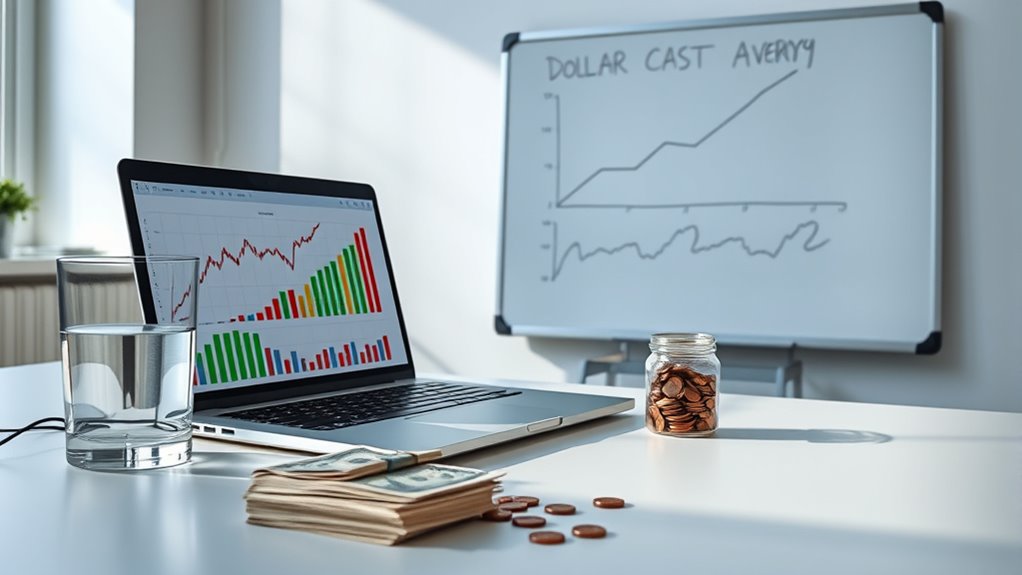

Dollar-cost averaging is a simple way to invest regularly by putting in a fixed amount of money, no matter the asset’s price. This approach helps reduce market risk and keeps your investing disciplined. For example, you buy more shares when prices are low and fewer when they’re high. Over time, this can lower your average purchase cost and smooth out market ups and downs. Keep exploring how this strategy can benefit your long-term investments.
Key Takeaways
- Dollar-cost averaging involves investing a fixed amount regularly, regardless of asset price fluctuations.
- It reduces market risk by spreading investments across different market conditions.
- Example: investing $200 monthly buys more shares when prices are low and fewer when high.
- This strategy lowers the average cost per share over time and minimizes emotional trading.
- It promotes disciplined, long-term investing, helping to avoid large losses from market downturns.

Dollar-cost averaging is a straightforward investment strategy that involves regularly investing a fixed amount of money into a particular asset, regardless of its price. This approach simplifies the investment process and helps you stay disciplined, especially in volatile markets. By consistently investing the same sum, you buy more shares when prices are low and fewer when prices are high. Over time, this can lower your average purchase cost and reduce the impact of market fluctuations, making it a valuable tool for managing risk.
Dollar-cost averaging involves regularly investing a fixed amount, helping to reduce market risk and maintain disciplined investing.
When you adopt dollar-cost averaging, you’re implementing a consistent investment routine that aligns with effective investment strategies. This method prevents emotional decision-making, such as trying to time the market or making impulsive buys based on short-term market movements. Instead, it encourages a long-term view, allowing your investments to grow gradually. This steady approach can be particularly beneficial during periods of market volatility, as it spreads out your entry points and minimizes the risk of investing a large sum just before a downturn.
Risk management becomes more manageable with dollar-cost averaging because it reduces the potential for significant losses during market dips. When you invest a fixed amount regularly, downturns don’t feel as devastating, since your purchases are spread across different market conditions. Over time, this can lead to a lower average cost per share, helping protect your portfolio from sharp declines. It also discourages panic selling, which is common during market downturns, thereby promoting a more disciplined investment habit.
For example, suppose you decide to invest $200 every month into a stock or a mutual fund. If the stock price is $20 in one month, you’ll buy 10 shares. When the price drops to $10 the next month, your $200 will buy 20 shares. If the price goes up to $40 in a subsequent month, you’ll buy 5 shares. Over several months, this pattern results in a lower average cost per share than if you had invested the entire amount at once, especially if the market experiences fluctuations. This example illustrates how dollar-cost averaging can help smooth out purchase prices over time and reduce exposure to the risks associated with lump-sum investing.
Frequently Asked Questions
How Does Dollar-Cost Averaging Compare With Lump-Sum Investing?
You might find dollar-cost averaging less risky than lump-sum investing, as it reduces the need for market timing and helps maintain investment discipline. When you invest a fixed amount regularly, you buy more shares when prices are low and fewer when they’re high, smoothing out market fluctuations. While lump-sum investing can yield higher returns if the market rises quickly, dollar-cost averaging offers a safer, more disciplined approach during volatile times.
What Are the Tax Implications of Dollar-Cost Averaging?
When you use dollar-cost averaging, you’ll need to report your investments for tax purposes, tracking your cost basis and sale proceeds. This affects your tax reporting, as each sale could generate capital gains or losses depending on the asset’s value at sale. Since you’re buying at different prices over time, it can be more complex than lump-sum investing, but it helps manage tax implications by spreading out gains and losses.
Can Dollar-Cost Averaging Reduce Investment Risk Effectively?
Yes, dollar-cost averaging can effectively reduce your investment risk by minimizing the impact of market timing errors. Instead of trying to predict market peaks and troughs, you invest fixed amounts regularly, which helps you avoid emotional investing decisions. This strategy smooths out market volatility, allowing you to buy more shares when prices are low and fewer when prices are high, ultimately lowering your overall risk.
Is Dollar-Cost Averaging Suitable for All Types of Investments?
Dollar-cost averaging isn’t suitable for all investment types, especially during high market volatility. You should consider this strategy mainly for long-term investments like mutual funds or ETFs, where steady investments can smooth out price fluctuations. However, for highly volatile or speculative assets, dollar-cost averaging might not be as effective, since rapid market swings could limit its benefits. Always assess your investment goals and market conditions before choosing this approach.
How Do Fees and Commissions Impact Dollar-Cost Averaging Strategies?
Think of dollar-cost averaging as planting seeds regularly. If broker fees and commission costs are high, they’re like weeds that eat into your harvest. These fees can reduce your investment gains and make small, consistent investments less effective. To maximize growth, choose brokers with lower fees and commission costs, ensuring more of your money works for you rather than going toward unnecessary charges. Keep fees in check to grow your investment steadily.
Conclusion
Now that you understand dollar-cost averaging, think of it as a steady heartbeat in your investment journey, pulsing through market highs and lows. It’s your rhythm, a dance that keeps emotions in check and your portfolio on beat. Like planting seeds at regular intervals, you nurture growth without rushing or fearing. Embrace this method, and watch your investments bloom steadily, turning the unpredictable market into a harmonious melody of consistent progress.