

Target-date funds automatically adjust your investments based on your expected retirement year. They start with more stocks for growth and gradually shift to bonds to reduce risk as your target date approaches. This hands-off approach helps simplify retirement planning while aiming to balance growth and safety. Keep in mind, the way these funds manage risk and assets varies, so exploring further will help you choose the right fit for your goals.
Key Takeaways
- Target-date funds automatically adjust asset allocations, gradually shifting from stocks to bonds as the specified retirement date approaches.
- They aim to simplify retirement investing by providing a hands-off, diversified investment strategy aligned with your target retirement year.
- The funds select a mix of assets based on the target date, with early years favoring growth and later years emphasizing safety.
- Management strategies, fee structures, and how quickly the fund shifts assets vary among providers, affecting performance and risk.
- Despite professional management, target-date funds are still subject to market risks and should be reviewed regularly to stay aligned with retirement goals.
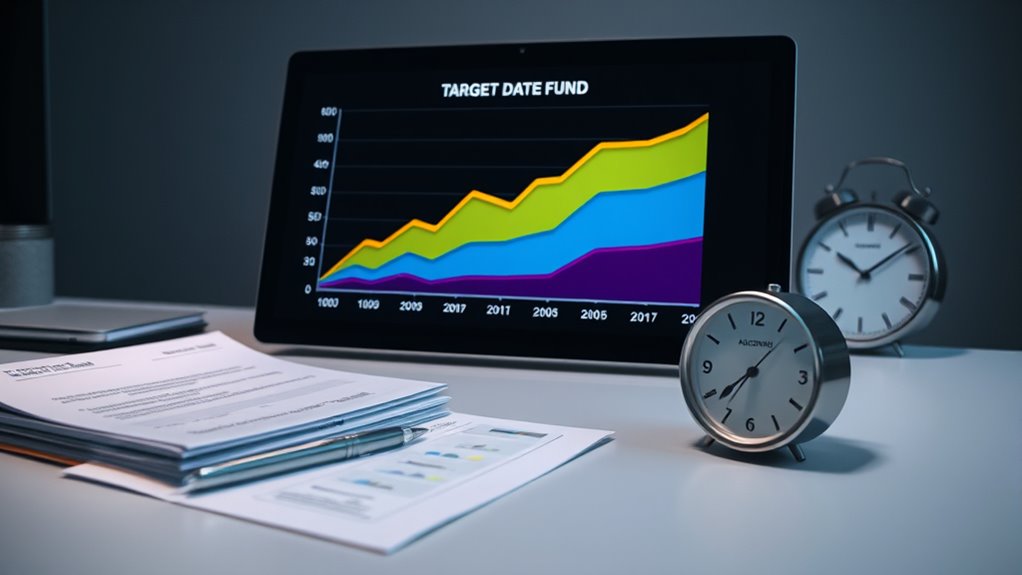
Target-date funds are a popular investment option designed to simplify retirement planning by automatically adjusting your asset allocation over time. They are designed to grow your savings with minimal effort, making them especially attractive if you prefer a hands-off approach. When you choose a target-date fund, you select a date that aligns with your expected retirement year, and the fund’s management team takes care of the rest. As you get closer to that date, the fund gradually shifts its investments from riskier assets like stocks to more stable options such as bonds, aiming to protect your accumulated savings.
Target-date funds automatically adjust investments over time to simplify retirement planning and growth.
However, it’s important to understand that, like any investment, target-date funds come with their own set of investment risks. Market fluctuations can impact the value of your holdings, especially in the early years when the fund typically has a higher allocation to stocks. If the market takes a downturn during this period, your investments could lose value, potentially delaying your retirement plans. Additionally, the way your fund is managed plays a vital role in how well it performs. Fund management involves decisions on asset allocation, rebalancing, and risk management strategies. Poor management or overly conservative adjustments might limit your returns, while overly aggressive management could expose you to unnecessary risks.
You should also recognize that not all target-date funds are created equal. Different fund providers may have varying investment strategies, risk tolerances, and fee structures. Some funds might shift their asset mix more quickly or slowly than others, which can influence your overall growth and risk exposure. It’s essential to review the fund’s prospectus and understand its management style and the associated costs before investing. While fund management aims to optimize growth and reduce risks over time, it’s not foolproof. Sometimes, funds may underperform or react differently than expected to market changes, which could impact your retirement timeline.
Another aspect to consider is that target-date funds are still subject to the inherent risks of the financial markets. Even with professional management, unexpected economic downturns or geopolitical events can affect your investments. Diversification within the fund can help mitigate some of these risks, but it doesn’t eliminate them entirely. Moreover, understanding the state tax implications for your specific location can influence your withdrawal strategies and overall retirement planning. Ultimately, your success with target-date funds depends on choosing the right fund for your risk tolerance, understanding how it is managed, and regularly reviewing its performance to guarantee it aligns with your retirement goals. While they offer a hands-off approach, staying informed about the fund’s management and potential investment risks guarantees you’re making the best decisions for your financial future.
Frequently Asked Questions
How Are Target-Date Funds Managed Over Time?
You can expect target-date funds to be actively managed through rebalancing strategies and glide path adjustments. As time passes, the fund gradually shifts from higher-risk investments to more conservative options, aligning with your changing risk tolerance. The managers regularly rebalance the portfolio to maintain the desired asset allocation, ensuring your investments stay on track for your retirement goals. This proactive management helps optimize growth while reducing risk as you approach retirement.
What Fees Are Associated With Target-Date Funds?
Think of target-date funds as a journey with a toll booth—you pay fees along the way. You’ll encounter a cost structure mainly through expense ratios, which cover management and administrative costs. These fees vary depending on the fund but generally range from 0.10% to 0.50%. Always check the expense ratio before investing, so you know what you’re paying for and how it might impact your long-term growth.
Can I Customize My Target-Date Fund?
You can’t fully customize your target-date fund, as these funds are designed to follow a set investment strategy based on your target retirement date. However, some fund providers offer limited options for investor preferences, like adjusting risk levels or adding specific asset classes. To tailor your investments more closely to your goals, consider combining a target-date fund with other investments or choosing a fund with more flexible fund customization options.
How Do Target-Date Funds Perform in Market Downturns?
During market downturns, target-date funds typically experience declines similar to the broader market, with historical performance showing average losses of around 20-30% during major dips. While they include diversification to manage investment risks, they can’t fully protect you from downturns. You might see some resilience, but it’s important to remember that during severe declines, your fund’s value can drop markedly, so stay patient and aligned with your long-term goals.
Are Target-Date Funds Suitable for All Investors?
Target-date funds aren’t suitable for all investors because your retirement planning needs vary. They offer investment diversification and a hands-off approach, making them ideal for those seeking simplicity. However, if you have a high risk tolerance or specific investment preferences, you might prefer customizing your portfolio. Consider your goals, risk level, and investment knowledge before choosing a target-date fund to guarantee it aligns with your financial plan.
Conclusion
Think of target-date funds as your financial GPS, guiding you smoothly toward retirement. Just like a seasoned navigator adjusts the course as you approach your destination, these funds automatically shift your investments over time. I once met someone who relied solely on them, and when retirement arrived, they found their portfolio balanced perfectly—ready for the journey ahead. With their adaptive nature, target-date funds help you stay on track, so you can reach your retirement goal confidently.