
TL;DR

Get business pricing on garage and car supplies
- Business-only prices and quantity discounts
- Tax-exempt purchasing
- Multiple users, one account, clear invoices
This article explains how to turn one source video into an entire publishing kit—like metadata, clips, social posts—all processed locally. It saves time, boosts privacy, and keeps your workflow under your control, without relying on cloud services.
Imagine this: you finish a 10-minute video, and instead of spending hours repackaging content for every platform, your system does it all—locally. No uploading, no waiting for servers, just a fast, secure process that turns a single file into a full spectrum of publish-ready assets.
This article reveals how a local-first pipeline can transform your video production workflow, saving time, protecting your data, and giving you total control over every asset. Ready to see how one video can become a whole publishing kit, without a single cloud connection? Let’s dive in.
Key Takeaways
- A local-first publishing system can generate a full suite of assets—titles, clips, descriptions, social posts—from a single video, all processed on your machine.
- Processing locally means faster turnaround, enhanced privacy, and full control over your content, without waiting for uploads or external servers.
- You can customize every asset—thumbnails, titles, social copy—while still automating the core workflow, maintaining your brand’s voice.
- Compared to cloud tools, local workflows reduce delays and security risks but may require more setup and technical understanding.
- Ideal for solo creators, privacy-conscious teams, or environments with limited internet—anyone who values speed, control, and confidentiality.
As an affiliate, we earn on qualifying purchases.
How to turn one video into a complete publishing kit in four simple steps
Getting a full suite of assets from a single video might sound complex, but it boils down to four core steps. Each one is designed to be quick, precise, and fully local. Imagine dropping your video into a desktop app, then watching it analyze and generate everything you need. Learn more about local publishing tools.
- Ingest and analyze: Drop your file or paste a link. The software reads the video’s visuals, audio, and on-screen text—locally, no cloud needed. This step is crucial because the quality of analysis directly impacts the relevance and accuracy of all subsequent assets. A thorough analysis ensures that thumbnails highlight key moments, descriptions capture essential content, and clips focus on the most engaging segments. Skimping here can lead to less effective assets and more manual editing later.
- Understand and fuse: The system combines audio and visual data, creating a layered, synchronized understanding of what’s happening on screen and what’s being said. This deep fusion allows the system to identify highlights, generate meaningful metadata, and produce assets that truly reflect the video’s core message. It’s not just about automation; it’s about intelligent synthesis that enhances the quality of every output, saving you from tedious manual curation.
- Generate assets: Titles, descriptions, clips, thumbnails, social posts—these are auto-created based on the analysis, then ready for your review. The system’s understanding enables it to craft assets that are not only relevant but also optimized for engagement and discoverability. Recognizing the importance of context, it considers trending keywords, platform-specific formats, and audience preferences—giving you a head start without extra effort.
- Review and publish: You edit, approve, and dispatch everything to your platforms—all from your desktop, with full control over timing and styling. This step emphasizes the tradeoff between automation and control—while the system automates the heavy lifting, your oversight ensures the final assets align with your brand voice and strategic goals. This balance is vital because it maintains quality while leveraging efficiency. Explore more about automotive content creation.
There’s no waiting for uploads or cloud processing—just fast, local action.
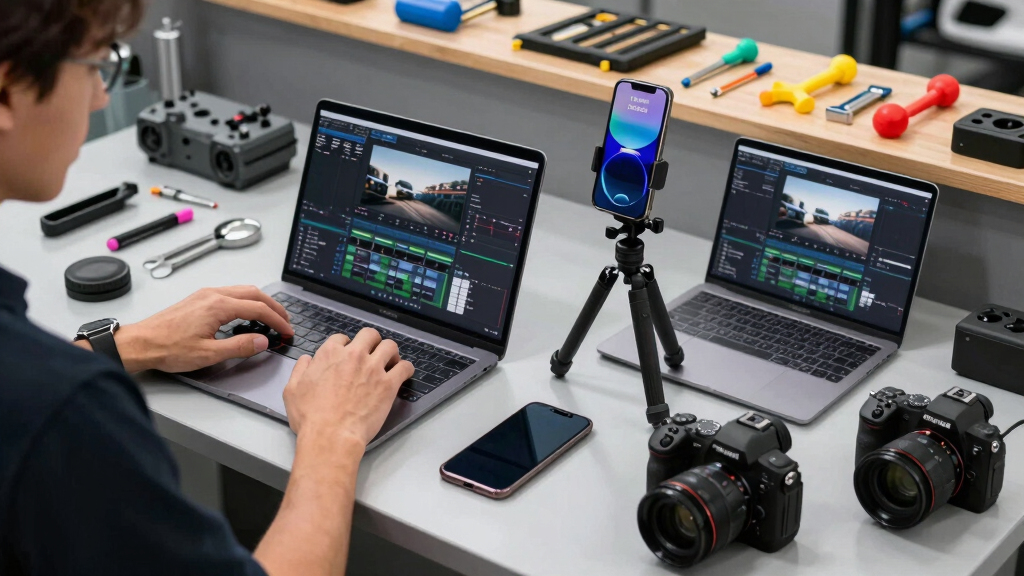
What makes a local-first publishing system better than cloud SaaS?
When you process videos locally, you keep every asset on your machine, not floating in someone else’s cloud. This means faster turnaround, fewer privacy worries, and no internet bottlenecks. For example, a creator working in a sensitive industry can analyze and publish without risking data leaks or delays caused by upload speeds. Find out more about automotive tech and security. Moreover, local workflows reduce dependency on internet stability—if your connection drops, your work continues seamlessly, avoiding costly interruptions.
Cloud tools often require uploading large files, which can take minutes or even hours depending on your bandwidth. Plus, your data is stored on external servers, raising security concerns. In contrast, local workflows handle everything internally, offering instant access and control. They also allow for iterative editing without incurring additional upload costs or risking data breaches. This means you can experiment freely, refine assets, and finalize your content with confidence that your data remains private and secure. The implications are profound: faster production cycles, enhanced security, and greater autonomy over your content pipeline.
Imagine editing a video and instantly seeing the generated captions, clips, and metadata appear on your screen—no upload pause needed. That’s a huge time saver and a privacy win, especially when dealing with proprietary content or confidential projects. This immediacy not only accelerates workflows but also empowers creators to respond rapidly to feedback or changing project requirements, fostering a more agile production environment.
What assets does this local publishing kit actually produce?
From just one video, you get a full set of assets ready to publish across platforms. Here’s what’s typically included: See how a publishing kit can be built locally.
| Asset Type | What It Does |
|---|---|
| Titles & Thumbnails | Auto-generated options scored for engagement, based on key moments in your video. These are not just random picks; they are derived from analyzing the content to identify high-impact visuals and compelling wording, which significantly increases click-through rates and viewer retention. |
| Descriptions & Chapters | SEO-friendly text, with chapter markers for better viewer retention. These descriptions are crafted to include relevant keywords and phrases, making your videos more discoverable. Chapters help viewers navigate your content more easily, reducing drop-off and encouraging longer watch times—crucial for platform algorithms that favor engaging content. Learn about off-road vehicle content strategies. |
| Clips & Shorts | High-retention moments turned into vertical clips for TikTok, Reels, Shorts. These are automatically generated from the most engaging segments, but you can fine-tune them or select different highlights. This capability allows you to repurpose your content efficiently, reaching audiences on multiple platforms without starting from scratch. |
| Social Posts | Tailored captions and threads for Twitter, Instagram, LinkedIn, and more. These are created based on the video’s themes and key points, designed to spark interest and drive traffic back to your main content. Properly crafted social assets can dramatically increase engagement and visibility across channels. |
| Metadata & Tags | Optimized tags, categories, and keywords to boost discoverability. This metadata is generated by analyzing trending topics and relevant keywords, helping your content surface higher in search results and recommendations. Proper tagging is essential for long-term discoverability and audience growth. |
All assets are linked to the original video, maintaining consistency and brand identity across every platform. This integration ensures that your message remains cohesive, and updates to one asset can propagate seamlessly, saving time and reducing manual effort.

How to customize your publishing kit to match your brand
Even with automation, you still have control. The system lets you tweak titles, choose preferred thumbnails, and edit descriptions before publishing. For instance, you might prefer a particular style of thumbnail that matches your channel branding—simply select or modify it. This customization ensures your content maintains a consistent look and feel, which is crucial for brand recognition and audience trust.
Most tools support extensive customization options, such as adjusting aspect ratios, adding logos, or tailoring social copy. This flexibility allows you to adapt generated assets to your specific branding guidelines, making sure everything aligns with your visual identity and voice. It also enables quick iterations—if a thumbnail isn’t quite right, you can easily modify it without starting from scratch.
Pro tip: Use the scoring system to pick the best title and description, then refine it to match your voice. This way, you save time but keep your unique style intact. The key is balancing automation with manual input—leveraging AI-generated suggestions while applying your personal touch to ensure authenticity and consistency.
How this local workflow compares to cloud publishing—what’s gained and what’s lost
Cloud-based publishing platforms excel in scalability and ease of use. They often offer one-click multi-platform posting, analytics, and collaboration tools. But they come with drawbacks: upload times, privacy concerns, and recurring costs. These platforms are designed for convenience, but at the expense of control and security. For instance, relying on cloud servers means entrusting your content to third parties, which can be risky if sensitive data or proprietary material is involved.
In contrast, a local-first approach keeps everything on your machine. You avoid upload delays, secure your content, and gain instant feedback. This immediacy is especially beneficial when rapid iteration is needed, or when internet access is unreliable. However, this approach may require more technical knowledge to set up and maintain, and you might need to handle updates or troubleshooting yourself. The tradeoff is between convenience and control: cloud solutions offer simplicity but less privacy, while local workflows demand more initial effort but provide greater autonomy and security.
Here’s a quick comparison:
| Feature | Cloud-Based |
|---|---|
| Speed | Dependent on upload/download speeds, often slower, especially with large files or slow connections. |
| Privacy | Data stored off-site, potential security risks depending on provider and data sensitivity. |
| Control | High, as everything remains on your local machine, giving you direct access and customization. |
| Cost | Recurring subscription fees, which can add up over time. |
| Customization | Limited by platform capabilities; you may have fewer options to tailor the process to your needs. |
Choosing between them depends on your priorities—speed and control favor local workflows, while scalability and ease of use often tilt toward cloud solutions. Understanding these tradeoffs helps you select the best approach for your specific context and needs.

Who benefits most from a cloud-free, local publishing workflow?
This approach is perfect for solo creators, small teams, or organizations with strict privacy needs. Think journalists working on sensitive stories, corporate teams handling confidential content, or artists who want total control over their assets. These users often prioritize security and immediacy over convenience, making local workflows ideal.
For example, a marketing team at a startup might process videos locally to avoid third-party data leaks and keep a tight grip on their assets. This not only reduces the risk of security breaches but also accelerates their production cycle, as they can generate and refine assets on demand without waiting for cloud uploads or external approvals. The ability to work offline and maintain full control over every asset is invaluable in high-stakes environments where confidentiality and speed are paramount.
It’s also advantageous in environments with poor internet connectivity or strict compliance rules—anywhere upload speeds are slow or data security is paramount. These scenarios demand a workflow that minimizes external dependencies, ensuring that work continues smoothly regardless of network conditions. Ultimately, anyone who values privacy, security, and speed will find a cloud-free, local approach aligns perfectly with their needs and operational constraints.
Frequently Asked Questions
What exactly is included in the publishing kit from one video?
A typical publishing kit includes titles, descriptions, chapters, clips, thumbnails, social media posts, and metadata—everything needed to publish across multiple platforms, all auto-generated and ready for review.
Can this workflow work fully offline?
Yes. The core idea is processing everything on your local machine, so you don’t need an internet connection once the software is set up. However, some features like cloud storage or external integrations might require connectivity.
What platforms does it support for publishing?
The system can generate assets for YouTube, TikTok, Instagram, Facebook, LinkedIn, Twitter, Reddit, and more. It produces platform-specific formats, so you can publish directly or manually upload with assets ready.
How much control do I have over customization?
You can tweak titles, thumbnails, descriptions, and social copy before publishing. The system also allows adjusting branding elements and layout options, ensuring your assets stay on-brand.
Is this more cost-effective than cloud solutions?
Generally, yes. You avoid recurring subscription fees and upload costs, although there may be an initial investment in the software. Over time, local workflows often save money and reduce delays.
Conclusion
Turning one video into a complete publishing kit without relying on the cloud is not just a dream—it’s a practical reality. It puts you in the driver’s seat, with faster workflows, tighter control, and better privacy.
Next time you finish a video, remember: your entire publishing kit can be ready in moments, right from your desktop. Why wait for uploads or external servers? Your content deserves the power of local processing—and now, it’s within reach.

Columbus Day / Indigenous Peoples' Day Picks
long weekend sales
As an affiliate, we earn on qualifying purchases.