
TL;DR

Get business pricing on garage and car supplies
- Business-only prices and quantity discounts
- Tax-exempt purchasing
- Multiple users, one account, clear invoices
Toyota will release an autonomous driving system in 2028 similar to Tesla’s FSD. The system features key differences, but full details and implications are still unclear. The development signals a shift in automotive autonomy efforts.
Toyota has confirmed that it will launch a new autonomous driving system in 2028, designed to closely resemble Tesla’s Full Self-Driving (FSD) system but with significant differences. This development marks a major step in Toyota’s push into full autonomy, aiming to compete directly with Tesla and other tech-driven automakers. The system’s arrival is expected to influence the future landscape of vehicle automation and mobility services.
According to Toyota officials, the new system, named ‘Toyota Autonomous Drive’ (TAD), will be available in select models starting later this year, with a broader rollout planned through 2029. Toyota describes TAD as an advanced driver-assistance system capable of handling complex driving scenarios with minimal human input, similar in function to Tesla’s FSD. However, Toyota emphasizes that TAD incorporates proprietary safety features and different operational protocols, which set it apart from Tesla’s offering.
While specific technical details remain under wraps, Toyota has indicated that TAD will utilize a combination of lidar, radar, and camera sensors, along with an AI-based processing platform. Unlike Tesla’s FSD, which relies primarily on camera-based vision, Toyota’s system will incorporate lidar for enhanced obstacle detection and environment mapping. The company also states that TAD will undergo rigorous testing and safety validation before widespread deployment.
Industry analysts note that Toyota’s move aligns with broader trends toward autonomous vehicle development, but the key differences—particularly in sensor choice and safety protocols—could influence how the system performs and is regulated. Toyota has also highlighted that TAD will be designed with strict safety and fail-safe mechanisms, potentially addressing some concerns associated with Tesla’s approach.
Implications of Toyota’s 2028 Autonomous System Launch
The introduction of Toyota’s autonomous driving system in 2028 signals a notable shift in the automotive industry, emphasizing safety, sensor diversity, and proprietary technology. Unlike Tesla’s FSD, which has faced scrutiny over safety and regulatory approval, Toyota’s approach could set new standards for reliability and public acceptance of autonomous vehicles. This development could accelerate adoption, influence regulatory frameworks, and reshape competitive dynamics among automakers and tech firms.
For consumers, the key difference in sensor technology and safety features may translate into more reliable and safer autonomous driving experiences. For the industry, Toyota’s entry could intensify competition and innovation, potentially prompting other manufacturers to revisit their autonomous strategies. Overall, the launch underscores the growing importance of autonomous systems in shaping future mobility.
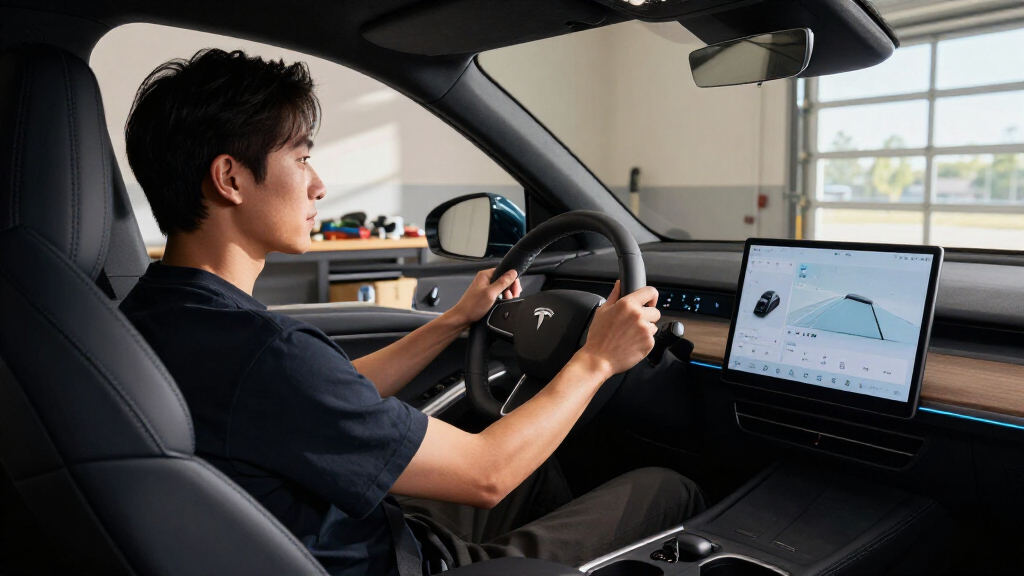
autonomous driving system for cars
As an affiliate, we earn on qualifying purchases.
As an affiliate, we earn on qualifying purchases.
Toyota’s Autonomous Drive Development Timeline
Toyota has been investing in autonomous vehicle technology for over a decade, with early prototypes and pilot programs testing various driver-assistance features. While Tesla popularized the concept of a driver-assist system marketed as FSD, Toyota’s approach has historically focused on safety and incremental automation. The current announcement reflects a culmination of years of research and development, with the company aiming to introduce a system that balances advanced automation with safety and regulatory compliance.
Prior to this, Toyota partnered with multiple tech firms to develop sensor and AI solutions, but the new TAD system marks a shift toward a more integrated and proprietary platform. The timing aligns with broader industry trends toward Level 3 and Level 4 autonomy, with regulatory agencies worldwide beginning to clarify standards for such systems. Toyota’s decision to incorporate lidar distinguishes it from Tesla’s vision-only approach, which has been a point of debate among industry experts.
Unresolved Details About System Capabilities
Specific technical details about the TAD system, such as sensor integration, AI architecture, and safety protocols, remain undisclosed. It is unclear how TAD will perform in diverse driving environments or how its safety record will compare to existing systems. Regulatory approval timelines and consumer acceptance are also still uncertain, as authorities evaluate the safety standards for such advanced systems.
Upcoming Deployment and Regulatory Review Processes
Toyota plans to begin limited pilot programs of TAD later this year, with wider availability expected in select markets by mid-2029. Regulatory agencies are closely observing these developments, and formal safety certifications will influence the system’s broader deployment. Toyota will likely continue testing and refining TAD in real-world conditions, with updates and safety reports expected in the coming months.
Key Questions
How does Toyota’s autonomous system differ from Tesla’s FSD?
Toyota’s system, TAD, will incorporate lidar sensors and safety-focused protocols, unlike Tesla’s vision-only approach. It aims to provide more reliable obstacle detection and safety mechanisms.
When will Toyota’s autonomous system be available to consumers?
Limited pilot programs are expected later in 2028, with broader market availability anticipated by mid-2029, depending on regulatory approval and safety validation.
Will Toyota’s system be safer than Tesla’s FSD?
While Toyota emphasizes safety and rigorous testing, definitive safety comparisons are not yet available, and the system’s real-world performance remains to be seen.
What are the regulatory challenges facing Toyota’s autonomous system?
Regulators are evaluating safety standards for autonomous vehicles, especially those with lidar and advanced safety features. Approval timelines are uncertain and depend on ongoing testing outcomes.
Source: rss
Halloween Picks
halloween
As an affiliate, we earn on qualifying purchases.