TL;DR

Get business pricing on garage and car supplies
- Business-only prices and quantity discounts
- Tax-exempt purchasing
- Multiple users, one account, clear invoices
Tesla has revealed that its Cybercab will use a giant on-screen joystick as a backup steering control. This development is confirmed through recent leaks, sparking widespread interest. The feature’s practical effectiveness and safety implications remain uncertain.
Tesla’s upcoming Cybercab will include a large on-screen joystick as a backup steering control, according to recent leaks. This feature, confirmed by unverified sources, marks a notable departure from traditional physical backup systems and has generated widespread interest among automotive and tech observers. The inclusion of such a control raises questions about its effectiveness, safety, and integration with Tesla’s autonomous driving systems.
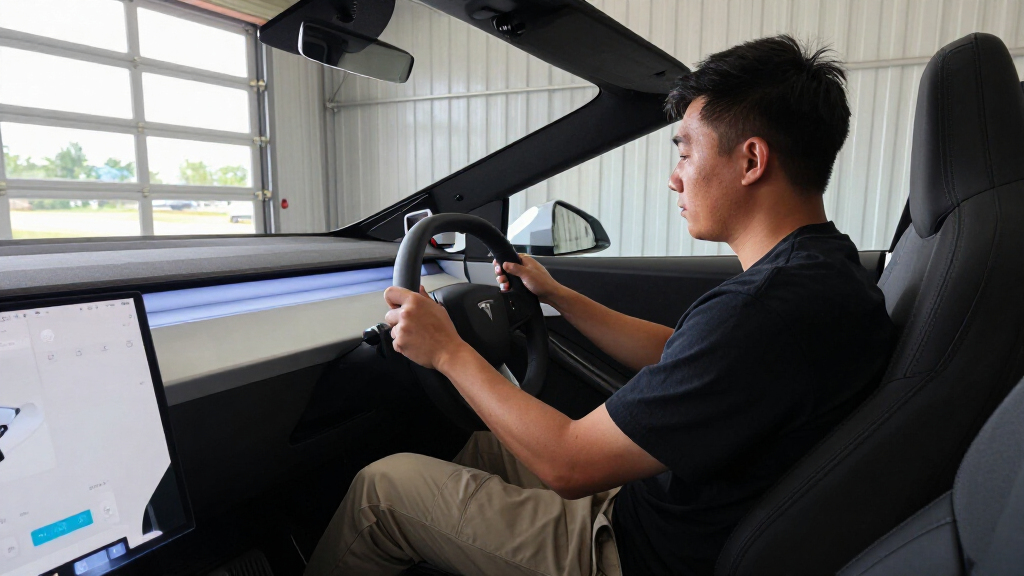
The Tesla Cybercab, an electric autonomous vehicle designed primarily for urban ride-hailing, is reported to incorporate a giant on-screen joystick as a backup steering method. This feature was first highlighted in leaked images and videos circulating on social media, showing a large, prominent joystick displayed on the vehicle’s dashboard interface. Tesla has not officially confirmed this detail, but multiple sources suggest that the joystick is intended as an emergency or manual override system, replacing traditional physical steering wheels in the vehicle’s design.Industry experts and safety analysts are examining whether this digital control can reliably replace conventional steering mechanisms. The joystick appears to be a sizable, touch-based interface that users would manipulate to steer the vehicle in case of primary system failure. Some sources suggest that the joystick’s design aims to simplify the interior layout and align with Tesla’s focus on digital interfaces, but technical specifics and safety protocols remain unconfirmed. Tesla’s approach to backup controls is thus far unpublicized, and it is unclear how this system would perform in real-world driving conditions or emergency scenarios.
Potential Impact on Autonomous Vehicle Safety Protocols
This development could signal a shift in how backup steering controls are integrated into autonomous vehicles, emphasizing digital interfaces over traditional mechanical systems. If effective, the giant on-screen joystick might streamline interior design and reduce mechanical complexity. However, safety experts are concerned about the reliability of digital controls in emergency situations, where tactile feedback and physical controls are considered crucial. The feature’s success or failure could influence industry standards and Tesla’s reputation for innovation in vehicle safety.
Tesla Cybercab backup steering joystick
As an affiliate, we earn on qualifying purchases.
As an affiliate, we earn on qualifying purchases.
Tesla’s Focus on Digital Controls and Autonomous Design
Tesla has been at the forefront of integrating digital interfaces and autonomous driving features into its vehicles. The company’s recent models rely heavily on touchscreen controls, and its Autopilot system is a central part of its strategy for autonomous mobility. The concept of replacing physical backup steering wheels with digital controls aligns with Tesla’s broader push toward minimalistic, software-centric vehicle interiors. However, the specific implementation of a giant on-screen joystick as a backup system is a new development, and its safety and practicality are still under scrutiny. Historically, backup steering mechanisms have been mechanical, designed to ensure driver control in case of primary system failure. Tesla’s move toward a digital alternative marks a significant departure from this norm, raising questions about regulatory approval and real-world reliability.
Unconfirmed Details on Safety and Operational Testing
It is not yet clear how Tesla plans to test the reliability and safety of the giant on-screen joystick as a backup steering system. Details about regulatory approval, real-world testing protocols, or user safety standards remain undisclosed. Industry insiders caution that the effectiveness of a digital joystick in emergency scenarios is still unproven, and its integration with Tesla’s autonomous systems is not fully understood. The actual functionality, fail-safes, and user interface design are still speculative based on leaked images and social media snippets.
Awaiting Official Confirmation and Safety Evaluations
Tesla is expected to provide official details about the Cybercab’s backup steering system in upcoming announcements or regulatory filings. Industry regulators and safety agencies will likely scrutinize the digital joystick’s safety protocols before approving its use. Further testing, user trials, and safety assessments are anticipated to determine whether this innovative feature can be reliably implemented in commercial vehicles. As the development remains in early stages, observers will watch for Tesla’s official statements and independent evaluations.
Key Questions
Is the giant on-screen joystick the primary steering control for the Tesla Cybercab?
No, it is reported to be a backup steering control, intended for emergency use if the primary autonomous system fails.
Has Tesla officially announced this feature?
No, Tesla has not officially confirmed the presence of the giant on-screen joystick; current information is based on leaks and unofficial sources.
How might this digital joystick work in a real emergency?
The exact operational details are unclear. Experts question whether a digital, touch-based control can provide tactile feedback and reliability comparable to mechanical steering wheels in emergencies.
Could this feature impact vehicle safety regulations?
Yes, if validated, it could influence safety standards for autonomous vehicles, especially regarding backup control mechanisms and digital interfaces.
When will more information about this feature be available?
Further details are expected from Tesla in upcoming official disclosures, and regulatory agencies will likely review safety testing results in the near future.
Source: rss
Fall Picks
fall essentials
As an affiliate, we earn on qualifying purchases.