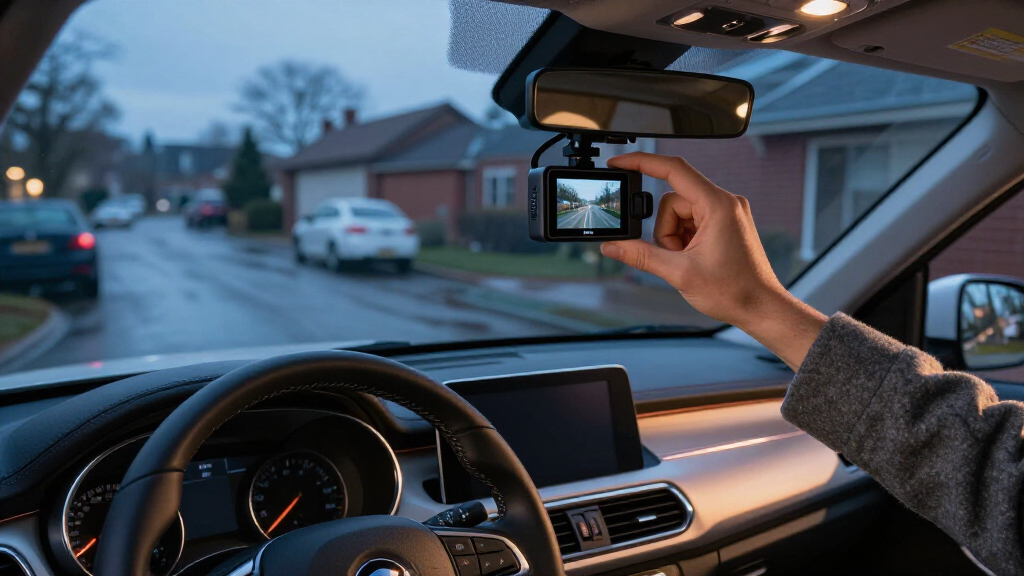

Dash cameras with night vision differ most in how well they capture detail after dark and how much of the car they cover. My best overall pick is the REDTIGER F7NP, whose STARVIS 2 sensor gives it a clear low-light focus in a front-and-rear setup. For broader coverage, the BOTSLAB 4 Channel 360° and PRUVEEO 360° record around the vehicle, while the TERUNSOUL 3-Channel adds a cabin view. More cameras can mean more angles to review and a more involved installation, while a dual-channel model keeps the setup simpler. Read on for the full breakdown and guidance on choosing night vision that fits your driving.

Get business pricing on garage and car supplies
- Business-only prices and quantity discounts
- Tax-exempt purchasing
- Multiple users, one account, clear invoices
Complete the kit


Key Takeaways
- The REDTIGER F7NP is my overall pick because its STARVIS 2 sensor puts low-light capture at the center of a straightforward front-and-rear setup.
- Four-channel coverage prioritizes context over simplicity: BOTSLAB, PRUVEEO, IIWEY N6, and similar systems record more sides of the car but take more effort to position and review.
- Resolution alone does not settle night performance: sensor and image processing details, such as STARVIS 2 or a stated starlight feature, help distinguish the low-light-focused options.
- Cabin recording serves a different need from side coverage: TERUNSOUL and REDTIGER F17 add interior footage, useful for rideshare or passenger monitoring.
- Included cards and connectivity change setup convenience, not night image quality: several picks bundle storage or newer Wi-Fi, but buyers still need to weigh coverage, installation, and low-light priorities.
| BOTSLAB 4 Channel 360° Dash Cam with 128GB Card, Voice Control, and App Control |  | Best for All-Around Night Coverage | Channels: 4: front, dual side, and rear | Resolution: 3K in four-channel mode; 4K in two- or three-channel modes | Field of view: 170° front, 120° per side, 150° rear | VIEW LATEST PRICE | See Our Full Breakdown |
| PRUVEEO 360° 4-Channel Dash Cam with GPS, Wi-Fi, Night Vision, and 128GB Card |  | Best for Straightforward 360° Recording | Channels: 4: front, rear, left, and right | Video resolution: 1080p | Field of view: 360° coverage | VIEW LATEST PRICE | See Our Full Breakdown |
| 4K Front and Rear Dual Dash Cam, 128GB Card Included, Starlight Night Vision |  | Best for Detailed Front-and-Rear Night Footage | Channels: 2: front and rear | Resolution: 4K front and 4K rear (3840×2160) | Field of view: 170° front, 150° rear | VIEW LATEST PRICE | See Our Full Breakdown |
| TERUNSOUL 3-Channel Dash Cam, 4K Front/Rear + 1080P Cabin, 128GB Card Included, AProX HD Night Vision |  | Best for Nighttime Rideshare Recording | Channels: 3: front, rear, and cabin | Resolution: 4K front, 4K rear, 1080p cabin | Viewing angles: 170° front, 150° rear, 150° cabin | VIEW LATEST PRICE | See Our Full Breakdown |
| REDTIGER F7N TOUCH 4K Front and 1080P Rear Dash Cam |  | Best for Easy On-Camera Control | Channels: 2: front and rear | Resolution: 4K UHD front, 1080p FHD rear | Field of view: 170° front, 140° rear | VIEW LATEST PRICE | See Our Full Breakdown |
| 4K Front and Rear Dash Cam with 128GB Card and Dual-Band Wi-Fi 6 |  | Best for Matched Front and Rear Detail | Video resolution: 4K UHD front and rear | Front viewing angle: 170° | Apertures: F1.5 front, F1.8 rear | VIEW LATEST PRICE | See Our Full Breakdown |
| REDTIGER F7NP 4K Front and 1080P Rear Dash Cam with STARVIS 2 Sensor |  | Best for Low-Light Sensor Credentials | Front video resolution: 4K (2160p) | Rear video resolution: 1080p | Sensor: STARVIS 2 CMOS | VIEW LATEST PRICE | See Our Full Breakdown |
| IIWEY N6 4-Channel 360° Dash Cam with 128GB Card |  | Best for All-Sides Night Coverage | Channels: 4 | Field of view: 170° front and rear; 150° sides | Night vision: Infrared with 8 IR lights | VIEW LATEST PRICE | See Our Full Breakdown |
| Affver A4 Dual Dash Cam, 4K Front and 2.5K Rear, 5GHz Wi-Fi 6, GPS |  | Best for Balanced Dual-Camera Detail | Front camera resolution: 4K UHD 2160p | Rear camera resolution: 2.5K | Wide angles: 160° front, 155° rear | VIEW LATEST PRICE | See Our Full Breakdown |
| ROVE R2-4K Dual Dash Cam with Front and Rear Cameras |  | Best for Expandable Storage and Parking Modes | Front video resolution: 2.5K QHD upscaled to 4K (2160p) | Rear video resolution: Full HD 1080p | Front image sensor: Sony STARVIS 2 IMX675, 5MP | VIEW LATEST PRICE | See Our Full Breakdown |
| 4-Channel 360° Dash Cam, Front/Rear/Left/Right Interior Car Camera |  | Best for Adjustable 360° Coverage | Channels: 4: front, rear, left, and right | Resolution: Full HD 1080P | Night vision: Eight infrared lights | VIEW LATEST PRICE | See Our Full Breakdown |
| PAPAGO 4-Channel 360° Dash Cam with 4K Front Recording |  | Best for Front-View Detail | Channels: 4 | Front resolution: 4K (3840 × 2160) | Rear, cabin, and side resolution: 1080p Full HD | VIEW LATEST PRICE | See Our Full Breakdown |
| REDTIGER F17 4K 3-Channel Dash Cam with STARVIS 2 Sensor |  | Best for Low-Light Image Processing | Channels: 3: front, interior, and rear | Front resolution: 4K | Interior and rear resolution: 1080P | VIEW LATEST PRICE | See Our Full Breakdown |
| IIWEY N5 4-Channel Dash Cam, 360° View, 2K Front + 1080P Rear, Side & Interior |  | Best for Flexible Front Resolution | Channels: 4: front, rear, sides, and interior | Resolution: 2.5K front or 1080P in four-channel mode | Field of view: 170° front and rear; 150° side cameras | VIEW LATEST PRICE | See Our Full Breakdown |
| Icesky S03 4K Dash Cam – 4 Channel Front, Rear, Left & Right with GPS, WiFi 6, 3″ Display |  | Best Feature-Rich Four-Channel Pick | Channels: 4: front, rear, interior, and side | Front resolution: 4K (2160p) | Other channel resolution: 1080P | VIEW LATEST PRICE | See Our Full Breakdown |
| dash cameras with night vision | Channels | Field of view | Wi-Fi | Night vision |
|---|---|---|---|---|
| BOTSLAB 4 Channel 360° Dash Ca | 4: front, dual side, and rear | 170° front, 120° per side, 150° rear | — | F1.8 aperture, six lenses, 940nm infrared LED, WDR |
| PRUVEEO 360° 4-Channel Dash Ca | 4: front, rear, left, and right | 360° coverage | — | F1.8 cabin lens with four infrared lights |
| 4K Front and Rear Dual Dash Ca | 2: front and rear | 170° front, 150° rear | — | — |
| TERUNSOUL 3-Channel Dash Cam | 3: front, rear, and cabin | — | — | AProX HD, WDR, four cabin infrared lights |
| REDTIGER F7N TOUCH 4K Front an | 2: front and rear | 170° front, 140° rear | — | — |
| 4K Front and Rear Dash Cam wit | — | — | Dual-band 2.4GHz and 5.8GHz Wi-Fi 6 | — |
| REDTIGER F7NP 4K Front and 108 | — | 170° front, 140° rear | Built-in 5.8GHz | — |
| IIWEY N6 4-Channel 360° Dash C | 4 | 170° front and rear; 150° sides | Wi-Fi 6 at 5.8GHz; also supports 2.4GHz | Infrared with 8 IR lights |
| Affver A4 Dual Dash Cam | — | — | 5GHz Wi-Fi 6 | WDR |
| ROVE R2-4K Dual Dash Cam with | — | 150° front, 140° rear | Dual-band 5.8GHz and 2.4GHz | — |
| 4-Channel 360° Dash Cam | 4: front, rear, left, and right | — | 5GHz | Eight infrared lights |
| PAPAGO 4-Channel 360° Dash Cam | 4 | — | 2.4GHz and 5.8GHz | Infrared cabin recording |
| REDTIGER F17 4K 3-Channel Dash | 3: front, interior, and rear | 150° front, 160° cabin, 155° rear | — | — |
| IIWEY N5 4-Channel Dash Cam | 4: front, rear, sides, and interior | 170° front and rear; 150° side cameras | 5GHz and 2.4GHz | — |
| Icesky S03 4K Dash Cam | 4: front, rear, interior, and side | — | Wi-Fi 6, 5.8GHz; downloads up to 20MB/s | Eight IR lights with independent left/right control |
More Details on Our Top Picks
BOTSLAB 4 Channel 360° Dash Cam with 128GB Card, Voice Control, and App Control
The BOTSLAB G980H is the strongest fit here for drivers who want nighttime coverage from every side of the car. Its four channels record the front, rear, and both sides at once, while an F1.8 lens and 940nm infrared LEDs support low-light capture. Compared with the PRUVEEO 360° 4-Channel Dash Cam, BOTSLAB offers higher resolution in its four-channel mode and a larger supported card, giving buyers more room to preserve footage. The tradeoff is that its side cameras are detachable, so a bump may shift their aim. The included 128GB card helps get started, but continuous parking monitoring needs a separate hardwire kit, and the short-range Wi-Fi is for nearby transfers rather than remote viewing.
Pros:- Four channels capture front, rear, and both sides simultaneously.
- F1.8 optics and 940nm infrared LEDs support low-light recording.
- The 3.18-inch screen offers four-way split-screen playback.
- Supercapacitor operation is specified for temperatures from -20°C to 70°C.
Cons:- 24/7 parking monitoring requires a separately sold hardwire kit.
- Wi-Fi works over a stated 3–5 m range and does not provide remote access.
- Detachable side cameras can be knocked out of alignment.
Best for: Drivers who park on busy streets and want simultaneous front, rear, and side recordings, including infrared-assisted low-light coverage.
Not ideal for: Buyers who want a simple two-camera setup, remote access to the car, or parking monitoring without installing a separate hardwire kit.
- Channels:4: front, dual side, and rear
- Resolution:3K in four-channel mode; 4K in two- or three-channel modes
- Field of view:170° front, 120° per side, 150° rear
- Night vision:F1.8 aperture, six lenses, 940nm infrared LED, WDR
- Display:3.18-inch touchscreen with four-way split-screen playback
- Storage:128GB card included; supports up to 512GB
- Connectivity and GPS:5.8GHz Wi-Fi; built-in GPS
- Parking modes:Time-lapse, Sentry, and collision detection; hardwire kit required
Our verdict“Choose the BOTSLAB if nighttime visibility around all four sides matters more than remote access or a simpler installation.”
PRUVEEO 360° 4-Channel Dash Cam with GPS, Wi-Fi, Night Vision, and 128GB Card
The PRUVEEO 360° suits drivers who want four-direction recording without moving up to the higher-resolution formats of the BOTSLAB G980H or the 4K Front and Rear Dual Dash Cam. Its adjustable lenses cover front, rear, left, and right, while the F1.8 cabin lens and four infrared lights target visibility inside the car after dark. That makes it a practical choice for rideshare drivers who value cabin footage alongside road views. GPS and Wi-Fi add route context and nearby phone access, and collision-locked clips are protected from routine loop recording. The compromise is 1080p video across the system and support for cards only up to 256GB. Parking mode also needs a separate hardwire kit, so it is less ready for unattended monitoring than the feature list might suggest.
Pros:- Records front, rear, left, and right views across four channels.
- F1.8 cabin lens and four infrared lights aid interior recording in darkness.
- Built-in GPS and Wi-Fi support route tracking and smartphone access.
- Collision-locked footage is protected from being overwritten by loop recording.
Cons:- All-channel resolution is 1080p, below the BOTSLAB’s 3K four-channel mode.
- Maximum supported card capacity is 256GB.
- Parking mode requires a separately sold hardwire kit.
Best for: Rideshare and family drivers who want four-direction footage with infrared cabin recording and basic phone access.
Not ideal for: Drivers prioritizing fine detail from license plates at night, higher-resolution recording, or parking mode without a hardwire installation.
- Channels:4: front, rear, left, and right
- Video resolution:1080p
- Field of view:360° coverage
- Night vision:F1.8 cabin lens with four infrared lights
- Display:3-inch screen
- Storage:128GB microSD card included; supports up to 256GB
- Connectivity and GPS:Wi-Fi; built-in GPS
- Parking and power:Time-lapse parking mode; hardwire kit required; supercapacitor power
Our verdict“Pick the PRUVEEO for four-way and cabin coverage at 1080p when that matters more than higher-resolution detail.”
4K Front and Rear Dual Dash Cam, 128GB Card Included, Starlight Night Vision
For drivers who care more about detail ahead and behind than coverage through the side windows, this dual 4K camera is the most focused choice in the group. Both cameras record at 3840×2160, and the f/1.5 aperture with starlight night vision and WDR is aimed at preserving usable low-light footage. Compared with the four-channel BOTSLAB G980H, it trades side coverage for higher stated resolution at both ends of the car. Built-in GPS and app support make it easier to locate and manage clips, while dual-band Wi-Fi is specified for transfers up to 20MB/s. The tradeoff is substantial storage demand from two 4K streams, and rear-camera wiring adds installation work. Parking mode requires a separate hardwire kit.
Pros:- Records 4K video from both front and rear cameras.
- F/1.5 aperture, starlight night vision, and WDR target low-light clarity.
- Dual-band Wi-Fi, GPS, and app support aid footage management and route context.
- Includes a 128GB card and emergency video lock.
Cons:- Two 4K streams can fill the included card quickly and require regular file management.
- Rear camera installation adds wiring and setup work.
- Parking mode requires a separate hardwire kit.
Best for: Drivers who regularly travel dark roads and want high-resolution front and rear footage with app-based clip access.
Not ideal for: Rideshare drivers needing cabin footage or owners who want side coverage and minimal storage management.
- Channels:2: front and rear
- Resolution:4K front and 4K rear (3840×2160)
- Field of view:170° front, 150° rear
- Aperture and night features:F/1.5 aperture, starlight night vision, WDR
- Frame rate:25fps
- Display:3-inch IPS
- Connectivity and GPS:Dual-band 5.8GHz/2.4GHz Wi-Fi; built-in GPS
- Storage:128GB card included
Our verdict“Choose this dual 4K model for detailed front-and-rear night footage if you can manage its storage needs and installation.”
TERUNSOUL 3-Channel Dash Cam, 4K Front/Rear + 1080P Cabin, 128GB Card Included, AProX HD Night Vision
The TERUNSOUL three-channel covers the road in 4K at both ends while keeping a 1080p cabin view, a useful balance for drivers who need evidence of what happened inside and outside the vehicle after dark. Its four cabin infrared lights, WDR, and AProX HD night vision focus the low-light features where many rideshare drivers need them most. Compared with the PRUVEEO 360°, it gives the front and rear cameras a higher stated resolution, but it does not record both sides of the car. Dual-band Wi-Fi 6 and app control help with clip access and updates; the included 128GB card can be expanded to 512GB. The cabin channel is lower resolution than the road cameras, and 4K files can accumulate quickly. Parking monitoring requires separate hardwiring.
Pros:- Records 4K front and rear footage plus a separate 1080p cabin view.
- Four infrared cabin lights and WDR support low-light interior capture.
- Dual-band Wi-Fi 6 and app control support transfers and firmware updates.
- Includes a 128GB card and supports expansion up to 512GB.
Cons:- Cabin footage is 1080p, below the front and rear camera resolution.
- 4K recordings can consume storage quickly.
- Parking monitoring requires a separately sold hardwire kit.
Best for: Rideshare and professional drivers who need an illuminated cabin view alongside detailed front and rear recordings at night.
Not ideal for: Drivers who need left-and-right exterior coverage or want to avoid large 4K files and hardwire installation.
- Channels:3: front, rear, and cabin
- Resolution:4K front, 4K rear, 1080p cabin
- Viewing angles:170° front, 150° rear, 150° cabin
- Night vision:AProX HD, WDR, four cabin infrared lights
- Display:3.18-inch full-laminated screen
- Connectivity and GPS:Dual-band Wi-Fi 6 at 2.4GHz and 5.8GHz; built-in GPS
- Storage:128GB card included; supports up to 512GB
- Parking monitoring:Time-lapse and collision detection; hardwire kit required
Our verdict“Choose the TERUNSOUL if nighttime cabin recording matters alongside high-resolution road footage, and you do not need side cameras.”
REDTIGER F7N TOUCH 4K Front and 1080P Rear Dash Cam
The REDTIGER F7N TOUCH is the pick for drivers who want a familiar two-camera setup and direct controls they can reach in the car. Its front camera records 4K, while the 1080p rear camera adds useful coverage behind; voice commands and a touchscreen make routine operation less dependent on a phone. Compared with the dual-4K model in this roundup, it gives up rear resolution, which can limit fine detail in nighttime clips from behind. It also lacks the cabin infrared setup of the TERUNSOUL, so it is less suited to rideshare recording after dark. GPS and 5.8GHz Wi-Fi support route context and file transfers, and a 128GB card is included. Parking monitoring still calls for a separate hardwire kit.
Pros:- Records 4K UHD at the front and 1080p at the rear.
- Voice control and touchscreen offer direct ways to manage the camera.
- Built-in GPS adds route information to recordings.
- Includes a 128GB card and 5.8GHz Wi-Fi with downloads up to 20MB/s.
Cons:- Rear resolution is lower than the dual-4K model in this roundup.
- No cabin camera is specified for recording passengers or the interior.
- Parking monitoring requires a separate hardwire kit.
Best for: Drivers who want front 4K and rear coverage with voice and touchscreen controls for managing recordings in the car.
Not ideal for: Drivers who need rear 4K detail, infrared cabin footage, or parking monitoring without hardwiring.
- Channels:2: front and rear
- Resolution:4K UHD front, 1080p FHD rear
- Field of view:170° front, 140° rear
- Night recording:Night-vision enhancements specified
- Controls:Voice control, touchscreen, and buttons
- Connectivity and GPS:5.8GHz Wi-Fi; built-in GPS
- Storage:128GB card included
- Parking monitoring:G-sensor and time-lapse modes; separate hardwire kit required
Our verdict“Pick the F7N TOUCH for convenient in-car controls and front 4K footage if 1080p rear recording meets your needs.”
4K Front and Rear Dash Cam with 128GB Card and Dual-Band Wi-Fi 6
Native 4K recording from both cameras gives this model a distinct advantage for drivers who want comparable detail ahead and behind, rather than the lower-resolution rear footage found on the REDTIGER F7NP and ROVE R2-4K Dual. Its F1.5 front and F1.8 rear apertures support low-light capture, though aperture figures alone cannot guarantee readable details in darkness. The 170° front view also covers a broad stretch of road. A supplied 128GB card, built-in GPS, and dual-band Wi-Fi 6 make the everyday setup and clip handling more complete than the Affver A4’s included 64GB card. The tradeoff is that parking monitoring needs a separately sold hardwire kit, and the listing gives no specific sensor or night-vision system to distinguish its dark-scene performance further.
Pros:- Records 4K UHD from both front and rear cameras
- F1.5 front and F1.8 rear apertures are suited to gathering light
- Includes a 128GB card and built-in GPS
- Dual-band Wi-Fi 6 supports app-based video transfers
Cons:- Parking monitoring requires a separately sold hardwire kit
- No specific image sensor or dedicated night-vision system is listed
- Wide 170° front coverage may include less detail per degree than a narrower view
Best for: Drivers who want the same 4K resolution at the front and rear and plan to review footage through a phone app.
Not ideal for: Drivers prioritizing documented night-imaging hardware or ready-to-use parking surveillance, since no sensor is specified and parking mode needs an extra hardwire kit.
- Video resolution:4K UHD front and rear
- Front viewing angle:170°
- Apertures:F1.5 front, F1.8 rear
- Wi-Fi:Dual-band 2.4GHz and 5.8GHz Wi-Fi 6
- Included memory card:128GB
- GPS:Built-in; records speed and location
- Parking monitoring:Time-lapse and collision detection; hardwire kit required
- Warranty:3 years
Our verdict“Choose this model if matched 4K front and rear footage matters more to you than a documented night-vision sensor or included parking-mode wiring.”
REDTIGER F7NP 4K Front and 1080P Rear Dash Cam with STARVIS 2 Sensor
The STARVIS 2 sensor, paired with WDR and HDR, gives the F7NP the clearest stated low-light credentials in this group. Those tools aim to retain useful detail across difficult lighting, which makes it a stronger night-focused pick on paper than the Affver A4, whose listing cites WDR but no named sensor. The front camera records 4K, while the rear tops out at 1080p, so it cannot match the dual-4K coverage of the 4K Front and Rear Dash Cam in this batch. GPS, a 128GB card, and a 3.16-inch screen round out a practical setup. One spec calls out a maximum frame rate of just 1 FPS; buyers should clarify what that applies to, since it would be a serious limit for normal driving footage if it described standard recording.
Pros:- STARVIS 2 sensor is paired with WDR and HDR for challenging light
- Records 4K front and 1080p rear footage
- Includes 128GB storage, built-in GPS, and 5.8GHz Wi-Fi
- Supercapacitor is designed for heat resistance
Cons:- Maximum frame rate is listed as 1 FPS, with its scope unclear
- Rear resolution is lower than the dual-4K option in this batch
- Parking mode requires a separately obtained hardwire kit
Best for: Drivers who prioritize a named low-light sensor and HDR/WDR support, and are comfortable with 1080p rear recording.
Not ideal for: Drivers who need confirmed smooth standard video capture without first clarifying the listed 1 FPS maximum frame rate, or who want 4K rear footage.
- Front video resolution:4K (2160p)
- Rear video resolution:1080p
- Sensor:STARVIS 2 CMOS
- Field of view:170° front, 140° rear
- Display:3.16-inch LCD
- Wi-Fi:Built-in 5.8GHz
- Included memory card:128GB
- Power component:Supercapacitor
- Warranty:18 months
Our verdict“Pick the F7NP for its named STARVIS 2 sensor and HDR/WDR support, provided you confirm the 1 FPS specification and accept 1080p rear video.”
IIWEY N6 4-Channel 360° Dash Cam with 128GB Card
For drivers who need views beyond the road ahead and behind, the N6 pairs four-channel recording with adjustable front, rear, and side cameras. Its eight infrared lights are a meaningful distinction from dual-camera models such as the Affver A4, though the listing does not specify resolution or image detail for each channel. Infrared can help capture nearby cabin or side activity in darkness, but it should not be mistaken for proof of clear, long-range road footage at night. A 128GB card, GPS, and dual-band Wi-Fi add useful basics. The broad coverage comes with more wiring and setup than a two-camera system, and the unit must remain connected to vehicle power; parking surveillance also needs a separately sold hardwire kit. This makes it a specialized coverage choice, not the simplest night-driving recorder.
Pros:- Four channels record front, rear, and both sides
- Eight infrared lights support night vision
- Includes 128GB storage and speed and route logging
- Loop recording and impact detection help preserve incident clips
Cons:- Must remain connected to vehicle power while in use
- Parking surveillance requires a separately sold hardwire kit
- Per-channel resolution is not specified in the supplied data
Best for: Drivers who need simultaneous front, rear, and side views, including visibility around the cabin or vehicle perimeter after dark.
Not ideal for: Drivers seeking a simple plug-and-play dual camera or documented high-resolution nighttime road footage across all four channels.
- Channels:4
- Field of view:170° front and rear; 150° sides
- Night vision:Infrared with 8 IR lights
- Included storage card:128GB
- Wi-Fi:Wi-Fi 6 at 5.8GHz; also supports 2.4GHz
- GPS:Speed and route logging
- Parking surveillance:Time-lapse and impact detection; hardwire kit required
- Power:Wired vehicle power; no built-in battery
Our verdict“Choose the N6 when all-around coverage and infrared visibility matter more than simple installation or clearly stated resolution for every camera.”
Affver A4 Dual Dash Cam, 4K Front and 2.5K Rear, 5GHz Wi-Fi 6, GPS
The A4 takes a middle path: 4K front and 2.5K rear video give the rear camera more detail than the 1080p rear units in this batch, though the 4K Front and Rear model still offers higher rear resolution. For night recording, its F1.5 aperture and WDR are relevant tools for gathering light and handling bright-to-dark shifts; the listing does not name a low-light sensor, so buyers seeking the clearest sensor-specific evidence may prefer the REDTIGER F7NP. The 3.59-inch display makes framing and playback easier in the car, and the included 64GB card plus extra USB port on the charger simplify setup. That card fills sooner during high-resolution recording, and no parking mode is specified. Rear-camera cable routing also takes more installation effort than a front-only setup.
Pros:- 4K front and 2.5K rear recording balance detail across both views
- F1.5 aperture and WDR support low-light and high-contrast scenes
- Large 3.59-inch IPS display aids setup and clip review
- Includes a 64GB card and charger with an extra USB port
Cons:- Included 64GB storage may fill quickly with high-resolution footage
- Rear camera installation requires cable routing
- No parking mode or named image sensor is specified
Best for: Drivers who want sharper-than-1080p rear footage, a built-in screen, and WDR-assisted night recording in a dual-camera setup.
Not ideal for: Drivers who need a named night-vision sensor, extended recording capacity out of the box, or specified parking surveillance.
- Front camera resolution:4K UHD 2160p
- Rear camera resolution:2.5K
- Wide angles:160° front, 155° rear
- Aperture and lens:F1.5 aperture; 6-layer lens
- Night vision:WDR
- Display:3.59-inch IPS screen
- Wi-Fi:5GHz Wi-Fi 6
- Included memory card:64GB
- Warranty:24 months
Our verdict“The A4 suits drivers who want more rear detail than 1080p and a useful screen, but it offers less sensor-specific night guidance and storage than the F7NP.”
ROVE R2-4K Dual Dash Cam with Front and Rear Cameras
The R2-4K combines a Sony STARVIS 2 IMX675 sensor with HDR and wide apertures, giving its night-recording pitch more specific hardware support than the Affver A4’s WDR-only description. Its front video is 2.5K upscaled to 4K, however, so buyers should not equate the label with native 4K detail; the REDTIGER F7NP lists 4K front capture and is the more straightforward resolution choice. Rear footage is 1080p. Where the ROVE pulls ahead is flexibility: dual-band Wi-Fi, GPS, an included 128GB card, and support for cards up to 1TB help with clip access and longer retention. Parking modes include time-lapse, motion, and collision detection, but using them requires a separate hardwire kit.
Pros:- STARVIS 2 sensor, HDR, and F1.5 front aperture support low-light capture
- Parking mode offers time-lapse, motion, and collision detection
- Includes a 128GB card and supports up to 1TB
- Dual-band Wi-Fi and built-in GPS support clip transfers and route stamps
Cons:- Front 4K footage is upscaled from 2.5K
- Rear recording is 1080p, below the 2.5K rear resolution of the Affver A4
- Parking mode requires a hardwire kit that is not included
Best for: Drivers who want a named STARVIS 2 sensor, several parking-mode options, and room to expand storage beyond the included card.
Not ideal for: Drivers who require native 4K front recording or want parking monitoring without adding a hardwire kit.
- Front video resolution:2.5K QHD upscaled to 4K (2160p)
- Rear video resolution:Full HD 1080p
- Front image sensor:Sony STARVIS 2 IMX675, 5MP
- Apertures:F1.5 front, F1.8 rear
- Field of view:150° front, 140° rear
- Wi-Fi:Dual-band 5.8GHz and 2.4GHz
- Included storage:128GB microSD card
- Maximum supported storage:1TB microSD card
- Parking mode:1 fps time-lapse, motion detection, and collision detection; hardwire kit required
Our verdict“Pick the ROVE if expandable storage and multiple parking modes matter more than native 4K front footage or higher-resolution rear video.”
4-Channel 360° Dash Cam, Front/Rear/Left/Right Interior Car Camera
For drivers who want night recording from every side of the vehicle, this model pairs four 1080P channels with eight infrared lights and WDR. That combination covers front, rear, left, and right views, while the adjustable cameras let owners aim them toward the cabin or outside. Compared with the REDTIGER F17, which adds a 4K front view and built-in GPS but records three channels, this camera prioritizes coverage around the car over front-image detail and route data. 5GHz Wi-Fi, a 128GB card, loop recording, and incident lock make footage easier to retrieve and keep. The tradeoff is a more involved multi-camera installation; GPS and 24-hour parking recording also need separately purchased accessories.
Pros:- Four adjustable 1080P cameras cover front, rear, left, and right views
- Eight infrared lights and WDR support low-light recording
- Includes a 128GB card and incident lock
- 5GHz Wi-Fi supports app access and video sharing
Cons:- GPS requires a separately purchased external logger
- 24-hour parking mode requires an optional ACC hardwire kit
- Installing and positioning four cameras is more involved than fitting a front-and-rear system
Best for: Drivers who park in busy areas and want night coverage of the cabin, sides, front, and rear
Not ideal for: Drivers who want built-in GPS or a simple installation, since GPS and parking mode need optional accessories and four cameras take more setup
- Channels:4: front, rear, left, and right
- Resolution:Full HD 1080P
- Night vision:Eight infrared lights
- Wide angle:160°
- Wi-Fi:5GHz
- Parking mode:24-hour; optional ACC hardwire kit required
- Included storage:128GB card
- Power:Supercapacitor
Our verdict“Choose this if broad night coverage around the vehicle matters more than 4K front detail or built-in GPS.”
PAPAGO 4-Channel 360° Dash Cam with 4K Front Recording
The PAPAGO suits buyers who want 4K detail ahead while keeping night coverage inside and around the car. Its front camera records at 4K, while the rear, cabin, and side cameras record at 1080p; infrared cabin recording helps capture activity in a dark interior. Unlike the 4-Channel 360° Dash Cam with Eight IR Lights, this model pairs its four views with a higher-resolution front camera and built-in GPS. That makes it a stronger fit for drivers who value readable forward footage and route records, though its supplied specs do not state the number of infrared lights. A 3-inch display and voice commands offer direct control, but the screen is not touch-enabled. Parking mode also depends on a separately sold hardwire kit.
Pros:- 4K front recording with 1080p rear, cabin, and side views
- Infrared cabin recording supports low-light interior capture
- Built-in GPS records route information
- Includes a 128GB card and Wi-Fi app control
Cons:- Parking mode requires a separately sold hardwire kit
- The 3-inch display does not support touch input
Best for: Drivers who want 4K forward footage, infrared cabin recording, and built-in GPS in a four-camera setup
Not ideal for: Owners who want touchscreen controls or parking monitoring without buying and installing a hardwire kit
- Channels:4
- Front resolution:4K (3840 × 2160)
- Rear, cabin, and side resolution:1080p Full HD
- Night vision:Infrared cabin recording
- Wi-Fi:2.4GHz and 5.8GHz
- GPS:Built-in
- Display:3-inch, non-touchscreen
- Included memory card:128GB
Our verdict“Pick the PAPAGO if front-camera detail and built-in GPS matter more to you than touchscreen operation.”
REDTIGER F17 4K 3-Channel Dash Cam with STARVIS 2 Sensor
The REDTIGER F17 is the night-focused choice for drivers who prefer three targeted views over a four-channel surround setup. Its STARVIS 2 sensor, HDR/WDR, and low-light enhancement are intended to help preserve detail across changing light, while the 4K front camera gives the forward view more resolution than the four 1080P channels on the 4-Channel 360° Dash Cam with Eight IR Lights. The F17 also records the cabin and rear in 1080P, with built-in GPS and dual-band Wi-Fi for route data and app transfers. That balance works well for documenting the road and cabin at night, but it leaves the side views uncovered. A 64GB card offers less included capacity than the 128GB cards supplied with several four-channel alternatives, and parking mode needs a hardwire kit.
Pros:- STARVIS 2 sensor with HDR/WDR and low-light enhancement
- 4K front recording with 1080P interior and rear views
- Built-in GPS and dual-band Wi-Fi
- Supercapacitor power and time-lapse and collision-detection parking modes
Cons:- Three channels do not provide left- and right-side coverage
- Includes a 64GB card, less capacity than several 128GB options in this roundup
- Parking mode requires an additional hardwire kit
Best for: Drivers who want enhanced low-light processing, a 4K forward view, and cabin and rear recording
Not ideal for: Drivers who need left- and right-side camera coverage or more included storage for extended recording
- Channels:3: front, interior, and rear
- Front resolution:4K
- Interior and rear resolution:1080P
- Sensor:STARVIS 2 IMX675
- Night video features:HDR, WDR, and low-light enhancement
- Field of view:150° front, 160° cabin, 155° rear
- GPS:Built-in
- Included storage:64GB card
Our verdict“Choose the F17 if low-light processing and 4K forward detail outweigh full side coverage and larger included storage.”
IIWEY N5 4-Channel Dash Cam, 360° View, 2K Front + 1080P Rear, Side & Interior
The IIWEY N5 gives buyers a choice between 2.5K front recording and a four-channel 1080P mode that captures the front, rear, sides, and cabin. For drivers focused on night coverage, its appeal is having all four views available alongside a 3-inch IPS screen and an included 128GB card. Compared with the Icesky S03, which specifies 4K front recording, infrared lights, and built-in GPS, the N5 offers a lower-resolution front option and lists no GPS or dedicated IR-light count. Its supercapacitor is rated for a wide operating-temperature range, a practical consideration for cars exposed to hot summers or cold winters. Parking monitoring supports time-lapse and impact detection, but needs a separate hardwire kit. Power is through the cigarette-lighter charger, and the warranty is 12 months.
Pros:- Four-channel coverage includes front, rear, side, and interior views
- Choice of 2.5K front mode or 1080P four-camera mode
- Includes a 128GB microSD card and supports up to 256GB
- Supercapacitor rated for operation from -4°F to 167°F
Cons:- GPS is not included
- Parking mode requires a separately sold hardwire kit
- Power requires the supplied cigarette-lighter charger; no USB or Type-C input
Best for: Drivers who want four-camera coverage, an onboard screen, and the option to prioritize front resolution
Not ideal for: Drivers who need built-in GPS, specified infrared night lighting, or USB-C power
- Channels:4: front, rear, sides, and interior
- Resolution:2.5K front or 1080P in four-channel mode
- Field of view:170° front and rear; 150° side cameras
- Screen:3-inch IPS
- Wi-Fi:5GHz and 2.4GHz
- Storage:128GB included; supports up to 256GB
- GPS:Not included
- Parking mode:Time-lapse and impact detection; hardwire kit sold separately
Our verdict“The N5 fits drivers who want adjustable front resolution and four-view coverage but can do without GPS and USB power.”
Icesky S03 4K Dash Cam – 4 Channel Front, Rear, Left & Right with GPS, WiFi 6, 3″ Display
The Icesky S03 combines 4K front recording with 1080P rear, interior, and side views, making it the most resolution-focused four-channel option in this group. Its eight IR lights, with independent left and right control, are a specific advantage for nighttime cabin and side coverage. Compared with the IIWEY N5, the S03 adds built-in GPS and a higher-resolution front channel; the N5 instead specifies a wide operating-temperature range and offers a 2.5K front mode alongside its 1080P four-camera mode. The S03 also includes a 128GB card, supports up to 512GB, and lists Wi-Fi 6 downloads up to 20MB/s. Parking mode needs a separate hardwire kit, and the supplied information gives conflicting screen sizes, so confirm the display specification before buying.
Pros:- 4K front recording with 1080P rear, interior, and side views
- Eight IR lights have independent left and right control
- Built-in GPS and Wi-Fi 6 app downloads up to 20MB/s
- Includes 128GB storage and supports cards up to 512GB
Cons:- 24-hour parking mode requires a separately sold hardwire kit
- Product data conflicts on display size, listing both 0.3 inches and 3 inches
- Supplied data lists a lithium-polymer battery rather than a supercapacitor
Best for: Drivers who want 4K front video, infrared night coverage across four views, and built-in GPS
Not ideal for: Drivers who want a clear, verified screen specification or parking mode without a separate hardwire kit
- Channels:4: front, rear, interior, and side
- Front resolution:4K (2160p)
- Other channel resolution:1080P
- Night vision:Eight IR lights with independent left/right control
- GPS:Built-in
- Wi-Fi:Wi-Fi 6, 5.8GHz; downloads up to 20MB/s
- Included storage:128GB microSDXC
- Maximum storage:512GB
Our verdict“Choose the S03 if you want the strongest stated combination of 4K front detail, IR-assisted four-view night coverage, and built-in GPS.”
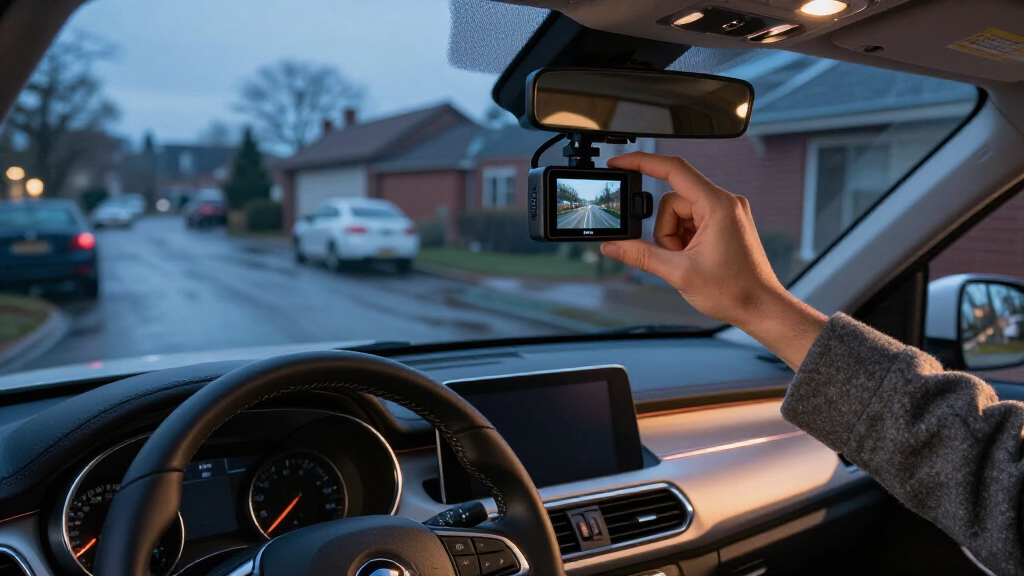
How We Picked
I compared the 15 listed cameras through the lens of night driving: the low-light technology each listing identifies, recording coverage, front and rear resolution, and practical details such as included storage, GPS, display, and wireless connectivity. I gave more weight to clearly stated night-focused hardware and useful incident context than to resolution claims alone; a 4K label does not by itself show how legible footage will be in darkness. I also considered how the number of cameras affects installation and day-to-day use.
The ranking reflects distinct buyer priorities rather than treating every feature as equal. The REDTIGER F7NP leads for its named STARVIS 2 sensor in a simpler dual-camera format. Multi-channel models rank well for buyers who need angles beyond front and rear, while picks with specific cabin coverage or convenience features suit narrower needs. Where the product name provides little detail about night imaging, I avoid assuming it outperforms a model with a stated low-light feature.
Factors to Consider When Choosing Dash Cameras With Night Vision
Night footage depends on more than a camera’s resolution label. I would start with what you need to identify after an incident, then match the sensor, camera placement, and power setup to that need.
Look for Low-Light Evidence, Not Just 4K
A higher resolution can preserve more detail, but it cannot guarantee a readable plate in a dark, moving scene. Check whether the listing names a sensor or night-focused processing, then look for sample footage recorded on unlit roads if it is available. Bright headlights can cause glare, while streetlights and reflective signs can confuse exposure, so footage in one lighting condition may not represent another. A model with STARVIS 2 or a stated starlight feature gives you a more concrete low-light claim to evaluate than a resolution number alone. Compare night samples at the speed and lighting conditions you normally encounter. Treat broad claims such as “night vision” as a starting point, not proof that every detail will be clear.
Match Camera Coverage to the Incident You Need to Document
Front-and-rear cameras concentrate on collisions ahead and behind, which covers many commuters’ main concerns. Side and cabin cameras can add context for parking disputes, rideshare trips, or incidents beside the vehicle, but each extra view creates another camera to mount and footage stream to review. A 360-degree label can describe several different layouts, so check where each lens points and whether it can actually see the area you care about. Wider coverage may also divide recording resolution across more channels. Decide whether you need a clear view in two directions or broader evidence around the car before choosing a channel count.
Check How Night Footage Handles Motion and Glare
Night driving combines movement, changing light, and bright headlights, so static low-light performance is only part of the picture. Look for sample clips that include oncoming traffic, streetlights, and a moving vehicle ahead. HDR or WDR may help manage bright and dark areas in the same scene, but the label alone does not establish how license plates will appear. If plate detail matters most, prioritize comparable night footage over a feature checklist. Also consider whether the camera’s placement behind the windshield will face tint, reflections, or obstructions that reduce usable light. A well-positioned camera often gives its sensor a better chance to capture a useful scene.
Plan the Power and Storage Setup Before Buying
Included memory cards make initial setup easier, but capacity affects how much footage stays available before the camera loops over older files. Frequent night drivers may fill storage faster, especially with multiple channels or high-resolution recording. Parking mode can capture events while the car is parked, yet it typically calls for a compatible hardwire kit and careful setup; check whether those parts are included. A low-voltage cutoff helps protect the car battery, and a supercapacitor can suit temperature extremes better than some battery designs. Confirm the camera’s power requirements and storage compatibility before installation. These details shape whether the system remains dependable after the first drive.
Decide Whether You Need Cabin Recording
Interior footage matters most when passengers are part of the evidence you need, such as for rideshare work or family transport. A cabin camera can also record the driver and events inside the vehicle, but it adds privacy considerations for anyone who rides with you. Infrared illumination may help a cabin camera record in darkness, though that does not improve the road-facing image. Check whether the interior view captures the seats you need without being blocked by headrests or reflections. If your priority is seeing the road and the car behind, a simpler dual-camera setup may be easier to install and review. Choose a cabin channel for a clear purpose rather than assuming more views always help.
Weigh Convenience Features Against Installation Complexity
Touch controls, voice commands, GPS, and Wi-Fi can make footage easier to manage, but they do not substitute for good night capture. Wi-Fi lets you transfer clips without removing the card, though large files can still take time to move. A display helps with positioning during installation, while an app can be more convenient for reviewing a clip after a drive. Multi-camera systems demand more careful cable routing and lens adjustment, particularly if you want side or cabin views. If you prefer a simple setup, choose the smallest channel count that records the incidents you care about. If you need wider coverage, set aside time to install and test every angle in darkness.
Frequently Asked Questions
Is a 4K dash camera automatically better at recording at night?
No. Resolution describes image detail under suitable conditions, but night footage also depends on the sensor, exposure, processing, lens, and available light. A 4K camera may capture more pixels while still struggling with glare or motion blur. Compare night sample clips from the exact models you are considering, especially footage with headlights and moving traffic. In this roundup, the REDTIGER F7NP stands out for naming a STARVIS 2 sensor, while several other products emphasize 4K without the same specific sensor detail in their names.
Should I choose a dual-camera model or a 360-degree dash cam for night driving?
Choose a dual-camera setup if your main concern is recording the road ahead and the vehicle behind with a simpler installation. A 360-degree system suits drivers who need side or cabin context, such as rideshare operators or people who want evidence around a parked car. Extra channels can mean more wiring, more positions to adjust, and more footage to search after an event. They may also divide resolution across views, so confirm the recording quality of each channel. Think about the direction of likely incidents before paying for coverage you may not use.
Can dash camera night vision record a parked car in a dark lot?
It can record while parked if the model supports parking mode and receives power when the ignition is off, but darkness still limits what a camera can capture. Parking recording often needs a hardwire kit, and extended use can drain a car battery without suitable power management. Check whether event recording uses motion detection, impact detection, or time-lapse, since these modes preserve footage differently. A camera’s cabin infrared, if present, is intended for the interior and does not illuminate the road or surroundings outside. For a dark parking area, review sample footage and confirm the power setup before relying on it.
Do I need an interior camera for useful night footage?
Most drivers do not need an interior view to record the road ahead and behind. It becomes more useful when you carry passengers for work, need to document activity inside the car, or want a view through the cabin. Interior footage raises privacy questions, and infrared illumination can help the cabin view without making the exterior road image brighter. Models such as the TERUNSOUL 3-Channel and REDTIGER F17 include cabin coverage in their stated configurations. If your concern is only traffic around the vehicle, a dual-channel camera keeps the setup more focused.
What should I verify before relying on a dash camera’s night vision?
Check sample recordings from the exact model in lighting similar to your own routes, including oncoming headlights and unlit roads. Confirm whether the footage remains clear enough to identify details that matter to you, since broad labels such as night vision do not promise a particular result. Verify the camera’s placement, windshield compatibility, and whether the rear view can be installed where it will have a clear field. Test video playback and confirm that the memory card records and protects incident clips as expected. If you plan to use parking mode, also confirm the power kit and battery protection requirements.
Conclusion
For most drivers seeking a night-focused front-and-rear setup, I recommend the REDTIGER F7NP as my best overall pick because it names a STARVIS 2 sensor without adding the complexity of four channels. The 4K Front and Rear model with Starlight Night Vision is my value-oriented choice for buyers who want a stated low-light feature and included storage. For a premium-style multi-view setup, the REDTIGER F17 pairs STARVIS 2 with front, rear, and cabin recording; beginners may find a two-camera layout easier to install and manage. Choose the BOTSLAB or PRUVEEO when broad 360-degree coverage matters more than simplicity, and the TERUNSOUL 3-Channel when cabin footage is central to your needs. Match the camera count to the evidence you need, then check night samples before deciding.
Fall Picks
fall essentials
As an affiliate, we earn on qualifying purchases.