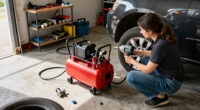
The best electric pumps depend on what you inflate: my best overall pick is the Fanttik X9 Ace for its 150 PSI capability, quick bike-tire inflation, and automatic shutoff. For paddle boards, the OutdoorMaster Shark 3 stands out for its rechargeable battery, while the AGPTEK electric air pump offers both AC and DC power for general inflatables. The main tradeoffs are pressure versus airflow, rechargeable portability versus outlet-powered use, and how many attachments or specialty functions you need. A bike pump is not a substitute for a high-volume mattress pump, and a general inflatable pump may not reach SUP pressures. Read on for the full breakdown and a guide to choosing the right pump for your gear.

Get business pricing on garage and car supplies
- Business-only prices and quantity discounts
- Tax-exempt purchasing
- Multiple users, one account, clear invoices
Complete the kit


Key Takeaways
- Different jobs call for different pump designs: the Fanttik X9 Ace targets high-pressure bike tires, while SUP pumps and high-volume inflatable pumps serve different needs.
- The Fanttik X9 Ace leads the bike-focused options on stated pressure and speed: its 150 PSI rating and 32-second inflation claim make it the most performance-oriented bike pick in this lineup.
- SUP buyers have the widest set of choices: models range from the battery-powered OutdoorMaster Shark 3 to dual-stage and auto-off options, so power source and intended pressure matter more than a single headline feature.
- Rechargeable pumps trade outlet independence for battery limits: they suit outings and travel, but buyers should check how many inflations a charge can support for their equipment.
- Inflatable and ball pumps are specialty tools, not all-purpose replacements: AC/DC compatibility, deflation, nozzle fit, and a gauge matter more than high PSI for these uses.


| electric pump | Maximum pressure | Power source | Dimensions | Item weight |
|---|---|---|---|---|
| Fanttik X9 Ace Mini Electric B | 150 psi | Battery powered | — | 384 g |
| Fanttik X10 Ace Mini Electric | 120 psi | Battery powered | 2.09 × 1.18 × 2.83 inches | 4.23 ounces |
| OlarHike Portable Tire Inflato | 160 psi | Battery powered | 5.91 × 2.76 × 1.97 inches | 15.68 ounces |
| KOSMEGAL Electric Portable Pad | 20 psi | — | — | 1.44 kg |
| ETENWOLF AIR 3 Air Pump for In | 4.5 kPa | Battery powered | 1.89 × 1.89 × 2.44 inches | 145 g |
| AIRBANK Electric Paddle Board | 20 psi | Battery powered | 6.5 x 3.4 x 7.5 inches | — |
| Hydrohero Electric Paddle Boar | 20 psi | Battery | — | — |
| Electric Ball Pump for Sports | 12 psi | Battery powered | 1.57 x 1.57 x 6.29 inches | — |
| 50 PSI Paddle Board Electric P | 50 psi | Battery and 12V DC | — | — |
| Electric Air Pump for Inflatab | — | Corded electric | 4.8 x 4.3 x 4.3 inches | — |
| OutdoorMaster Shark 3 Electric | 20 psi | — | 18.7 × 17.2 × 32.3 cm | 3.64 kg |
| 50 PSI Paddle Board Electric P | 50 psi | Battery powered | 6.88 × 3.54 × 6.88 inches | 2.9 pounds |
| ETENWOLF P300 Plus Ball Pump | 17 psi | Battery powered | 2.5 × 1.7 × 3.5 inches | 238 g |
| Portable Rechargeable Electric | 20 psi | Battery | 6.69 × 5.9 × 3.07 inches | 2.86 pounds |
| AGPTEK Electric Air Pump for I | 0.5 psi | 110V AC or 12V DC | 4.3 × 4.3 × 4.7 inches | 16 ounces |
More Details on Our Top Picks
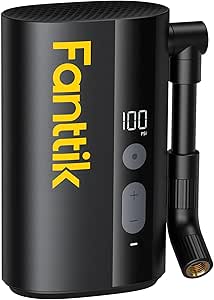
Fanttik X9 Ace Mini Electric Bike Pump, 150 PSI, 32s Inflate, Auto Stop
The Fanttik X9 Ace is my strongest all-around pick here for cyclists who want a portable pump with more pressure headroom than the X10 Ace. Its 150 PSI maximum suits higher-pressure bike tires, while the stated 32-second inflation time and automatic shutoff make roadside top-ups less fiddly. The 5000 mAh battery is a practical advantage for riders who may need more than one inflation between charges, and its valve-switching hose keeps setup simple. Compared with the lighter X10 Ace, this model is heavier at 384 g and has a lower stated inflation speed, so it is less compelling when every gram or second counts. It is also limited to tires and other uses within its pressure range, with continuous operation capped at 25 minutes.
Pros:- 150 PSI maximum pressure accommodates higher-pressure bike tires.
- Automatic shutoff helps prevent overinflation once the preset pressure is reached.
- 5000 mAh battery supports multiple uses between charges.
- All-in-one hose with valve switching reduces loose parts to carry.
Cons:- At 384 g, it is heavier than the 4.23-ounce Fanttik X10 Ace.
- Continuous operation is limited to 25 minutes.
- The stated 32-second inflation time is slower than the X10 Ace’s stated 22 seconds.
Best for: Road and commuter cyclists who want a rechargeable pump with high pressure capacity and automatic shutoff for tire top-ups on rides.
Not ideal for: Weight-conscious riders seeking the smallest possible emergency pump, or people who need extended continuous operation or pressure beyond 150 PSI.
- Power source:Battery powered
- Maximum pressure:150 psi
- Air flow capacity:10 liters per minute
- Battery:5000 mAh lithium-ion polymer (LiPo)
- Operation mode:Automatic
- Item weight:384 g
- Material:Plastic
- Color:Black
Our verdict“Choose the X9 Ace if higher bike-tire pressure capacity and a larger stated battery matter more to you than the X10 Ace’s lower weight and faster stated inflation.”
Fanttik X10 Ace Mini Electric Bike Pump, 120 PSI, Fast Inflation, Auto Stop
At just 4.23 ounces, the Fanttik X10 Ace makes the most sense for riders who want an electric pump that takes up little space in a jersey pocket or small saddle bag. Its 120 PSI ceiling and stated 22-second inflation time favor quick, routine bicycle top-ups rather than the broader pressure range of the X9 Ace. A display, preset pressure, ±1 PSI precision, and auto stop give riders more control than a basic mini inflator, while Presta and Schrader compatibility adds practical flexibility. Compared with the X9 Ace, it is far lighter and faster by the stated figures, but its lower maximum pressure and unspecified battery capacity offer less reassurance for repeated or higher-pressure jobs. It is also not waterproof, so wet-weather riders need to protect it.
Pros:- Very light at 4.23 ounces and compact enough for small carry bags.
- Stated 22-second inflation time supports quick roadside top-ups.
- ±1 PSI pressure precision, preset pressure, and auto stop provide controlled inflation.
- Works with both Presta and Schrader valves.
Cons:- 120 PSI maximum is lower than the Fanttik X9 Ace’s 150 PSI capacity.
- Not waterproof, so it needs protection in rain or wet conditions.
- Battery may need recharging after prolonged use, and its capacity is not specified.
Best for: Road and urban cyclists who prioritize a very light, pocketable pump for quick tire top-ups and want preset pressure control.
Not ideal for: Riders who need up to 150 PSI, a stated large battery capacity, or equipment that can be used without rain protection.
- Power source:Battery powered
- Maximum pressure:120 psi
- Battery type:Lithium-ion
- Connector:USB
- Item weight:4.23 ounces
- Dimensions:2.09 × 1.18 × 2.83 inches
- Hose length:3.94 inches
- Material:Plastic
Our verdict“Pick the X10 Ace over the heavier X9 Ace when low carry weight and quick, precise bicycle top-ups matter more than maximum pressure.”
OlarHike Portable Tire Inflator & Air Compressor
The OlarHike is the most versatile choice in this group for someone who wants one cordless pump for car, motorcycle, and bicycle tires. Its 160 PSI maximum exceeds the bike-focused Fanttik X9 Ace’s 150 PSI ceiling, and the digital pressure gauge with auto shutoff helps make tire inflation less guesswork-heavy. The built-in power bank function adds a useful emergency role beyond pumping, while USB-C charging and included attachments support mixed use. That versatility comes with a size and weight tradeoff: at 15.68 ounces, it is far less pocketable than the Fanttik X10 Ace. The listing also limits it to smaller tires and inflatables, so I would not choose it for large commercial truck tires or for a buyer whose main need is a tiny cycling pump.
Pros:- 160 PSI maximum pressure covers a broad range of smaller-tire inflation needs.
- Digital pressure display and auto shutoff support controlled inflation.
- Power bank function adds emergency utility beyond tire pumping.
- USB-C connector and multiple attachments support varied use.
Cons:- At 15.68 ounces, it is substantially heavier than either Fanttik bike pump.
- Not suited to large commercial truck tires.
- Battery may need recharging after multiple uses.
Best for: Drivers and outdoor users who want one rechargeable inflator for smaller car, motorcycle, and bicycle tires, with a power bank as an extra utility.
Not ideal for: Commercial truck owners or cyclists who want the lightest possible pump to carry on every ride.
- Power source:Battery powered
- Maximum pressure:160 psi
- Battery type:Lithium-ion
- Connector:USB Type-C
- Item weight:15.68 ounces
- Dimensions:5.91 × 2.76 × 1.97 inches
- Material:Plastic
- Color:Orange
Our verdict“Choose the OlarHike if you need a multi-vehicle emergency inflator and power bank, rather than the lighter, bike-specific Fanttik X10 Ace.”
KOSMEGAL Electric Portable Paddle Board Pump with Auto-Off and Deflation for Inflatables
The KOSMEGAL serves a different job from the cordless tire pumps: it is built for paddle boards, kayaks, and other inflatables, with a 20 PSI maximum suited to this lower-pressure category. Its auto-off function and backlit LCD display help users set a target without continually watching the pump, while multiple nozzles widen its use around water gear. A flashlight is handy when packing or inflating in dim conditions. Compared with the battery-powered ETENWOLF AIR 3, KOSMEGAL offers much higher pressure for board inflation, but it depends on a 12V car connection rather than an internal rechargeable battery. It also weighs 1.44 kg and deflation is manual, making it less convenient for users who need a lightweight, fully cordless inflator-deflator.
Pros:- 20 PSI maximum is suited to paddle boards and similar inflatables.
- Auto-off and backlit LCD display support target-pressure inflation.
- Multiple nozzles accommodate different inflatable valve types.
- Built-in flashlight can help with setup in low light.
Cons:- Requires a 12V car cigarette-lighter connection and is not rechargeable.
- Manual deflation adds effort when packing away inflatables.
- At 1.44 kg, it is heavier than the battery-powered ETENWOLF AIR 3.
Best for: Paddle-board and kayak owners who inflate near a vehicle and need a pump capable of reaching 20 PSI.
Not ideal for: Campers without access to a 12V vehicle outlet, or buyers seeking a rechargeable pump with powered deflation.
- Maximum pressure:20 psi
- Power connector:12V DC car connector
- Item weight:1.44 kg
- Display:Backlit LCD
- Auto-off:Yes
- Deflation:Manual
- Included attachments:Multiple nozzles
Our verdict“Choose KOSMEGAL for vehicle-side paddle-board inflation to 20 PSI; choose the ETENWOLF AIR 3 for small, cordless inflatables instead.”
ETENWOLF AIR 3 Air Pump for Inflatables with 2600mAh Battery and Camping Light
The ETENWOLF AIR 3 is a compact pick for air mattresses, pool floats, and inflatable furniture, not for tires or high-pressure gear. At 145 g, it is easy to pack, and its 13 cfm airflow is designed for moving air quickly through larger, low-pressure inflatables. The pump can inflate and deflate, while USB-C charging and the 600-lumen camping light give it value around a campsite beyond the pump itself. That low-pressure focus separates it from KOSMEGAL, which reaches 20 PSI for paddle boards but needs a car outlet. The tradeoff is limited pressure: the AIR 3 is not suited to SUPs, sports balls, or balloons, and operation requires holding the button, which may be tiresome during longer sessions.
Pros:- Lightweight at 145 g and compact for camping kits.
- 13 cfm airflow supports quick movement of air in compatible low-pressure inflatables.
- Inflates and deflates compatible items.
- Built-in 600-lumen camping light and USB-C charging add practical campsite utility.
Cons:- Not suitable for SUPs, balloons, sports balls, or other high-pressure uses.
- Must be operated by holding the button.
- 2600 mAh battery may limit repeated use before recharging.
Best for: Campers and car campers who pack air mattresses, pool floats, or inflatable furniture and want a small rechargeable pump with a useful light.
Not ideal for: Paddle-board owners, sports-ball players, or anyone needing a tire inflator or hands-free operation.
- Power source:Battery powered
- Air flow capacity:13 cfm
- Maximum pressure:4.5 kPa
- Battery:2600 mAh lithium-ion
- Connector:USB-C
- Item weight:145 g
- Dimensions:1.89 × 1.89 × 2.44 inches
- Included components:Air pump, nozzles, charging cable, storage bag, and user manual
Our verdict“Choose the AIR 3 for compact, cordless air-mattress and float duty, but pick KOSMEGAL if your main task is inflating a paddle board to higher pressure.”
AIRBANK Electric Paddle Board Pump 20 PSI The Puffer Pro, Portable SUP Pump with Dual-Stage Inflation and Auto-Off
The AIRBANK Puffer Pro suits paddlers who want a compact, cordless pump for boards and other inflatables without carrying a larger unit. Its 400 L/min airflow and dual-stage inflation are designed to move air quickly before building pressure, while the digital display and auto-off help limit guesswork at the shoreline. At 1.26 kg, it is lighter than the Hydrohero, which makes it easier to pack when weight matters. The tradeoff is a 20 PSI ceiling and battery dependence, so it is not the pick for tire inflation or repeated sessions without a recharge plan. Compared with the 50 PSI Paddle Board Electric Pump, it gives up pressure headroom and broader modes in favor of a lighter, simpler SUP-focused setup.
Pros:- Light 1.26 kg design is easy to carry with paddle gear
- Dual-stage inflation supports faster filling before high-pressure finishing
- Digital display and automatic shutoff help control target pressure
- Multiple nozzles support different inflatable valves
Cons:- 20 PSI maximum limits use with higher-pressure equipment
- Battery power requires recharging between outings or frequent inflations
- Noticeable operating noise may bother users in quiet campsites
Best for: Paddlers who prioritize a lightweight, cordless pump for occasional board and kayak outings
Not ideal for: Buyers who need tire inflation, pressure above 20 PSI, or enough battery capacity for repeated group use
- Power source:Battery powered
- Air flow capacity:400 liters per minute
- Maximum pressure:20 psi
- Operation mode:Automatic
- Weight:1.26 kg
- Dimensions:6.5 x 3.4 x 7.5 inches
- Material:Plastic
- Warranty:2 years
Our verdict“Choose the Puffer Pro if portability for SUP use matters more than higher pressure or multi-purpose capability.”
Hydrohero Electric Paddle Board Pump, 20 PSI Rechargeable SUP Pump
The Hydrohero is a straightforward choice for paddlers who want a rechargeable pump with its key controls built in: automatic dual-stage inflation, a digital display, and auto shutoff. Its listed setup time of five minutes to reach 12 PSI makes it appealing when getting a board ready quickly is the priority. The Type-C charging port and seven included nozzles add flexibility, though the charging cable is not included, so buyers need to supply one. At 2.5 pounds, it is still portable, but the AIRBANK Puffer Pro weighs less and reaches the same 20 PSI ceiling. The Hydrohero is a better fit for buyers who value its stated fast setup and accessory selection; its battery life may prove limiting across multiple boards, and it remains focused on inflatables rather than general-purpose pumping.
Pros:- Automatic dual-stage operation reduces hands-on monitoring
- Digital pressure display and auto shutoff support controlled inflation
- Seven included nozzles accommodate a range of inflatables
- Type-C charging port offers a widely used charging connection
Cons:- Charging cable is not included
- Battery life may fall short during frequent or multiple-board use
- 20 PSI maximum keeps it within inflatable-focused applications
Best for: Paddle-board owners who want an automatic rechargeable pump with several nozzle options for personal outings
Not ideal for: Groups inflating several boards back-to-back or buyers who expect a charging cable or broad tire-pumping capability in the box
- Maximum pressure:20 psi
- Power source:Battery
- Air flow capacity:400 liters per minute
- Battery type:Lithium-ion
- Battery capacity:38.48 Wh
- Charging port:Type-C
- Weight:2.5 pounds
- Hose length:19.69 inches
- Included nozzles:7
Our verdict“Pick the Hydrohero for a feature-rich, automatic SUP setup, but choose the lighter AIRBANK if carrying weight is your main concern.”
Electric Ball Pump for Sports Balls with Gauge and LCD
This compact pump fills a different role from the board-focused AIRBANK and Hydrohero: it is made for sports balls, not large inflatables. Intelligent pressure detection and an LCD gauge help users reach a target without relying on feel, while the listed 1–2 minute inflation time is useful for quick top-ups before practice. At just 8.8 ounces, it is easy to keep in a gym bag or equipment kit. Its low 4 L/min airflow and 12 PSI maximum listed in the specs make it unsuitable for paddle boards, air mattresses, or tires. The product data also lists an inflation pressure of 15 PSI, so I would verify the intended operating range before buying. Unlike the 110–120V P300A, this pump is cordless and specialized for portable ball inflation.
Pros:- Small, lightweight body is convenient for a gym bag or equipment case
- LCD pressure gauge supports more controlled ball inflation
- Intelligent pressure detection helps reduce manual pressure checks
- USB-rechargeable lithium-ion battery avoids dependence on a wall outlet during use
Cons:- Low airflow is not suited to large inflatables
- Listed maximum pressure is 12 PSI, while separate product data lists 15 PSI inflation pressure
- No storage case is included
Best for: Coaches, players, and families who need a compact pump for routine sports-ball top-ups
Not ideal for: Paddle-board owners or campers who need high-volume inflation, high pressure, or a pump for large inflatables
- Power source:Battery powered
- Air flow capacity:4 liters per minute
- Maximum pressure:12 psi
- Listed inflation pressure:15 PSI
- Battery type:Lithium-ion
- Connector type:USB
- Weight:8.8 ounces
- Dimensions:1.57 x 1.57 x 6.29 inches
- Material:Aluminum
Our verdict“Choose this model for portable sports-ball maintenance, not as a substitute for a high-volume inflatable pump.”
50 PSI Paddle Board Electric Pump with Rechargeable Battery and Auto-Off
This 50 PSI model earns its place for buyers who want more than a SUP-only pump. It pairs rechargeable cordless operation with a 12V DC option, plus inflate, deflate, and tire modes; that flexibility separates it from the AIRBANK Puffer Pro and Hydrohero, both capped at 20 PSI. Real-time pressure monitoring and auto-off help manage inflation without constant checking, while the included adapters broaden the range of compatible items. The added capability comes with compromises: the unit may feel bulky in compact gear storage, and its 10,000mAh battery still needs recharging after several inflations. I would choose it for mixed outdoor and vehicle use, but skip it if a light, simple board pump is all that is needed.
Pros:- 50 PSI maximum offers more pressure range than the 20 PSI AIRBANK and Hydrohero
- Rechargeable battery and 12V DC power provide two ways to operate
- Inflate, deflate, and tire modes cover more tasks than a SUP-only pump
- Auto-off and real-time pressure monitoring support controlled use
Cons:- Bulkier body takes more storage space than compact SUP-focused alternatives
- Battery may need recharging after several inflations
- Charging takes 3.5–4.5 hours
Best for: Paddle-board owners and road-trip campers who want one pump for boards, compatible tires, and deflation tasks
Not ideal for: Minimalist paddlers who want the lightest possible SUP pump or users who need many inflations without access to power
- Maximum pressure:50 psi
- Power source:Battery and 12V DC
- Battery capacity:10,000 mAh
- Charging time:3.5–4.5 hours
- Modes:Inflate, deflate, tire
- Connectivity:Type-C and 12V DC
- Included accessories:Tire inflation hose, 7 nozzle adapters, Type-C cable, 12V DC cord
- Material:Plastic
Our verdict“Choose this pump when its higher pressure and multiple power options justify carrying a larger, more versatile unit.”
Electric Air Pump for Inflatables, Portable Quick-Fill Air Pump with 3 Nozzles, 110-120V, Inflator & Deflator for Camping, Air Mattresses, Boats, Pool Floats
Unlike the battery-powered AIRBANK and Hydrohero, this AC pump is built for use near a 110–120V outlet. Its three locking nozzles and inflate/deflate function make it a practical match for air mattresses, boats, and pool floats, especially where quick setup matters more than cordless portability. The compact 4.8-inch body is easy to store, and the three-year warranty is longer than the AIRBANK’s listed two years. The tradeoff is a strict reliance on AC power: it is a poor fit for remote beach launches, and the product data says it is not suitable for high-pressure items such as tires. Compared with the 50 PSI rechargeable pump, this one is simpler and outlet-dependent, but better aligned with low-pressure household inflatables.
Pros:- Inflate and deflate functions handle both setup and pack-down
- Three nozzle sizes fit a range of common inflatables
- Compact dimensions make it easy to store between trips
- Three-year warranty is longer than the AIRBANK’s listed coverage
Cons:- Requires a 110–120V AC outlet and cannot run as a cordless pump
- Not suitable for high-pressure items such as tires
- Outlet dependence limits use at remote launch sites
Best for: Campers and households who inflate air mattresses, pool floats, or boats where an AC outlet is available
Not ideal for: Paddlers launching away from outlets or anyone who needs cordless operation or high-pressure tire inflation
- Power source:Corded electric
- Operation mode:Automatic
- Connector type:AC power plug
- Input voltage:110–120V
- Dimensions:4.8 x 4.3 x 4.3 inches
- Included components:Pump, 3 nozzles, user manual
- Model number:P300A
- Warranty:3 years
Our verdict“Choose the P300A-style AC pump for low-pressure inflatables near an outlet, not for remote SUP launches or tires.”
OutdoorMaster Shark 3 Electric Paddle Board Pump – Fast Inflation, 74Wh Rechargeable Battery
The OutdoorMaster Shark 3 is the speed-focused choice here: it can inflate a 10.6-foot paddle board in a stated 3 minutes 50 seconds, then stop automatically at the selected pressure. That combination suits paddlers who would rather spend less time pumping at the launch site. Its 74Wh rechargeable battery is listed to handle up to four boards per charge, while eight nozzle options make it more adaptable to other inflatables than a board-only pump. Compared with the lighter Portable Rechargeable Electric SUP Pump with Dual-Stage Inflation and Auto-Off, the Shark 3 prioritizes rapid inflation and a broader nozzle set over carry weight. The tradeoff is substantial: at 3.64 kg, it is heavier than that alternative, and its reported noise can reach 88 dB. Battery capacity may also fall short for groups inflating more than four boards.
Pros:- Stated inflation time of 3 minutes 50 seconds for a 10.6-foot paddle board
- Rechargeable battery is listed to inflate up to four boards per charge
- Eight nozzles support a range of inflatable valves
- Automatic shut-off helps prevent inflation beyond the set pressure
Cons:- At 3.64 kg, it is relatively heavy to carry to a launch
- Noise can reach 88 dB during high-pressure inflation
- Battery capacity may not cover more than four boards per charge
Best for: Paddlers heading out with several boards who value quick inflation and want one pump with nozzles for other inflatables.
Not ideal for: Solo paddlers who need a light pack or anyone who expects to inflate more than four boards without recharging.
- Maximum pressure:20 psi
- Power:74 Wh
- Battery type:Lithium-ion
- Voltage:12 volts
- Item weight:3.64 kg
- Dimensions:18.7 × 17.2 × 32.3 cm
- Nozzles:8
- Color:Black and orange
Our verdict“Choose the Shark 3 if fast inflation for a small group matters more than low weight and quiet operation.”
50 PSI Paddle Board Electric Pump, Portable Rechargeable SUP Pump with Automatic Power-Off and Deflation Functions
This rechargeable pump is the broadest-use option in this group: alongside paddle boards, its stated applications include car tires, inflatable boats, and kayaks, and it can both inflate and deflate. The 12,000mAh battery is listed to support up to four paddleboards per charge, while the 420-liter-per-minute airflow capacity and three-stage inflation are aimed at reducing setup time. Compared with the OutdoorMaster Shark 3, its listed maximum pressure is much higher at 50 psi, and it weighs less at 2.9 pounds. That does not automatically make it the better SUP pick, since buyers should match pressure and valve requirements to their equipment; the description also notes that extra accessories may be needed for some valves. Battery life can vary with use, and a rechargeable unit still needs planning between outings.
Pros:- Inflates and deflates, with listed uses beyond paddle boards
- 12,000mAh battery is stated to handle up to four boards per charge
- Three-stage inflation and 420 L/min airflow are designed to speed setup
- At 2.9 pounds, it is lighter than the OutdoorMaster Shark 3
Cons:- Some valve types may require additional accessories
- Battery life can vary with frequent use
- A 50 psi maximum may be unnecessary for typical SUP inflation
Best for: Paddlers and campers who want one rechargeable pump for boards, kayaks, boats, and compatible tire valves.
Not ideal for: Buyers seeking a simple SUP-only pump who do not need the higher pressure range or have valve types that require extra adapters.
- Maximum pressure:50 psi
- Battery capacity:12,000 mAh
- Airflow capacity:420 liters per minute
- Power source:Battery powered
- Item weight:2.9 pounds
- Dimensions:6.88 × 3.54 × 6.88 inches
- Connector type:DC power jack
- Color:Orange and black
Our verdict“Pick this model if you want a rechargeable pump for several kinds of inflatables, not just paddle boards.”
ETENWOLF P300 Plus Ball Pump, Electric Basketball Pump with Inflation and Deflation
The ETENWOLF P300 Plus serves a different job from the SUP pumps in this roundup: its compact form and included needles are designed for sports balls, not high-volume board inflation. A sensitive pressure sensor rated to ±0.3 psi helps coaches and players set ball pressure more consistently, and the pump can deflate as well as inflate. At just 238 g, it is far easier to keep in a sports bag than the OutdoorMaster Shark 3, but its 6.5 L/min airflow and 17 psi ceiling make it unsuitable for paddle boards and most large inflatables. That narrow purpose is its main tradeoff. It is rechargeable, yet cannot run while charging, so users need to charge it ahead of practice or a game.
Pros:- Pressure sensor accuracy is specified at ±0.3 psi
- Inflates and deflates sports balls
- Lightweight 238 g design with a storage bag and two needles
- Rechargeable battery avoids a disposable power source
Cons:- Cannot operate while charging
- Maximum pressure is limited to 17 psi
- Requires charging before use and is not suited to large inflatables
Best for: Coaches, teams, and players who want a pocketable pump for inflating and deflating sports balls with controlled pressure.
Not ideal for: Paddle-board owners or anyone needing a pump for high-volume inflatables; its ball-focused airflow and 17 psi limit are not suited to those tasks.
- Maximum pressure:17 psi
- Airflow capacity:6.5 liters per minute
- Power source:Battery powered
- Battery type:Lithium-ion
- Item weight:238 g
- Dimensions:2.5 × 1.7 × 3.5 inches
- Included components:Pump, 2 needles, storage bag, charging cable, air hose, user manual
- Color:Black
Our verdict“Choose the P300 Plus for accurately managed sports-ball inflation, not as a general-purpose electric pump.”
Portable Rechargeable Electric SUP Pump with Dual-Stage Inflation and Auto-Off
For paddlers who want a dedicated board pump without carrying the Shark 3’s extra weight, this model is the more portable choice at 2.86 pounds. Its dual-stage inflation is listed to reach 12–15 psi in 7–9 minutes, and the digital LCD plus automatic shut-off lets users monitor a target without standing over the pump. A 13,500mAh battery and deflation function also suit camping trips where access to power may be limited. Compared with the 50 PSI Paddle Board Electric Pump, this one has a lower 20 psi ceiling and a more clearly SUP-focused pressure range; that is a sensible fit for board inflation, but less adaptable if a buyer needs higher-pressure uses. The 4–5-hour charging time calls for advance planning, and the battery needs care during extended storage.
Pros:- Lightweight at 2.86 pounds for carrying to outdoor launch points
- Dual-stage inflation and automatic shut-off simplify reaching a selected pressure
- LCD provides real-time pressure monitoring
- 13,500mAh battery and deflation function support use away from mains power
Cons:- Maximum pressure is 20 psi, below the 50 psi pump’s stated limit
- Charging takes 4–5 hours
- Battery should be recharged with care before extended storage
Best for: Paddlers and campers who want a relatively light rechargeable pump for boards, kayaks, or tents and can charge it before a trip.
Not ideal for: Users who need pressure above 20 psi or regularly forget to recharge equipment; its stated charging time is 4–5 hours.
- Maximum pressure:20 psi
- Battery capacity:13,500 mAh
- Inflation speed:7–9 minutes for 12–15 psi
- Power source:Battery
- Item weight:2.86 pounds
- Dimensions:6.69 × 5.9 × 3.07 inches
- Connector types:USB-C, DC power plug
- Material:Acrylonitrile butadiene styrene
Our verdict“Choose this pump for a lighter, board-focused setup if you can plan around its charging time and 20 psi ceiling.”
AGPTEK Electric Air Pump for Inflatables, 110V AC & 12V DC Inflator Deflator
The AGPTEK Electric Air Pump is a low-pressure inflator and deflator for items such as air mattresses, boats, and pool floats—not a pump for bringing a paddle board to riding pressure. Its key advantage over rechargeable picks like the Portable Rechargeable Electric SUP Pump with Dual-Stage Inflation and Auto-Off is flexible power: the AC and 12V DC connections let it work at home or from a compatible vehicle outlet without relying on a built-in battery. Three nozzles cover different valve openings, and the 16-ounce weight makes it easy to store with camping gear. The tradeoff is its 0.5 psi maximum pressure, which rules out high-pressure uses such as SUP inflation. It also needs a power outlet or vehicle connection, so it is less convenient at remote sites.
Pros:- AC and 12V DC power options work at home or with a compatible vehicle outlet
- Inflates and deflates low-pressure inflatables
- Three nozzles cover multiple valve openings
- Compact 16-ounce design is easy to store with camping gear
Cons:- Maximum pressure of 0.5 psi is far too low for paddle boards
- Requires an AC or DC connection and is not rechargeable
- Not suitable for the Intex Challenger K1, according to the product information
Best for: Campers and households inflating air mattresses, swimming rings, and other low-pressure inflatables near a wall or vehicle outlet.
Not ideal for: Paddle-board owners or users at remote launch sites; its 0.5 psi limit and corded power do not suit high-pressure, off-grid inflation.
- Maximum pressure:0.5 psi
- Quick-fill pressure:4.5 kPa
- Power source:110V AC or 12V DC
- Operation mode:Automatic
- Item weight:16 ounces
- Dimensions:4.3 × 4.3 × 4.7 inches
- Nozzles:3
- Connector types:AC, DC
Our verdict“Buy the AGPTEK for low-pressure mattresses and pool floats near an outlet, but choose a rechargeable SUP pump for paddle boards.”

How We Picked
I compared the 15 listed pumps by matching their stated capabilities to the jobs buyers are likely to have: inflating bike tires, paddle boards, sports balls, and high-volume inflatables. I gave weight to useful performance details such as pressure range, inflation speed, dual-stage operation, auto shutoff, power source, and whether the pump also deflates. Portability, controls, included connection options, and likely upkeep also shaped the comparison, since a pump that is awkward to use or poorly matched to a valve can be less useful than a faster one.
The ranking reflects how clearly each option serves its stated use, not a claim that one pump can replace every other type. The Fanttik X9 Ace ranks highly for bike tires because it combines a high stated pressure ceiling with a specific speed claim and auto stop. SUP picks are judged on board-oriented features and power options; general inflatable pumps are placed for their usefulness with larger, lower-pressure items. Specialty ball pumps rank for convenience in their narrower role. Where the supplied product details do not specify a measurement, I avoid treating that feature as proven performance.
Factors to Consider When Choosing Best Electric Pumps
Before choosing from this roundup, match the pump to the item and its valve rather than relying on the word “electric.” The most useful way to narrow the field is to decide what you inflate most often, where you will use the pump, and whether pressure or air volume is the limiting factor.
Match Pressure and Air Volume to the Item
Pressure and airflow solve different problems, and confusing them is a common reason for buying the wrong pump. Bike tires need a pump that can reach the tire’s required pressure, while an air mattress or pool float needs substantial air volume at comparatively low pressure. Paddle boards sit in their own category: they need a pump built to reach SUP pressures, often with a high-volume first stage followed by a higher-pressure stage. Check the recommended pressure printed on your equipment and compare it with the pump’s stated range. A high PSI figure alone does not mean a pump will fill a large inflatable quickly. Choose a specialty design when the task is demanding; use a general-purpose pump only for items within its stated limits.
Choose a Power Source for Where You Inflate
Rechargeable models are handy when you need to inflate away from an outlet, such as at a launch site or roadside. Their practical limit is battery capacity, which determines whether one charge covers a single job or several items. AC-powered pumps suit home, garage, or campsite use where a socket is available, while 12V DC support can be useful near a vehicle. Dual-power designs add flexibility but may involve more cables and setup than a compact battery pump. Before buying, think through the whole trip: a pump that works at home may not help at a remote shore without a charged battery or suitable power source. For repeated group use, battery capacity and recharge time deserve more attention than a small size advantage.
Treat Auto Shutoff and Gauges as Control Tools
A target-pressure setting and automatic shutoff can reduce the chance of overinflating an item, especially when the pump is running unattended nearby. A gauge helps you confirm the reading, but its usefulness depends on clear units, visibility, and a connection that does not leak air. For balls and bike tires, small pressure differences can affect how the item feels or performs, so readable controls matter. For mattresses and floats, pressure precision is less central than avoiding prolonged operation or excessive inflation. Do not assume every pump’s gauge is equally precise just because it has a display. Check the equipment maker’s pressure guidance and stop if the pump or hose becomes unusually hot.
Check the Valve, Nozzles, and Deflation Setup
Compatibility can matter as much as motor strength: a pump that cannot connect securely to the valve may leak or fail to inflate the item properly. Bike tires, SUP valves, sports balls, and household inflatables use different fittings, and adapters are not interchangeable by default. Confirm which nozzles or connectors are included and whether the pump supports the specific valve on your gear. A deflation function is useful when packing down mattresses, boats, or other bulky inflatables, but it does not replace a proper storage routine. Some pumps are designed around one valve family, while others trade compactness for several attachments. If you own several types of equipment, verify each connection before treating one pump as a household solution.
Balance Portability Against Runtime and Duty Cycle
A small pump is easier to store and carry, but compact size may come with limited battery capacity, slower inflation, or a shorter operating period. Large inflatables and paddle boards can keep a motor running much longer than a ball or bike tire. Check whether the manufacturer gives a runtime, number of inflations, or a rest period between uses; if those details are absent, avoid assuming continuous operation. A handle, hose storage, and a stable body can make a heavier pump easier to manage at the water’s edge. For occasional use with one item, a simple compact unit may be enough. For several boards or repeated fills, prioritize sustained use and power management over the smallest package.
Pay for Features That Fit Your Routine
Extra functions help only when they address a recurring need. Dual-stage inflation can suit paddle boards because it moves more air early and works toward higher pressure later, while a camping light or deflation mode may help buyers who regularly inflate gear outdoors. A dedicated ball pump can be more convenient for teams than adapting a larger inflator, even if it serves fewer tasks. Conversely, a complex rechargeable SUP pump may be unnecessary for someone who only inflates pool toys beside an outlet. Compare the number of items you inflate, how often you transport the pump, and whether you need one device for multiple settings. Spend more for a feature that removes a real inconvenience, not for a spec that does not match your equipment.
Frequently Asked Questions
Can one electric pump handle bike tires, paddle boards, and air mattresses?
Usually, one pump is not the best fit for all three. Bike tires need a high-pressure design and the correct tire valve connection; paddle boards need a pump intended to reach SUP pressure, often with a dual-stage system. Air mattresses need high airflow and suitable wide nozzles, not a high PSI rating. Some general pumps include multiple adapters, but attachments alone do not make the motor suitable for every job. If you regularly inflate more than one category, check the pressure range, airflow purpose, and valve compatibility for each item before choosing a single device.
Is a higher PSI rating always better?
No. The pump must meet the pressure requirement of the item, but a much higher maximum does not automatically mean faster or better inflation. High-volume items such as mattresses and pool floats need airflow more than high pressure, while bike tires and paddle boards need pressure suited to their specifications. A pump with a narrow specialty may also connect poorly to other valves. Use your equipment’s recommended range as the starting point, then compare inflation speed, control features, and compatible fittings. Do not inflate beyond the equipment maker’s guidance.
Should I choose a rechargeable pump or one that plugs into a vehicle or wall?
Choose based on where you inflate and how many items you need to fill in one session. A rechargeable pump is convenient at a trailhead, beach, or campsite without nearby power, but its battery can limit repeated fills. A wall-powered model makes sense for home use, and a 12V connection can suit vehicle-based inflation. Some pumps support more than one power source, which broadens where they can be used but may add cables or bulk. If you plan to inflate several boards or large items, look for stated battery capacity, runtime, or supported inflation count rather than assuming a single charge will cover the outing.
Do I need auto shutoff and a digital gauge?
These controls are most useful when the item has a defined pressure target, such as a bike tire or paddle board. Auto shutoff can prevent the pump from continuing past a selected setting, and a visible gauge lets you monitor progress without guessing. For low-pressure inflatables, airflow and nozzle fit may matter more than precise pressure control. A display is only helpful if its units are clear and the pump’s connection holds securely. Keep checking the item and follow its stated pressure limit even when the pump has automatic controls.
When is a dedicated pump better than a general inflatable pump?
A dedicated pump makes more sense when the task has a specific pressure, valve, or portability requirement that a general unit may not meet. The Fanttik X9 Ace is aimed at bike tires, while the SUP models are designed around paddle-board inflation; ball pumps also focus on a small, specific job. A general inflatable pump can be a better fit for mattresses, boats, and pool floats when it has appropriate nozzles and deflation support. Buying by task avoids relying on adapters to solve a mismatch in pressure or airflow. If you inflate only one kind of item, specialty features are often more useful than broad claims of versatility.
Conclusion
For the broadest recommendation within its specific use, I’d choose the Fanttik X9 Ace as best overall for bike tires: its stated 150 PSI capacity, quick inflation claim, and auto stop make it the clearest all-around bike pick in this lineup. For best value in practical flexibility, the AGPTEK AC/DC inflatable pump is a sensible choice for buyers who need household or vehicle power and low-pressure inflation, though it is not a substitute for a bike or SUP pump. The OutdoorMaster Shark 3 is my premium-leaning SUP pick for buyers who want a rechargeable board pump with a substantial stated battery capacity. Beginners inflating mixed household items can start with a straightforward nozzle-equipped AC/DC pump; anyone new to paddle boards should choose a SUP-specific model with clear pressure controls. For specific needs, pick the ETENWOLF P300 Plus for sports balls, an inflatable-focused pump with deflation for bulky gear, or a dual-stage SUP pump for boards. Match the pump to your most frequent task first, then pay for portability or extra functions only if your routine calls for them.
Halloween Picks
halloween
As an affiliate, we earn on qualifying purchases.